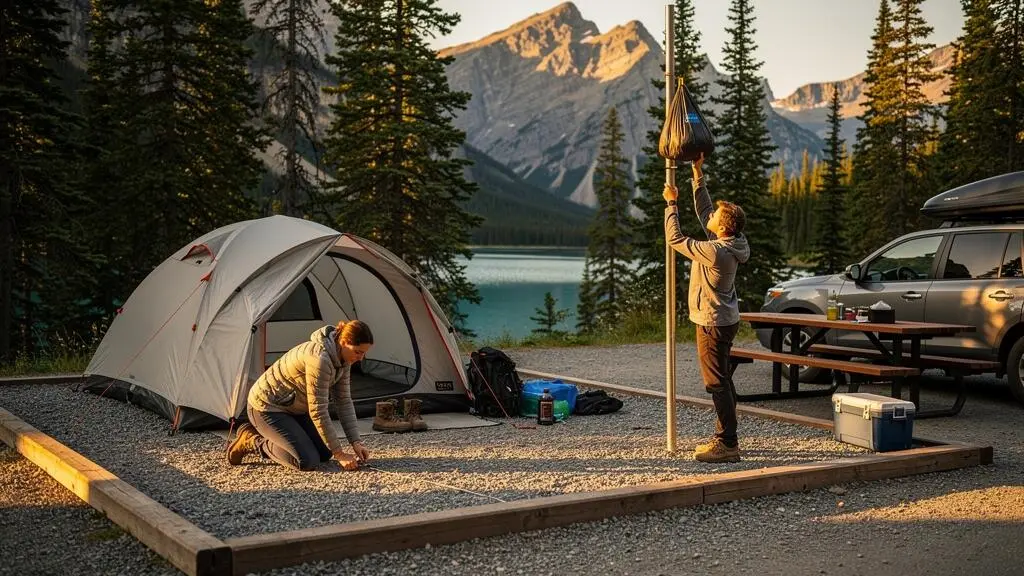
Camping in Canada’s national parks offers access to remarkable landscapes, from Rocky Mountain valleys and boreal forests to coastal ecosystems and remote northern wilderness. But a successful trip requires more than a tent, a campsite reservation and an appealing destination.
National parks operate under conservation rules that affect where visitors can camp, how they store food, which activities require reservations and how they respond to wildlife. Weather conditions, campground facilities and emergency access also vary substantially between regions.
The most reliable approach is to choose a camping experience that matches your group’s abilities, confirm the applicable park requirements, secure reservations and test essential equipment before departure. Building flexibility into your schedule helps you adapt when trails close, forecasts change or particular activities become unavailable.
Whether you are taking children on their first overnight outdoor adventure or preparing for a more remote experience, thoughtful planning protects both your comfort and the natural environments you came to enjoy.
National Park Camping: The Essentials
- Check reservation launch dates, permits, transportation arrangements and campground rules separately before booking the rest of your trip.
- Match your camping style, hiking plans and equipment to your actual experience, not your ideal itinerary.
- Prepare for changing weather, store wildlife attractants securely and establish an emergency communication plan.
- Why Does Camping in a National Park Require More Advance Planning Than Regular Campgrounds?
- How Can First-Time Campers Prepare for a National Park Stay?
- Frontcountry or Backcountry Camping: Which Fits Your Experience Better?
- What Food-Storage Mistakes Can Create Wildlife Problems at a Campsite?
- When Should You Book Camping in a Canadian National Park?
- How Can You Choose a Hiking Trail That Matches Your Fitness and Experience?
- Rent or Buy Camping Equipment: Which Is Better for Your First Seasons?
- How Can You Plan a Safe Camping Trip in Canada’s Diverse Terrain and Conditions?
Why Does Camping in a National Park Require More Advance Planning Than Regular Campgrounds?
Camping in a Canadian national park generally requires more advance planning because visitors must coordinate reservations, conservation requirements, permitted activities and local access arrangements. Unlike a typical private campground, a national park may have separate booking procedures for campsites, backcountry access and transportation to popular attractions. Requirements differ by destination, making early verification essential.
Parks Canada manages national parks under a federal conservation framework. Camping opportunities are therefore shaped by ecological protection, visitor safety and limits on where recreational activities are permitted. This does not mean every campground uses the same restrictions, but it does mean a reservation alone cannot establish that every planned activity is allowed.
For example, someone planning a stay in Banff may need to coordinate a frontcountry campsite with separately reserved transportation to a popular sightseeing destination. Backcountry camping can involve another reservation category altogether.
According to Parks Canada’s official reservation dates and booking information, launch dates vary by location and activity. For the 2026 visitor season, Banff frontcountry campground reservations opened on February 12, regional backcountry reservations on January 26, and Moraine Lake and Lake Louise lakeshore shuttle reservations on April 15.
These dates illustrate why visitors should not assume that securing one booking completes their arrangements. They are historical examples for the 2026 season, not confirmed deadlines for subsequent years.
Under-planning can also create financial consequences. If a required permit or transport reservation is unavailable, travellers may have to modify an itinerary that includes flights, accommodation or guided activities purchased separately. Refund eligibility depends on the terms of each booking.
A practical solution is to build the schedule backwards from the intended arrival date:
- Choose the destination and camping format. Identify suitable campgrounds and permitted access routes.
- Record reservation opening dates. Check each relevant Parks Canada booking category.
- Verify additional requirements. Review park entry, shuttle, activity and backcountry permit arrangements where applicable.
- Schedule equipment preparation. Leave time to test shelter, sleeping systems and cooking equipment.
- Establish final verification points. Recheck weather forecasts, closures, access information and applicable rules shortly before travelling.
For a hypothetical July arrival, the first planning action may need to happen months before the journey if reservations open earlier in the year. The exact sequence depends on the park and the reservation season.
Once the booking and access requirements are understood, the next priority is making sure everyone in the group is comfortable with the realities of camping outdoors.
How Can First-Time Campers Prepare for a National Park Stay?
First-time campers should prepare by choosing a well-supported campground, learning the park’s rules and practising essential equipment skills before departure. Setting up a tent, keeping food away from wildlife and dressing for changing temperatures deserve attention before the trip. Less critical campground routines can be learned after arrival with help from park staff.
A useful starting point is to distinguish ordinary camping preparation from national park obligations. Campers should review the destination’s rules on wildlife attractants, campfires, firewood movement, generator use, quiet hours, pets and any location-specific restrictions. These conditions are not identical across Canada’s national parks.
Beginners do not necessarily need to purchase a complete set of specialized equipment. Parks Canada identifies frontcountry camping as an accessible introduction and offers more comfortable accommodation alternatives at selected destinations.
The official Parks Canada’s Camping 101 information describes frontcountry camping, equipped camping and options such as oTENTik structures, yurts and cabins. Availability and included equipment depend on the location.
These alternatives can reduce the complexity of a first trip. However, an oTENTik should not automatically be treated as a fully supplied camping package. Visitors must check whether they need bedding, cookware or other personal equipment.
The most effective preparation exercise is a trial setup at home or a nearby campground. Pitch the tent, inflate sleeping pads, practise using the stove in a suitable outdoor area and pack the equipment into the vehicle or backpack.
After the test, sort the gear into three categories:
- Essential and tested: shelter, sleeping equipment, suitable clothing, lighting and necessary safety supplies.
- Useful but adjustable: comfort items whose value depends on the campsite and trip length.
- Unused or unnecessary: duplicate tools and bulky extras that add weight without solving a real need.
This exercise addresses a common beginner problem: carrying too much equipment without understanding how the important items work.
Park infrastructure also provides a valuable safety net. Visitor centres can help clarify local conditions and regulations, while interpretive activities may introduce families to wildlife awareness and the surrounding environment. Availability should be checked with the individual destination.
After basic readiness is established, campers can make a better-informed choice between an accessible campground and a more demanding wilderness experience.
Frontcountry or Backcountry Camping: Which Fits Your Experience Better?
Frontcountry camping generally suits beginners, families and visitors who want easier vehicle access and established facilities. Backcountry camping is better suited to people prepared for physical travel, limited services, navigation and greater responsibility for their own safety. The right choice depends on experience, mobility, equipment, weather tolerance and emergency preparedness rather than scenery alone.
In frontcountry campgrounds, visitors can usually reach the general camping area by vehicle. Depending on the destination, facilities may include washrooms, potable water, showers or electrical connections. These amenities should be confirmed for the specific campground and campsite.
Backcountry camping typically involves hiking or paddling to the camping location. Some sites have designated tent pads or basic toilets, but access to supplies and assistance may be more limited.
The differences become clearer when comparing operational demands rather than simply describing one option as more adventurous.
| Planning factor | Frontcountry camping | Backcountry camping |
|---|---|---|
| Access | Generally accessible by vehicle | Usually requires hiking or paddling |
| Physical demand | Often lower, depending on activities | Greater travel and equipment-carrying demands |
| Facilities | May provide washrooms, water and other services | Limited or basic facilities, sometimes none |
| Food storage | Use approved campground storage methods | Follow the specific backcountry site’s requirements |
| Emergency access | Generally easier to reach services | May require significant self-reliance and evacuation planning |
| Booking | Check campground-specific reservation dates | Check separate backcountry permits and reservation procedures |
There are also intermediate choices. Some frontcountry campgrounds provide walk-in sites, while comfort camping accommodations reduce the amount of equipment visitors need to manage. Shorter backcountry routes with designated campsites can provide a gradual introduction for campers who already have the necessary skills.
Before selecting a backcountry trip, ask whether everyone in the group can navigate the route, treat drinking water, manage wildlife attractants, carry essential supplies and respond when weather or trail conditions require a change of plans.
These are practical self-assessment questions, not a formal certification standard.
Booking procedures matter too. Backcountry permits and frontcountry reservations may have different launch dates and availability. Choosing the camping format only after other travel commitments are made can therefore limit the remaining options.
Whichever format you choose, wildlife-aware campsite management remains an essential responsibility.
What Food-Storage Mistakes Can Create Wildlife Problems at a Campsite?
The most serious campsite food-storage mistakes involve leaving food, garbage, toiletries or other scented items accessible to wildlife, even briefly. Coolers, cooking equipment and pet food can attract animals as well. In areas covered by Parks Canada’s Bare Campsite Program, these items must be secured in approved storage whenever they are not actively being used.
Food storage is not simply about preventing an animal from taking someone’s dinner. When wildlife repeatedly finds accessible food around people, animals may begin associating campsites with feeding opportunities. This creates risks for both visitors and wildlife.
One overlooked item can undermine an otherwise careful campsite. An empty cooler, toothpaste tube, cooking pot or pet bowl may still contain attractive odours.
According to Parks Canada’s Bare Campsite Program, campers in the covered mountain national park campgrounds must store wildlife attractants in a hard-sided vehicle, trailer, motorhome or designated food storage locker whenever they are not in use.
Soft-sided tents and oTENTiks are not acceptable food-storage locations under these requirements. The rules also apply when visitors leave their campsite, not only overnight.
The correct storage method changes with the location. In the mountain campgrounds covered by the program, hard-sided vehicles and designated lockers are accepted solutions. In remote backcountry areas, specific sites may require other methods, including approved food containers or designated hanging systems.
A bear hang should not be assumed acceptable everywhere. Likewise, possessing a bear-resistant canister does not automatically satisfy the requirements of every destination. Campers should check the applicable park or backcountry camping instructions before deciding what equipment to bring.
Experienced campers can make mistakes when moving quickly between activities. Common examples include leaving groceries beside a picnic table while visiting a neighbouring campsite, keeping snacks in a jacket pocket inside the tent or leaving pet food outside after feeding.
A repeatable evening routine makes these omissions less likely.
Five Checks Before Leaving or Sleeping at Your Campsite
- Collect all food, drinks, wrappers and empty coolers; confirm that no food-related items remain unattended.
- Check tents, clothing pockets and bags for toiletries, snacks and other scented products; place them in approved storage.
- Gather cookware, dishes, pet food and pet bowls; verify that each item has been cleaned and securely stored.
- Dispose of garbage and grey water using the facilities designated by the campground; check that the cooking area is clear.
- Close and secure the approved vehicle storage compartment or food locker; complete one final visual check of the campsite.
These practices have consequences beyond general good housekeeping. Parks Canada states that non-compliance with the Bare Campsite Program may lead to cancellation of a camping permit without a refund and potentially to charges under applicable legislation.
Knowing how to manage a campsite responsibly is essential, but visitors also need to secure that campsite through the appropriate reservation process.
When Should You Book Camping in a Canadian National Park?
Book camping in a Canadian national park as soon as the relevant reservation window opens if you need specific peak-season dates, campground facilities or popular destinations. Parks Canada publishes different launch dates for different locations and activities rather than one universal opening day. Flexible travellers can consider alternative dates, campground types and cancellations, but availability is never guaranteed.
The most important distinction is between the date you want to camp and the date reservations become available. For some high-demand itineraries, the latter determines whether your preferred trip is practical.
Parks Canada’s published 2026 schedule demonstrates that frontcountry sites, backcountry opportunities and some shuttle services can open for booking on separate dates. Visitors preparing for another season must consult the new schedule instead of copying the previous year’s dates.
Different travel scenarios call for different booking strategies.
| Trip type | Recommended approach | Main consideration |
|---|---|---|
| Peak-season weekend in a popular park | Prepare before the published opening and book promptly when eligible | Preferred dates and site types may be highly competitive |
| Shoulder-season camping | Compare dates and campground operating periods | Weather and available services may differ from summer conditions |
| Backcountry itinerary | Check permits, campsite rules and route-specific booking procedures first | Reservations may follow a separate process |
| Flexible last-minute visit | Check current availability and legitimate cancellations | Remaining choices may be limited or unpredictable |
Cancellations sometimes create another opportunity to reserve a site. However, there is no universal cancellation-release time established for all national park bookings. Rechecking official availability is a useful backup, not a substitute for a secured reservation when travel dates are fixed.
Booking extremely early can introduce a different problem: plans may change before the trip. Before paying, review the applicable cancellation, modification and refund terms, particularly when transportation or other non-refundable arrangements depend on the campsite reservation.
Check more than the campsite name. Confirm accommodation type, vehicle restrictions, maximum occupancy, available services and any local conditions that could affect your group.
It is also worth considering whether the chosen campsite supports the rest of the itinerary. A location that looks convenient on a regional map may not be the best base for the hiking, sightseeing or family activities you intend to pursue.
Once the campsite is secured, the next step is selecting outdoor activities that match the abilities and energy of the group.
How Can You Choose a Hiking Trail That Matches Your Fitness and Experience?
Choose a hiking trail by evaluating distance, elevation gain, terrain, current conditions and the abilities of the least experienced person in your group. Difficulty labels alone are insufficient because an apparently moderate trail may involve steep climbs, unstable surfaces or exposed sections. Compare the route with hikes you have recently completed and allow time for weather changes.
Distance is only one part of trail difficulty. A short route with substantial elevation gain can be more tiring than a longer path through comparatively level terrain. Roots, loose rock, scree, stream crossings and exposed ridgelines can add challenges that a simple kilometre figure does not communicate.
Before selecting a route, review four practical factors:
- Distance and elevation: consider total travel distance, cumulative ascent and descent, and the elevation of the trail itself.
- Terrain: identify steep grades, unstable footing, exposed sections and potential obstacles.
- Conditions: review seasonal snow, weather forecasts, trail warnings and wildlife-related closures.
- Personal experience: compare the demands with recent hikes completed comfortably by everyone in the group.
For pacing, begin with the time your group has actually needed for comparable walks. Add a conservative allowance for climbing, descending, breaks and difficult terrain. A pace calculated only from distance risks underestimating the effort of mountain hiking.
Conditions can also change the nature of a familiar trail. Parks Canada’s Banff hiking guidance notes that mountain weather changes quickly and snow can occur in any month. Visitors should check local warnings and closures before leaving.
An out-and-back route can be advantageous for beginners because the group can turn around at an agreed point. A loop may require continuing through difficult terrain even after someone becomes tired, depending on its layout and available exits.
Camping logistics belong in the decision too. After travelling, unloading and pitching a tent, a group may have less energy than expected. A shorter route near the campground can therefore be a better choice on arrival day than a demanding hike requiring additional driving and uncertain trailhead parking.
Choose a turnaround time before departure, consider remaining daylight and be prepared to abandon the hike if conditions deteriorate.
With the hiking itinerary established, equipment choices become easier because campers can distinguish what they truly need from items they are unlikely to use.
Rent or Buy Camping Equipment: Which Is Better for Your First Seasons?
Renting camping equipment often makes more sense for beginners taking occasional trips, testing unfamiliar gear or lacking storage space. Buying becomes more attractive when equipment is used regularly and personal fit matters. A mixed approach is usually practical: rent expensive items initially, then purchase essentials gradually as your camping preferences become clearer.
There is little advantage in investing immediately in a complete premium setup if you have not established whether you prefer vehicle-accessible campgrounds, family comfort camping or lightweight backcountry travel.
These experiences place different demands on tents, sleeping systems, cooking equipment and backpacks. Equipment selected for one style may be inconvenient or unnecessary for another.
The following comparison helps identify which arrangement suits a first camping season.
| Decision factor | Renting | Buying |
|---|---|---|
| Occasional camping | Limits commitment to equipment used infrequently | May create unnecessary ownership costs |
| Frequent camping | Repeated rental arrangements can become inconvenient | Provides dependable access to familiar gear |
| Trying different camping styles | Allows experimentation before committing | Early purchases may not suit future trips |
| Home storage | Reduces storage needs between trips | Requires space and appropriate maintenance |
| Equipment familiarity | Requires learning each rented item’s operation | Allows repeated practice with the same equipment |
| Additional considerations | Pickup, return, availability and possible damage deposits | Storage, maintenance and replacement of worn gear |
Rental options may include local outdoor outfitters near major parks and equipped camping experiences at participating Parks Canada destinations. Equipment rental services and inventories can change, so confirm current availability rather than assuming a particular retailer or campground offers the items required.
For personal-fit equipment, ownership may provide more consistency. Properly fitted hiking footwear, suitable clothing and a familiar headlamp can be useful across many outdoor activities. Sleeping pads also deserve careful selection because personal comfort varies.
Large purchases can follow later, after a few trips reveal the actual requirements. A family travelling by car may prioritize a roomy shelter and durable cookware; someone preparing for a longer backcountry route may place greater emphasis on pack weight and portability.
Neither the cheapest equipment nor the most expensive guarantees an appropriate choice. Evaluate durability, ease of operation, safety and suitability for the conditions you expect.
Finally, make equipment acquisition part of the reservation timeline. A campsite booking is not useful if essential rented gear cannot be collected before departure.
Equipment supports the trip, but it cannot replace decisions about weather, terrain, wildlife and emergency preparedness.
Key Takeaways Before Your Trip
- Evaluate risks for the specific park environment: mountain, forest, coastal and northern destinations require different preparations.
- Keep enough flexibility to change a hiking route, activity or departure plan when weather and access conditions deteriorate.
- Confirm how your group would request assistance if mobile service disappeared and help could not arrive immediately.
How Can You Plan a Safe Camping Trip in Canada’s Diverse Terrain and Conditions?
Safe camping in Canada’s national parks begins with identifying the risks of the specific destination rather than relying on a universal packing checklist. Mountain weather, forest wildlife, coastal tides and remote northern access create different challenges. Review current park information, establish communication arrangements, carry appropriate supplies and decide in advance which conditions would require changing your itinerary.
Canada’s national parks encompass environments with very different travel and safety demands. A plan suitable for an accessible summer campground in a forested park may be inadequate for a high-elevation mountain itinerary or a remote coastal route.
Understanding the environment helps identify where preparation should be concentrated.
| Environment | Potential hazards to evaluate | Preparation priorities |
|---|---|---|
| Mountain parks | Rapid weather changes, snow, altitude and steep terrain | Warm layers, route conditions, turnaround plans and navigation |
| Boreal and forest parks | Wildlife, wet conditions and potentially limited access | Approved food storage, weather protection and route awareness |
| Coastal and marine parks | Tides, coastal weather and cold water | Local marine conditions, access timing and suitable water-safety equipment |
| Northern and remote parks | Isolation, demanding logistics and limited communications | Detailed trip plans, contingency supplies and reliable emergency communication |
This comparison is a planning framework, not a complete hazard assessment for every park. Local notices, access requirements and activity-specific guidance take priority.
Weather should determine more than clothing choices. Review forecasts relevant to the planned elevation and environment, not simply the nearest town. For coastal outings, marine conditions and tides may be important. For mountain routes, investigate precipitation, temperature changes and remaining snow.
Build flexibility into the itinerary where possible. A change in conditions may justify postponing a hike, replacing an exposed route with an accessible alternative or remaining at the campground rather than proceeding into remote terrain.
Emergency preparedness should also be operational. Give a reliable person your intended route, planned campsites, expected return time and instructions about what to do if you do not make contact.
Identify places where mobile communication may be unavailable. For remote travel, consider an appropriate satellite emergency communication device and learn how it functions before departure. Know how to contact the relevant park emergency or dispatch service and recognize that assistance may be delayed.
Parks Canada’s Banff hiking information recommends carrying a first aid kit, bear spray and satellite emergency communication equipment, along with suitable food, water and clothing. These recommendations are particularly relevant to its mountain setting; equipment needs must still be evaluated for each destination.
In bear habitat, keep bear spray accessible rather than buried in a backpack, learn how to use it and follow the park’s wildlife guidance. Travelling together and remaining alert in areas with restricted visibility are important precautions. Carrying protective equipment without understanding its safe operation provides little practical reassurance.
Wildlife safety also extends beyond large animals. Respect closures and viewing distances, avoid feeding animals and follow local restrictions intended to protect sensitive habitats.
Responsible camping means staying in designated areas, disposing of waste correctly, respecting fire regulations and leaving natural features undisturbed. These practices protect ecological conditions and help maintain safe recreational opportunities for later visitors.
As a final practical step, review your booking confirmations, destination-specific regulations, weather forecast, emergency contacts and food-storage arrangements together. If any essential requirement is unresolved, adjust the itinerary before travelling rather than relying on an improvised solution after arrival.
Can you camp in a Canadian national park without a reservation?
It depends on the park, campground, season and type of accommodation. Some camping opportunities may have different access arrangements, while reservable sites require following the relevant booking process. Check the destination’s official camping information before travelling, and never assume that an unoccupied-looking site is available for use.
Do you need a park entry pass if you already have a campsite reservation?
A campsite reservation and park admission are separate matters. Visitors should check the applicable park entry requirements, fees, exemptions and any currently available admission arrangements. A campsite booking should not be assumed to cover every entry or activity requirement.
Can you bring a dog camping in Canada’s national parks?
Dogs are permitted in some national park camping areas, subject to local restrictions. In areas covered by Parks Canada’s Bare Campsite Program, pets must be leashed and should not be left unattended outside. Pet food and bowls are wildlife attractants that require appropriate storage. Always verify the rules for your selected campground and trails.
What should you do if severe weather is forecast during your camping trip?
Review the latest destination-specific forecast and official park warnings, then assess whether your shelter, equipment, campsite and planned activities remain appropriate. Postpone exposed hikes or remote travel when conditions exceed your group’s capabilities. Follow park directions and use established emergency procedures if immediate danger develops.
Are campfires allowed at every national park campsite?
No. Campfire permissions depend on the campground, designated facilities and current restrictions. Fire bans may affect otherwise permitted activities. Check the park’s rules and fire notices before your trip, use only authorized fire facilities when permitted and follow restrictions on transporting firewood.