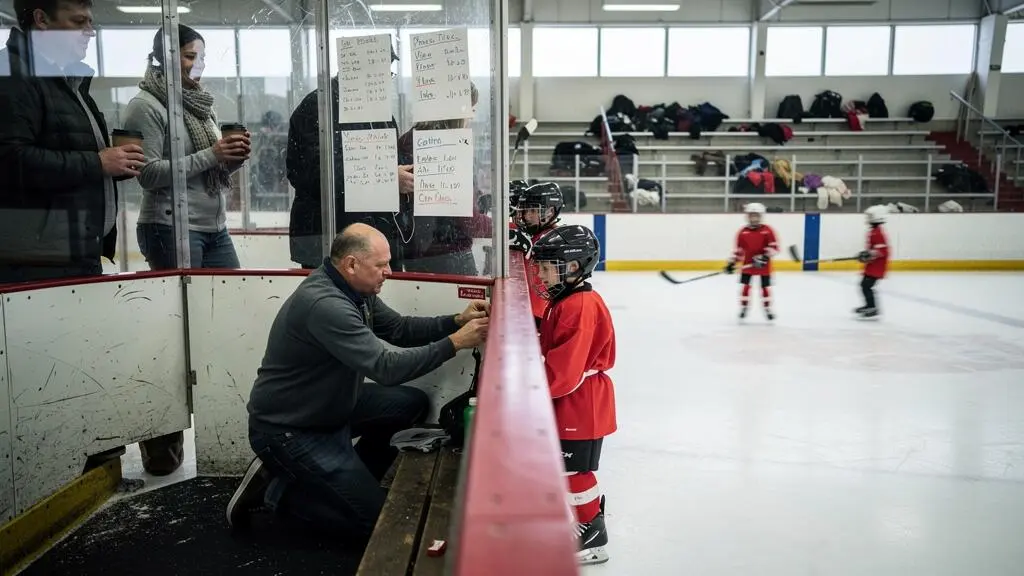
Community sports strengthen Canadian communities by creating regular opportunities for people to connect, stay active, volunteer and develop a sense of belonging. From neighbourhood soccer fields to small-town hockey arenas, accessible recreational programs offer something that extends beyond physical activity: a shared place where families, participants and local organizations can build relationships.
These benefits depend on more than having a team or facility nearby. Registration fees, equipment, transportation, scheduling and the culture of a program all influence who can participate and who feels welcome. A community may have excellent sports facilities while still leaving many residents on the sidelines.
Canada’s community sports system also faces practical choices. Families must balance recreation and competition, volunteers need sustainable support, and municipalities must decide when expanding programs will genuinely improve access. Understanding these decisions helps communities protect the social value of sport without making participation unnecessarily expensive or demanding.
Community sports in Canada: What matters most
- Local sports programs create recurring social connections among players, families, volunteers and neighbourhood organizations.
- Meaningful accessibility requires affordable equipment and registration, practical schedules, transportation options and welcoming environments.
- Recreational and competitive opportunities can both benefit children when enjoyment, development, safety and long-term participation remain priorities.
- Why Do Local Sports Programs Build Stronger Community Connections?
- How Can Community Sports Become More Accessible to More Families?
- Competitive or Recreational Sports: Which Fits Your Child Better?
- Why Can Too Much Competition Push Children Away From Sport?
- When Should a Community Expand Its Local Sports Programs?
- How Can Families Prepare for a First Hockey Season Without Overspending?
- Indoor or Outdoor Winter Sports: Which Works Better for Your Family?
- Why Does Hockey Remain So Important to Canadian Sport and Culture?
Why Do Local Sports Programs Build Stronger Community Connections?
Local sports programs strengthen community connections because they bring people together repeatedly around shared activities and responsibilities. Players develop relationships through participation, while parents, coaches and volunteers interact during practices, games and community events. Over time, these ordinary encounters can create familiarity, trust and opportunities for neighbourhood support.
A weekly soccer practice might introduce two parents who otherwise would never meet. Initially, they exchange greetings beside the field. Later, they might coordinate transportation, help with a fundraiser or become friends. Community sport creates opportunities for both casual acquaintances and more durable relationships.
These connections can be understood as two complementary forms of social ties:
- Weak ties: Familiar faces, occasional conversations and connections across families or neighbourhood groups. They help people feel recognized and informed about local life.
- Strong ties: Closer friendships and support relationships that may develop through repeated experiences, shared responsibilities and mutual assistance.
Both matter. A newcomer to a suburban neighbourhood may first encounter the broader community through a children’s recreational league. In a smaller town, the local arena may function as a gathering place for residents whose social circles would otherwise rarely overlap.
The Canadian Sport Policy 2025-2035 recognizes community-building, social cohesion and cultural identity as important dimensions of sport. It also notes that municipalities and regional school boards own and maintain much of Canada’s public sporting infrastructure.
That infrastructure serves a social purpose as well as a recreational one. Arenas, gymnasiums, community centres and playing fields create predictable meeting places. Volunteer coaches and parent organizers turn those spaces into functioning community networks.
Weekend tournaments, equipment exchanges and seasonal celebrations can extend these connections beyond the participants themselves. The relationships are especially valuable when a program brings together families from different schools, age groups or cultural backgrounds.
The reverse deserves attention, too. If a volunteer-run club closes, participants lose their activities, but parents and other residents may also lose a recurring social gathering place. The degree of that effect depends on what alternative opportunities remain available.
For these connections to benefit an entire neighbourhood, however, programs must be accessible to families who cannot easily afford fees, travel to facilities or accommodate rigid schedules.
How Can Community Sports Become More Accessible to More Families?
Community sports become more accessible when organizations address the full cost and practical demands of participation, not just registration fees. Affordable equipment, convenient locations, flexible schedules, transportation options and inclusive communication all matter. Financial assistance can help families join, but genuine access also means they can attend regularly and feel welcome.
Consider a hypothetical family whose child qualifies for subsidized soccer registration. The program is technically affordable, yet practices take place across town before the parent finishes work. Without reliable transportation or another suitable session, the subsidy alone does not make participation realistic.
Common barriers include:
- Financial: Registration, uniforms, protective gear, transportation and tournament expenses.
- Logistical: Limited transit, distant facilities and practices that conflict with work or caregiving responsibilities.
- Communication: Registration instructions, language differences and unfamiliar local sporting systems.
- Social and physical: Inaccessible facilities, limited accommodations, discriminatory behaviour or environments where beginners feel unwelcome.
Canadian families can investigate several forms of assistance. Canadian Tire Jumpstart offers eligible children financial support for participation through its Individual Child Grants program. Its published information identifies eligible registration and equipment expenses of up to $300 per year per child, subject to program conditions, local availability and funding.
Families should consult the official Jumpstart Individual Child Grants information to review current eligibility requirements, application arrangements and availability in their area.
Up to $300 per child annually
Eligible registration and equipment expenses under the Jumpstart Individual Child Grant program. This is a maximum potential grant, not a guaranteed award, and local funding availability applies.
Canadian Tire Jumpstart Charities, Individual Child Grants, program information for 2026.
Families can also investigate KidSport, municipal recreation subsidies, school-supported initiatives and community equipment-lending programs. Availability and eligibility vary, so contacting the local program directly is more reliable than assuming national assistance applies everywhere.
Clubs face their own affordability decisions. An all-inclusive registration model can simplify budgeting and reduce unexpected expenses, but its upfront price may discourage some families. A tiered model can offer lower-cost entry points, although optional charges need to be explained clearly to prevent surprises.
Neither approach automatically guarantees inclusion. Organizations should ask who registers, who remains involved and who leaves because the program does not fit their circumstances.
A practical approach for families is to ask an association about its complete annual costs, borrowing options, financial assistance, nearby locations and attendance expectations before committing. For newcomers, clear explanations of equipment, registration and volunteer requirements can make a substantial difference.
Once practical barriers are addressed, families can focus on selecting the type of sporting experience that fits their child instead of simply choosing the only available option.
Competitive or Recreational Sports: Which Fits Your Child Better?
Recreational sports generally suit children who want flexible participation, enjoyment and skill development without intensive performance demands. Competitive programs may suit children who actively seek structured challenges and are comfortable with greater training commitments. The better choice depends on motivation, well-being and family capacity, not athletic ability alone.
A talented child is not automatically ready for a competitive pathway. Similarly, a beginner who enjoys challenges may appreciate structured competition without pursuing elite development.
Parents can compare the two approaches using factors that affect the child’s actual experience:
| Decision factor | Recreational sport | Competitive sport |
|---|---|---|
| Primary focus | Enjoyment, participation and skill-building | Development, structured competition and performance goals |
| Typical commitment | Often more flexible and locally focused | May involve additional practices, travel and longer seasons |
| Family expenses | Often lower, depending on the activity | Potentially higher due to travel, tournaments and training |
| Best motivation | Playing, socializing and trying new activities | Enjoying challenge, improvement and organized competition |
| Potential difficulty | May offer fewer advanced development opportunities | Can create pressure or scheduling demands if poorly matched |
The distinction is not absolute. Recreational leagues can include competitive games, and performance-focused organizations can create supportive environments where enjoyment remains central.
Canada’s national sport policy recognizes both participation-oriented and performance-oriented contexts. It emphasizes that children and youth benefit from exploring different activities in positive, inclusive environments.
This is consistent with the broad principles of Canadian long-term athlete development: early involvement does not need to mean immediate specialization. Sampling multiple sports can give younger children opportunities to discover different movement skills, friendships and interests.
Families should also examine the hidden commitments of a competitive program. Tournament travel, accommodations, additional ice or field time, specialized coaching and fundraising may affect the household budget as much as registration fees do.
For a hypothetical child with strong skills but limited access to travel, a local development clinic combined with recreational league play might provide a manageable alternative. Other possibilities include community academies, selective tournaments and flexible development programs where available.
The child’s preferences should remain part of the decision. Asking whether they enjoy the practices, friendships and challenges often reveals more than examining performance statistics alone.
Even when competition initially feels exciting, its intensity can become counterproductive if winning begins to outweigh enjoyment and personal development.
Why Can Too Much Competition Push Children Away From Sport?
Excessive competition can push children away from sport when winning becomes more important than enjoyment, learning and personal progress. Children who feel constantly judged by results may become anxious, lose confidence or associate participation with pressure. Healthy competition can support development, but it needs an environment where mistakes and improvement remain acceptable.
Motivation matters because children are more likely to find participation rewarding when they experience enjoyment, choice and a sense of progress. If every practice becomes a test of performance, those experiences can become less satisfying.
A child who once enjoyed playing basketball with friends might begin worrying about mistakes if playing time, praise or parental approval appears to depend entirely on winning. A losing streak or a change in team role can then feel like a judgment of personal worth.
The Canadian Sport Policy 2025-2035 identifies excessive early competition and early specialization as factors associated with sport dropout. This does not establish a universal point at which competition becomes harmful, but it supports keeping development and participation opportunities broader than short-term results.
It is important not to confuse this concern with a measured national dropout figure. The supplied evidence does not establish a precise Canadian adolescent sport dropout rate, so no single percentage should be used to characterize the problem.
Parents and coaches can watch for several warning signs:
- Repeated anxiety, distress or physical complaints before games.
- A noticeable loss of enthusiasm for practices or teammates.
- Statements suggesting that mistakes make the child feel worthless.
- Requests to leave a sport despite previously enjoying it.
- Little opportunity to rest, explore other activities or participate without evaluation.
None of these signs alone proves that competition is the cause. School demands, injuries, social conflicts and changing interests may also affect motivation.
When concerns appear, a useful response is to ask what the child enjoys and what feels difficult. Parents and coaches can then review workloads, expectations, communication and available alternatives.
Healthy competition can help children practise preparation, cooperation, emotional regulation and responding constructively to setbacks. These benefits are more plausible when coaches emphasize effort and learning, provide appropriate challenges and maintain respectful environments.
For community organizations, retaining children who want to participate is at least as important as attracting new registrations. A program that recruits successfully but repeatedly loses participants may need to examine its culture, not simply its marketing.
Keeping young people involved also requires communities to provide suitable programs as their populations, interests and sporting needs change.
When Should a Community Expand Its Local Sports Programs?
A community should consider expanding local sports programs when sustained unmet demand, population changes and participation barriers indicate that existing opportunities are insufficient. Expansion is most justified when additional activities, schedules or facilities would meaningfully improve access. Before building or launching programs, organizers should assess volunteer capacity, operating costs and whether existing resources can be used better.
A long waiting list may signal demand, but it does not automatically justify constructing another facility. The shortage might be concentrated in one age group, one season or a few popular practice times.
Municipalities and local associations can examine several indicators together:
- Demand: Persistent waiting lists, unsuccessful registrations and requests for additional sessions.
- Population: Growth in neighbourhoods, school enrolment and changing recreational interests.
- Facility use: Available hours, accessibility, travel distance and competing users.
- Participation gaps: Whether girls, newcomers, children with disabilities and other underserved groups can access suitable programs.
- Delivery capacity: Qualified coaches, trained volunteers, equipment and reliable operating budgets.
Expansion has consequences. More teams may mean less practice time per team, greater pressure on volunteer organizers and additional maintenance expenses. Costs can rise if an association needs paid coaching or must rent facilities at less convenient hours.
Sometimes adjusting schedules, coordinating with nearby clubs or opening existing spaces to additional users delivers more value than launching a separate program.
Partnerships can also change what is feasible. Municipal recreation departments, school boards, community associations and local sports organizations may be able to coordinate programming and share facilities.
In communities involving First Nations, Inuit or Métis organizations, collaboration should reflect the priorities and decisions of the relevant Indigenous partners rather than assuming one standardized model will fit every community.
Rural and remote communities may face additional challenges involving travel distances, facility availability and a limited volunteer base. A regional program or shared seasonal initiative may be more practical than duplicating specialized facilities.
Five steps to assess a community sports expansion
- Document unmet demand: Collect waiting-list counts and unsuccessful registrations by age group and activity. Deliverable: a dated demand summary.
- Map participation barriers: Gather information about travel, costs, schedules and accessibility needs. Deliverable: a barrier inventory.
- Review existing capacity: Identify unused facility hours, available equipment and qualified volunteers. Deliverable: a capacity map.
- Compare expansion options: Evaluate new sessions, shared facilities, partnerships and additional teams against their resource needs. Deliverable: an options comparison.
- Set review measures: Choose indicators such as registrations, retention, participation by underserved groups and operating sustainability. Deliverable: a monitoring plan.
These steps create a decision process, not a universal numerical threshold. A small community with a significant access problem may have a stronger reason to act than a larger municipality where current facilities are merely inconvenient at peak times.
Individual families face a similar question on a smaller scale: how to participate in valued Canadian sports without committing more money or time than they can comfortably sustain.
How Can Families Prepare for a First Hockey Season Without Overspending?
Families can prepare for a first hockey season affordably by selecting an appropriate introductory program, checking the complete seasonal budget and borrowing or buying suitable second-hand equipment. Avoiding unnecessary upgrades, travel commitments and extra training can keep costs manageable while a child discovers whether they enjoy the sport.
The first step is to distinguish essential expenses from optional ones. Registration fees are only part of the budget. Families may also need skates, protective gear, transportation and occasional team-related expenses.
Costs vary considerably across Canada according to location, age group, association and program type. A single national price estimate would not reliably represent every family’s situation.
Before registering, request information about:
- Registration and any required association fees.
- Mandatory protective equipment and team clothing.
- Expected practices, games and transportation.
- Required tournaments or additional ice sessions.
- Potential fundraising commitments and optional activities.
Hockey Canada‘s Hockey Starts Here program information describes introductory opportunities, equipment requirements and approaches to reducing participation costs.
Programs identified by Hockey Canada include NHL/NHLPA First Shift, Learn to Skate, Learn to Play Hockey, Try Hockey events and Esso Fun Days. Availability depends on the community and participating organizations.
Introductory programs can be useful because they let children explore hockey before families commit to a full regular-team schedule. Street hockey or ball hockey can offer additional ways to develop interest with different equipment and facility requirements.
Equipment choices deserve particular attention. Skates, pads, gloves and other items may be available through equipment swaps, lending programs or second-hand sales, provided they fit properly and meet applicable safety requirements.
Protective equipment must not be treated as an opportunity to compromise on safety. Hockey Canada’s guidance identifies CSA-approved helmets with face masks and BNQ-certified neck guards. Families should verify the current requirements for their program, inspect equipment carefully and follow manufacturer guidance.
A used helmet with an uncertain impact history or compromised condition is not a worthwhile saving. Prioritize reliable protection and correct fit over a low purchase price.
For a child’s first season, expensive specialized camps, private coaching and upgraded equipment are rarely necessary simply to determine whether they enjoy playing. Families can reassess those opportunities after learning what the child genuinely wants.
Financial assistance and equipment support may be available through community associations, Jumpstart or hockey-specific assistance programs. Hockey Canada identifies the Hockey Canada Foundation Assist Fund as another potential support option, subject to current program conditions.
It is also worth comparing recreational house league participation with more selective programs. Travel and training obligations can differ considerably, and the most demanding pathway is not automatically the most suitable introduction.
For some households, the bigger decision is whether organized indoor hockey is the right winter activity at all, particularly when outdoor recreation may offer a more flexible alternative.
Indoor or Outdoor Winter Sports: Which Works Better for Your Family?
Indoor winter sports generally offer more predictable schedules, controlled facilities and structured skill development. Outdoor activities can provide flexible recreation, time in nature and opportunities for lower-cost family participation. The better choice depends on children’s ages, local facilities, weather, budget and whether the family values organized instruction or informal activity.
Canada’s winter recreation options are diverse, and the right comparison involves more than hockey versus skating.
Indoor skating lessons, recreational hockey and gym-based activities may offer regular sessions when outdoor conditions are difficult. Outdoor options can include neighbourhood skating, cross-country skiing, snowshoeing, tobogganing and downhill skiing or snowboarding.
Cost differences vary by activity. A community outdoor rink may have minimal admission costs, while organized indoor hockey can involve registration and equipment expenses. However, downhill skiing and snowboarding may require substantial spending on lift access, travel and specialized equipment.
Families should compare the entire outing rather than admission alone. Travel time, rentals, required clothing and the frequency of participation can change which option is affordable.
Age and experience also matter. Younger children may prefer short outdoor activities near home, while others benefit from regular instruction in a supervised facility. A child learning to skate may enjoy both lessons and informal practice, provided conditions are suitable.
Weather introduces a distinctly Canadian challenge. Natural outdoor ice depends on sustained appropriate conditions. Milder periods and fluctuating temperatures can reduce the reliability of community rinks, although the impact varies substantially by location and season.
Families should never assume an outdoor skating surface is safe because it was usable previously. Follow municipal rink notices and safety guidance, particularly for natural ice surfaces.
Indoor facilities provide greater scheduling reliability, but access can be constrained by available ice time, registration demand and facility costs. This makes free skates, municipal recreation sessions and shared community facilities worth investigating.
A balanced approach often works well. A family might register a child for weekly skating lessons while using suitable outdoor rinks for informal practice. Another household might favour walking, snowshoeing or cross-country skiing alongside occasional indoor recreation.
Combining activities also reduces dependence on a single program. Children can experience structured learning, social interaction and unstructured play without every winter outing becoming another organized commitment.
Among these activities, hockey occupies a particularly visible place in Canadian community life, demonstrating both the lasting appeal of local sport and the importance of making it welcoming.
Key takeaways for families and communities
- Preserve the social spaces around sport, including volunteer networks and informal community gatherings, rather than measuring success only through registrations or competitive results.
- Choose programs that fit real household resources and individual interests, with opportunities to explore activities before making expensive commitments.
- Treat cultural traditions as opportunities for wider participation, while recognizing that cost, geography and exclusion can prevent some residents from sharing them.
Why Does Hockey Remain So Important to Canadian Sport and Culture?
Hockey remains important to Canadian sport and culture because generations of communities have organized winter activities, volunteer efforts and shared traditions around the game. Local arenas provide places for families to gather, children to learn and neighbours to build relationships. Its cultural influence is significant, although participation and personal attachment vary across Canada.
Hockey’s place in Canadian life reflects more than professional competitions or national-team achievements. In many rural and northern communities, winter recreation developed around local ice surfaces and arenas that became important gathering places.
These facilities have supported recurring routines: early practices, weekend games, volunteer coaching, team fundraising and seasonal tournaments. The social value lies partly in their predictability. Families return to the same spaces over many years and encounter people outside their immediate circles.
In this sense, an arena can serve as social infrastructure. It offers a setting where community relationships develop through ordinary shared activities rather than formal networking or planned social events.
Hockey can also teach cooperation and shared responsibility. Players depend on teammates, coaches organize learning opportunities, and parents frequently contribute transportation, equipment management or volunteer time.
However, hockey’s cultural importance does not mean it is equally accessible or meaningful to everyone.
Equipment costs, facility availability, travel and scheduling can create substantial barriers. Some children prefer other activities, while newcomers may be unfamiliar with the rules, equipment or registration system.
Girls and women, children with disabilities and participants from communities historically underserved by organized sport may encounter additional barriers to finding suitable opportunities. Welcoming programs need to examine these conditions directly rather than assuming that the popularity of hockey guarantees inclusion.
Indigenous sporting experiences and traditions also cannot be reduced to a single national narrative. Meaningful access and partnerships must recognize the priorities, histories and perspectives of the First Nations, Inuit and Métis communities involved.
These issues connect hockey to broader Canadian participation patterns.
55%
Of people aged 15 and older in Canada reported participating in sport in 2023. This covers sport generally, not hockey specifically, and should not be interpreted as a 2026 participation rate.
Statistics Canada, Survey Series on People and their Communities, 2023 data, discussed in its March 2025 analysis.
Statistics Canada‘s analysis also reported that among sports participants, 82% identified physical health and fitness as a motivation, 70% identified fun, recreation or relaxation, and 54% identified doing activities with friends. These were reported motivations, not measured causal effects of participation.
Those findings help explain why hockey should not be evaluated exclusively through competitive achievement. Like soccer, basketball, skating and other community activities, it can offer opportunities for health, enjoyment and social contact when participation is appropriate and accessible.
Hockey’s enduring cultural role therefore presents both an opportunity and a responsibility. Community organizations can preserve valued traditions while providing beginner pathways, recreational choices, equipment support and welcoming environments.
A strong local hockey culture should be measured not only by successful teams but also by whether residents can participate, volunteer, learn and belong without facing unnecessary obstacles.
Families can begin by exploring a nearby recreational program and asking about introductory sessions, equipment support and volunteer opportunities. Community organizations can take the complementary step of asking whose participation is still missing and what would make joining easier.
Can adults benefit from community sports even if they do not play?
Yes. Adults can take part as volunteer coaches, organizers, spectators and supporters. These roles create opportunities to meet neighbours, share responsibilities and build relationships. The benefits depend on the program’s atmosphere and the opportunities for meaningful interaction.
What can a family do if their community has no suitable sports program?
Families can contact municipal recreation departments, schools and nearby community associations to ask about available activities, shared facilities and future programs. They may also explore informal recreation or neighbouring communities’ offerings. Any new organized program should have appropriate supervision, safety arrangements and sustainable resources.
Do children need to specialize in one sport to develop athletic skills?
No. Canada’s national sport policy supports opportunities for children and youth to explore a broad range of activities in positive environments. Different sports can help children discover interests and develop varied movement experiences. Appropriate specialization decisions depend on the child, activity and stage of development.
How can local sports clubs make newcomers feel more welcome?
Clubs can explain registration requirements clearly, offer beginner-friendly sessions, provide information about equipment and costs, and identify contacts who can answer questions. Flexible communication and a respectful environment can help families unfamiliar with Canadian organized sports understand how to participate.
How can volunteers support community sports without taking on too much?
Volunteers can choose clearly defined roles, such as helping with one event, coordinating equipment exchanges or assisting with communications. Organizations can make participation more sustainable by sharing responsibilities, offering orientation and avoiding dependence on a small number of individuals for every essential task.