Lifestyle and Trends
Lifestyle is never static. It evolves with technology, culture, economics, and the values of each generation. In Canada, where urban density coexists with vast natural landscapes and a famously diverse population, lifestyle and trends take on a distinctive character. This page brings together the key ideas that shape how Canadians live today: wellness, work-life balance, sustainability, technology, food culture, and the way people spend their leisure time. Whether you are new to the country, curious about cultural shifts, or simply looking to make more intentional choices in your daily routine, understanding these trends offers a useful window into modern life.
What Does Lifestyle Really Mean?
At its simplest, lifestyle describes the way a person or group organizes daily life: how they eat, work, relax, travel, spend money, and connect with others. It is shaped by both personal choices and larger forces. Where you live, your income, your family situation, and the culture around you all influence what feels normal or desirable.
Trends, on the other hand, are the visible movements within a lifestyle. A trend emerges when a behaviour or preference spreads beyond a small group and becomes widespread. Not every trend lasts: some fade within a season, while others slowly transform into lasting habits. The shift toward remote and hybrid work, for example, began as a niche practice but has become a structural feature of the Canadian labour market.
Lifestyle Versus Trends: A Useful Distinction
- Lifestyle is the overall pattern of daily living, relatively stable over time.
- Trends are shorter-term movements that can influence or reshape a lifestyle.
- Micro-trends are niche behaviours, often amplified by social media, that may or may not reach the mainstream.
Keeping this distinction in mind helps you evaluate which changes are worth adopting. A lasting lifestyle shift, such as cooking more meals at home, usually delivers more value than chasing every passing trend.
Wellness and Well-Being: The Central Trend of Modern Life
If there is one theme that connects most lifestyle trends today, it is well-being. Health is no longer limited to the absence of illness; it now encompasses mental health, sleep quality, nutrition, movement, and stress management. Canadians increasingly talk openly about burnout, anxiety, and the importance of rest, a conversation that has grown considerably in recent years.
Practical Wellness Habits
Wellness trends often look glamorous online, but the habits with the strongest evidence remain refreshingly simple:
- Prioritizing consistent sleep, aiming for seven to nine hours per night.
- Moving regularly, whether through walking, cycling, skating on a community rink, or visiting a local gym.
- Limiting screen time, especially in the hour before bed.
- Maintaining social connections, which research consistently links to long-term health.
- Seeking professional support when needed, including Canada-wide mental health resources such as provincial telehealth lines and community counselling services.
Consider a fictional example: Marie, a nurse in Winnipeg, felt constantly exhausted despite exercising a few times a week. Rather than adopting an elaborate routine, she focused on a fixed bedtime and a twenty-minute evening walk. Within a few months, her energy improved noticeably. The lesson is common in wellness research: small, consistent habits outperform dramatic overhauls.
Work-Life Balance and the Changing World of Work
The way Canadians work has changed dramatically, and lifestyle has followed. Hybrid schedules, four-day work week trials, and freelance or side-hustle arrangements have all gained ground. This shift brings both freedom and challenges: commuting less saves time, but the boundary between work and home can blur when your office is the kitchen table.
Strategies for a Healthier Balance
- Define clear start and end times for your workday, and communicate them to colleagues.
- Create a dedicated workspace, even a small one, to separate professional and personal life.
- Take genuine breaks, including stepping outside during the day, which matters even more during long Canadian winters.
- Use vacation days fully; rest is part of productivity, not the opposite of it.
Employers have responded too. Many Canadian companies now emphasize flexibility, mental health benefits, and results-based evaluation rather than hours logged at a desk. For workers, this means lifestyle decisions, like where to live or how to structure a week, have more room for personal preference than in previous generations.
Sustainability and Conscious Consumption
Environmental awareness has moved from the margins to the mainstream. In Canada, where climate change affects everything from wildfire seasons to winter recreation, sustainability is a lifestyle consideration, not just a policy debate. Consumers increasingly think about where their products come from, how long they last, and what happens to them at the end of their life.
Everyday Sustainable Choices
- Buying fewer, better-quality items instead of fast, disposable products.
- Choosing local and seasonal food, supported by farmers’ markets in cities like Vancouver, Toronto, and Halifax.
- Reducing single-use plastics, a practice reinforced by federal regulations phasing out certain items.
- Repairing and reusing, aided by community repair cafés and thriving second-hand marketplaces.
- Considering energy efficiency at home, from heat pumps to better insulation, which also lowers utility bills.
An analogy helps here: think of your household like a small ecosystem. Every purchase is an input, every discard is an output, and small adjustments to either can compound over time into a meaningful difference, both for the planet and for your budget.
Technology and Digital Life
Technology threads through nearly every lifestyle trend. Smartphones mediate shopping, dating, banking, and even grocery lists. Smart home devices manage heating, which is a practical concern in a country where winters can be severe. Streaming platforms have reshaped entertainment, and social media increasingly influences what people buy, eat, and wear.
Yet a counter-trend has emerged: the desire to disconnect. Digital wellness, or the deliberate limiting of screen time, has become a trend in its own right. Many Canadians now practice phone-free evenings, uninstall apps that drain their attention, or establish screen-free family meals. The healthiest relationship with technology is intentional rather than accidental: use the tools that serve you, and set boundaries around the ones that do not.
Food Culture: Comfort, Health, and Diversity
Few areas reveal lifestyle trends more clearly than food. Canada’s multicultural population means food trends often blend traditions: Korean-inspired dishes in Toronto, Filipino bakeries in Winnipeg, and fusion cuisine from coast to coast. At the same time, interest in health-conscious eating continues to grow, with attention on plant-forward meals, gut health, and simpler ingredient lists.
Current Directions in Food Habits
- Flexitarian eating: reducing meat without eliminating it entirely, driven by both health and environmental motivations.
- Convenience with quality: meal kits and prepared foods that save time without sacrificing nutrition.
- Home cooking revival: a renewed appreciation for cooking skills, encouraged by online recipes and budget-consciousness amid rising grocery prices.
- Food as connection: hosting, potlucks, and community meals as antidotes to digital isolation.
A practical tip for beginners: rather than overhauling your diet, aim to cook one more meal at home each week. Over a year, that small habit saves money, builds skills, and typically improves nutrition, without ever feeling like a restriction.
Leisure, Travel, and the Pursuit of Experience
Spending patterns have shifted from possessions to experiences. Canadians increasingly prioritize travel, outdoor activity, and learning over accumulating goods. This is visible in the popularity of national parks, the growth of trail running and paddling communities, and the steady appeal of road trips through regions like the Rockies, the Gaspésie, or the Cabot Trail.
Closer to home, hobbies are having a moment. Knitting, board games, bouldering, photography, and community sports leagues all offer what psychologists call flow, the satisfying absorption in an activity that balances challenge and skill. In a busy world, protected leisure time is not a luxury; it is part of a sustainable lifestyle.
Building Leisure Into a Busy Schedule
- Treat hobby time as an appointment in your calendar, not leftover time.
- Choose activities close to home to reduce friction and cost.
- Combine social time with movement, such as a walking group or a recreational league.
- Start small: fifteen focused minutes beats an ambitious plan that never happens.
Financial Wellness as a Lifestyle Pillar
Money habits are inseparable from lifestyle. With housing costs a defining issue in Canadian cities, financial wellness has become a lifestyle topic in its own right. Trends include simpler budgeting methods, increased interest in second-hand shopping, prioritizing experiences over material goods, and a broader questioning of consumption-driven status symbols.
A reassuring starting point: financial wellness is less about income and more about alignment. When your spending reflects your actual values, whether that is travel, family, security, or creativity, the same budget can feel dramatically more satisfying. Tracking where your money goes for a single month is often the most eye-opening first step.
How to Navigate Trends Without Losing Your Balance
Trends can inspire, but they can also overwhelm. The healthiest approach is selective and intentional:
- Evaluate a new trend against your own needs, values, and circumstances.
- Test small before committing: try a habit for a few weeks before investing in equipment or subscriptions.
- Be sceptical of trends marketed with pressure or unrealistic promises.
- Remember that consistency, not novelty, drives most long-term improvement in well-being.
Lifestyle is ultimately personal. Trends provide a menu of possibilities, but the best life is the one that fits your own circumstances, energy, and goals.
Conclusion: Living Intentionally in a Changing World
Lifestyle and trends offer a shared vocabulary for how we live, but they work best as tools for reflection rather than rules to follow. In Canada, the convergence of wellness awareness, technological change, sustainability, and cultural diversity creates both opportunities and noise. By focusing on the fundamentals, sleep, movement, connection, purposeful work, and conscious consumption, you can borrow what is useful from any trend while building a daily life that genuinely suits you. The most enduring lifestyle is not the trendiest one; it is the one you can sustain and enjoy.

What Really Determines Housing Affordability in Canada?
Housing affordability in Canada depends on more than the price of a home or the rent advertised online. It reflects the relationship between household income, borrowing costs, available housing, everyday expenses and access to essential services. A home can appear…
Lire la suite
How Are Affordability Pressures Changing Household Choices in Canada?
Affordability pressure changes household decisions long before a family runs out of money. Rising costs for housing, groceries, transportation and debt payments can force Canadians to postpone savings, reconsider where they live, reduce discretionary spending or rely on credit to…
Lire la suite
What Is Preventing Canada From Building Enough Housing?
Canada’s housing shortage is not simply a question of whether developers want to build more homes. Housing supply depends on a connected system of developable land, municipal permissions, financing, construction capacity and infrastructure. When one component cannot accommodate additional growth,…
Lire la suite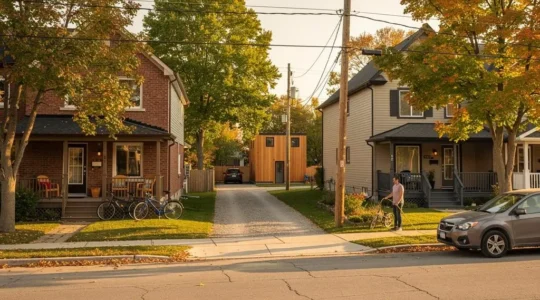
How Can Canadian Cities Add Housing Density Without Sacrificing Liveability?
Canadian cities face a difficult housing challenge: accommodating more households without undermining the neighbourhood qualities that make communities desirable. Residents want attainable homes, reliable services, safe streets, accessible parks and enough space for everyday life. Yet adding housing often raises…
Lire la suite