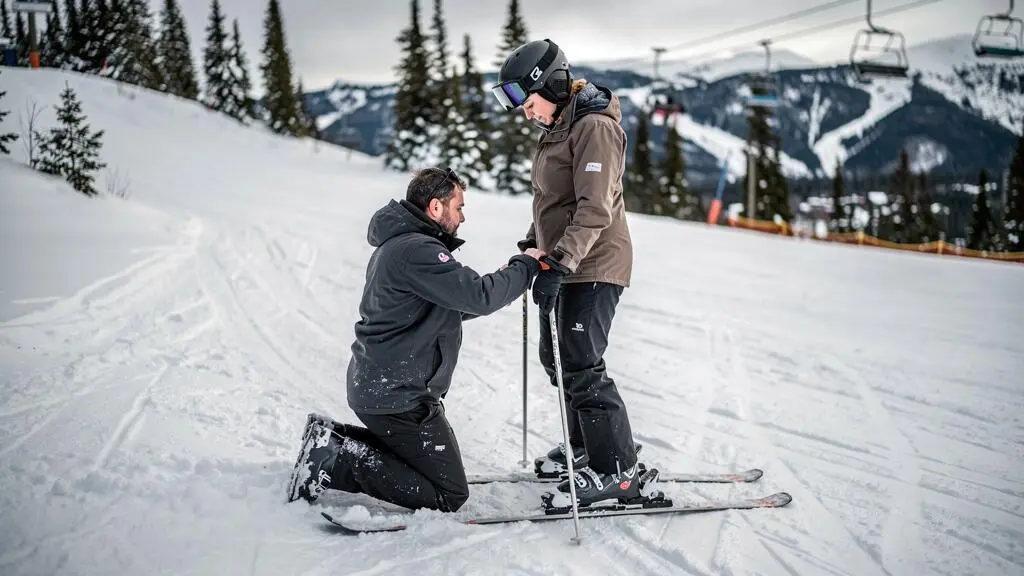
Starting skiing in Canada can be exciting, but the first few outings can also become expensive, uncomfortable or discouraging. Between equipment rentals, lift tickets, lessons and travel, a beginner may spend a considerable amount before discovering whether downhill skiing suits their lifestyle.
The best approach is to start small: choose a beginner-friendly ski area, rent properly fitted equipment, book an introductory lesson and practise on terrain where stopping and turning remain manageable. Spending more on advanced skis or a destination resort will not automatically make learning easier.
Canadian conditions add another consideration. Hard-packed slopes in Quebec, changing mountain weather in Alberta and wet coastal snow in British Columbia can demand different clothing and skiing adjustments. Families must also plan around children’s energy levels, rental appointments and winter driving conditions.
Good preparation is less about buying everything immediately and more about making a few informed decisions. The following guidance explains how to control costs, progress safely and build a skiing habit that fits your experience and budget.
Beginner skiing in Canada: the essentials
- Start with a lesson, properly fitted rental equipment and gentle terrain where you can reliably control your speed.
- Compare the full cost of lift tickets, rentals, transport and accommodation before choosing a resort or purchasing equipment.
- Progress according to demonstrated skills and current snow conditions, not confidence, trail colour or pressure from companions.
- Why Does Skiing Feel So Difficult for Beginners at First?
- How Can You Prepare for Your First Ski Day Without Forgetting the Essentials?
- Rent or Buy Ski Equipment: Which Is Better for Your First Seasons?
- Why Can Choosing a Ski Run Above Your Skill Level Be Dangerous?
- When Are You Ready to Try a Harder Ski Run?
- How Can Beginners Prepare for Their First Day of Winter Sport?
- Day Hike or Overnight Trip: Which Is Better for Your Next Adventure?
- Which Winter Sports Best Fit Different Canadian Lifestyles?
Why Does Skiing Feel So Difficult for Beginners at First?
Skiing feels difficult at first because beginners must learn three unfamiliar skills simultaneously: balancing on moving skis, controlling their edges and adjusting speed to changing terrain. These movements take practice even for physically active people. Snow texture, equipment fit and slope difficulty can make the learning process feel considerably harder or easier.
Unlike walking or running, skiing involves sliding while keeping your weight centred over equipment that moves independently beneath each foot. A small change in posture can affect balance, particularly when the skis accelerate or encounter uneven snow.
At the same time, beginners must discover how their ski edges interact with the snow. Edging helps the skis turn and manage speed, but the necessary movements are not always intuitive. Stiff legs, leaning backwards or trying to force every turn can interfere with control.
Terrain reading adds a third challenge. A gentle-looking slope may become steeper around a bend, while a patch of harder snow can change how readily a ski grips.
These challenges vary across Canada. Eastern resorts may have firm, icy patches, especially after freeze-thaw cycles. Rocky Mountain resorts can offer dry snow that behaves differently from heavily groomed surfaces. Coastal British Columbia may experience dense, wet snow that feels more demanding to turn through.
Beginners should therefore avoid comparing their progress with someone learning in different conditions.
Equipment and instruction also matter. Poorly fitted boots can make movement uncomfortable, while an overly difficult slope leaves little opportunity to practise safely. Skipping lessons may reinforce inefficient habits that become frustrating to correct.
General fitness helps with endurance, but it does not automatically teach ski-specific balance and edge control. Simple mobility exercises and balance practice before the season can help prepare the body, although technique still needs to be learned on snow.
The objective of a first lesson is not to descend impressive slopes. It is to make basic movements repeatable enough that skiing begins to feel predictable rather than overwhelming.
How Can You Prepare for Your First Ski Day Without Forgetting the Essentials?
Prepare for your first ski day by booking suitable beginner terrain, arranging lessons and rentals, checking the forecast and packing clothing that stays warm when damp. Prioritize essential safety equipment before optional comforts. Allow extra time for fitting equipment, and plan to stop skiing while you still have enough energy to maintain control.
Canadian resort weather can change substantially during a single outing. The simplest clothing strategy is to use three adjustable layers:
- Base layer: moisture-wicking synthetic fabric or wool to help keep perspiration away from the skin.
- Insulating layer: fleece or another suitable mid-layer that can be adjusted to the temperature.
- Outer layer: wind-resistant, weather-appropriate ski jacket and pants, with waterproof protection where wet snow or rain is possible.
Cotton is a poor choice next to the skin in cold conditions because it retains moisture and can become uncomfortable after sweating. On a very cold Quebec morning, extra insulation and protection for exposed skin may be needed. In the Rockies, sunshine does not eliminate the need for wind protection. On the British Columbia coast, managing wet snow may be particularly important.
The next priority is deciding what cannot be forgotten. A properly fitted helmet, suitable gloves or mittens, appropriate eye protection and confirmed access to rentals, lessons and lifts are central to the outing. Spare socks, snacks and a comfortable change of clothes can improve the experience but should not displace essentials.
Health Canada‘s winter sports and recreation safety recommendations emphasize suitable protective equipment, correctly fitted skiing gear and professional binding inspections.
Arrive with enough time to collect rental equipment and resolve fitting problems before the lesson begins. A morning lesson can be convenient because beginners have not yet accumulated a full day’s fatigue.
Your five-step first ski day checklist
- Confirm the lesson, rental reservation and lift access; save the confirmations on your phone.
- Review the resort forecast and pack a complete layered outfit; leave a written clothing checklist beside your bag.
- Check that helmet, goggles, gloves and ski socks are available; place them together in one equipment bag.
- Review the route, road conditions and parking or shuttle arrangements; save a travel plan with an alternative if conditions deteriorate.
- Identify the beginner learning area, lunch location and planned finishing time; save a simple day schedule.
Travel deserves particular attention. British Columbia’s official winter-driving information explains that winter tire and chain requirements apply on designated routes during specified periods, generally between October 1 and April 30, with some requirements ending March 31. Always check the rules for the route and province involved.
Consider resort shuttles or public transport where practical. After skiing, fatigue combined with poor visibility or changing road conditions can create additional driving challenges. A conservative departure plan is preferable to pushing through exhaustion.
A successful first outing may be shorter than expected. Finishing after a comfortable learning session is better than adding exhausted runs that leave beginners anxious about returning.
Rent or Buy Ski Equipment: Which Is Better for Your First Seasons?
Renting ski equipment is generally the more flexible choice for beginners who have not yet established how often they will ski. It avoids a large initial purchase and provides access to suitable beginner equipment. Buying becomes more attractive when skiing is regular, preferences are clearer and the cost of repeated rentals starts approaching ownership expenses.
A practical progression is to rent skis, boots and poles initially, then reassess your needs after several outings. If you enjoy the sport but consistently struggle with rental boot comfort, properly fitted personal boots may be the first purchase worth considering. This is a decision framework, not a universal purchasing rule.
Three equipment-access models are common in Canada, and each has different advantages.
| Option | Best suited to | Main consideration |
|---|---|---|
| Daily resort rental | First-time and occasional skiers | Flexible, but repeated rental charges can accumulate. |
| Season-long shop rental | Beginners expecting several outings | May improve convenience; check service, exchange and return terms. |
| End-of-season demo or used equipment | Skiers with established equipment preferences | Condition, compatibility and professional inspection matter. |
Calculate the actual cost per ski day by dividing the total seasonal equipment expense by the number of days you expect to ski. Include applicable fitting, maintenance and transport costs rather than comparing purchase prices with rental fees alone.
The Canadian Ski Council‘s ski equipment rental advice recommends that beginners disclose their true experience level to rental technicians. Factors including age, height, weight and skier classification inform binding release settings.
Boot fit deserves particular care. A boot should hold the foot securely without causing excessive pressure or circulation problems. An experienced boot fitter can assess the shell, liner and overall fit more reliably than a beginner selecting a size from everyday footwear habits.
Used skis also require careful assessment. Bindings must be compatible with the boots and remain serviceable. Release settings should be assessed by a qualified ski technician, not guessed or adjusted casually at home. Older bindings may not be supported for professional servicing.
Advanced skis are another tempting but potentially counterproductive purchase. A stiff or poorly sized ski can be more demanding to control, particularly for someone still learning to turn consistently.
After several ski days, review your actual attendance, comfort and preferred terrain. Let those observations guide purchases rather than committing to a complete equipment setup before your skiing habits are established.
Why Can Choosing a Ski Run Above Your Skill Level Be Dangerous?
A ski run becomes dangerous when its steepness, surface or obstacles exceed a skier’s ability to turn, slow down and stop reliably. The main risk is losing control as speed increases, especially on hard snow or unfamiliar terrain. Beginners should evaluate each descent according to current conditions, not simply its colour-coded difficulty rating.
Canadian resorts commonly use green, blue and black trail classifications, but ratings describe difficulty relative to the terrain and practices of a particular resort. They are not a universal guarantee that runs of the same colour will feel identical across mountains.
A blue run on one hill may present different challenges from a blue run elsewhere because of pitch, width, grooming, obstacles and snow conditions. Rather than assuming an exact equivalence between resorts, consult the local trail map and ask mountain staff about suitable progression routes.
The underlying danger is straightforward: on a steep section, speed can build faster than an inexperienced skier can manage. Hard-packed or icy snow may reduce the effectiveness of tentative braking movements. A fall can become an uncontrolled slide if the skier cannot regain control.
Difficulty also affects people nearby. A skier who suddenly stops in an unsafe location, slides into another trail or cannot negotiate an obstacle may create hazards for other mountain users. Companions attempting an improvised rescue can expose themselves to unnecessary risks.
“Always stay in control. You must be able to stop or avoid people or objects.”
Before starting a run, locate its junctions and exits on the trail map. Check whether the trail offers an easier alternative and whether changing conditions have affected its suitability.
Ask yourself: can you stop confidently and make controlled turns on the steepest section you can see? If the answer is uncertain, select easier terrain or seek advice from resort staff.
If you find yourself on terrain beyond your ability, stop in a safe, visible location if possible. Do not attempt to climb uphill against ski traffic or improvise a hazardous descent. Contact ski patrol or resort staff for guidance when needed.
Choosing an easier route is not a setback. It preserves the opportunity to practise the skills that will eventually make more challenging terrain manageable.
When Are You Ready to Try a Harder Ski Run?
You are ready to consider a harder ski run when you can link turns consistently, control speed without panic and stop on demand across your current terrain. Readiness also depends on snow conditions, visibility and fatigue. A progression that feels comfortable on freshly groomed snow may be inappropriate on ice, moguls or unfamiliar powder.
Confidence matters, but it is not a substitute for demonstrated control. A beginner may feel comfortable travelling straight downhill while still struggling to change direction or stop when another skier enters the path.
Before progressing, assess several practical abilities:
- Can you make linked turns in both directions without relying on an uncontrolled straight-line descent?
- Can you reduce speed or stop promptly when needed?
- Can you maintain enough balance to handle moderate changes in snow texture?
- Can you recognize when the next section looks more demanding than expected?
- Can you complete your current runs without excessive fatigue or repeated loss of control?
The next step should be a small increase in difficulty rather than a dramatic leap. A short, moderately steeper section with an easy exit can provide an opportunity to test new movements under instructor supervision.
Practising at more than one resort can expose beginners to different terrain and snow characteristics. However, there is no universal requirement to master runs at several mountains before progressing. Skill demonstrations and professional instruction remain more useful than a fixed number of destinations.
Conditions can change your effective ability level. A groomed trail that felt straightforward yesterday may become demanding after refreezing, snowfall or reduced visibility. Reassess the mountain every day rather than treating an earlier success as permanent clearance for the same route.
Group skiing can create additional pressure. If friends want to descend a harder run, a beginner can say, “I’m staying on the easier trail until I can stop comfortably on steeper snow.” Agree on a meeting point at the lift base or lodge instead of separating without a plan.
An instructor can help identify the next appropriate challenge and demonstrate techniques for handling steeper terrain without relying solely on braking.
Progress is most sustainable when each new challenge builds on a skill you can already reproduce reliably. The next run should extend your ability, not force you to abandon control.
How Can Beginners Prepare for Their First Day of Winter Sport?
Beginners can prepare physically for skiing with several weeks of leg-strength, balance, mobility and endurance exercises. The goal is not elite fitness but greater comfort during repeated turns, controlled squatting positions and time spent moving on snow. A manageable home routine, combined with suitable rest and hydration, can make early outings less physically demanding.
Downhill skiing places demands on the quadriceps, glutes, core and muscles responsible for stabilizing the hips and ankles. Repeated turns involve lateral control and sustained muscular effort, which may feel unfamiliar even to people who regularly run or lift weights.
A simple four-to-six-week preparation routine might include the following activities two or three times per week, adjusted to current ability:
- Bodyweight squats or supported sit-to-stand movements to develop leg endurance.
- Controlled step-ups and side steps to practise balance and lateral movement.
- Single-leg balance exercises near a stable support.
- Gentle ankle and hip mobility exercises.
- Walking, cycling or another comfortable aerobic activity to improve general endurance.
This is an illustrative conditioning routine, not a proven injury-prevention protocol or a substitute for individualized medical or professional exercise advice. Progress gradually, and adjust exercises if they cause pain.
Unlike skating, hockey or snowboarding, downhill skiing requires its own movement patterns. Existing athletic experience can be helpful, but becoming comfortable on skis still requires instruction and practice.
On the mountain, begin with easy runs rather than immediately attempting the hardest terrain you managed previously. Allow the body to warm up, drink regularly and take breaks before muscular fatigue begins to affect technique.
Warning signs include trembling legs, repeated backward leaning, increasingly rushed turns, difficulty concentrating and frequent mistakes that were absent earlier in the day. Persistent fatigue is a reason to stop, not a challenge to overcome with one more run.
Canadian beginners who are uncertain about committing to downhill skiing can also explore cross-country skiing or snowshoeing. Both provide opportunities to practise winter movement and clothing management, although neither automatically teaches alpine ski technique.
Physical preparation is valuable because it makes learning more comfortable. It should support safe decisions on the mountain rather than encourage beginners to take on harder terrain prematurely.
Day Hike or Overnight Trip: Which Is Better for Your Next Adventure?
For a beginner ski trip, a day outing is usually simpler and less expensive when a suitable resort is nearby. An overnight trip becomes more attractive when travel is long, several ski days are planned or accommodation allows for better rest. Compare the total trip cost and time available for skiing rather than considering lodging prices alone.
Regional ski hills can be useful for first lessons because they may offer approachable learning areas without the travel commitment associated with major mountain destinations. A short drive also makes it easier to return frequently for practice.
However, a long day trip may involve early departure, rental queues, lessons, repeated runs and a tiring drive home. A nearby overnight stay can allow a more relaxed schedule and additional recovery between shorter ski sessions.
The decision depends on the full cost structure:
| Decision factor | Day trip | Overnight trip |
|---|---|---|
| Accommodation | Usually unnecessary | Additional expense |
| Travel | Return journey the same day | Driving can be spread across days |
| Equipment | One-day rental may suffice | Multi-day rental arrangements may help |
| Learning | One concentrated session | Opportunity for shorter sessions over multiple days |
| Flexibility | Convenient for nearby resorts | More planning and reservations |
As a planning heuristic, a round trip of roughly three hours or more is a useful point at which to compare accommodation options. It is not an evidence-based threshold, and staying overnight will not necessarily cost less than driving home.
For a hypothetical family trip, compare two nearby day visits with one overnight trip offering two ski sessions. Add fuel, parking, lift access, rentals, meals, lodging and cancellation conditions. Then consider whether travelling back and forth would leave the family too tired to enjoy the second session.
Possible budget strategies include smaller regional hills, shared accommodation for groups and travel outside the busiest holiday periods. Prices and availability vary by destination, so these should be investigated rather than assumed to provide guaranteed savings.
For beginners, the main advantage of an overnight stay may be better pacing. Two manageable mornings on snow can provide repeated practice without turning either session into an endurance test.
Whether the trip lasts one day or several, plan around the quality of the learning experience. More hours at a resort do not automatically translate into better skiing when fatigue interferes with technique.
Key takeaways before choosing your winter sport
- Choose an activity that can fit into your schedule repeatedly, not just one that looks appealing during a destination holiday.
- Compare recurring costs, including transport and access fees, with the equipment investment required.
- Consider local trails, outdoor rinks and regional ski hills before committing to expensive travel or specialized equipment.
Which Winter Sports Best Fit Different Canadian Lifestyles?
The best winter sport depends on your budget, location, available time and preferred type of activity. Downhill skiing offers lift-served descents and technical progression but usually involves higher access and equipment expenses. Cross-country skiing, snowshoeing and skating can be more convenient for frequent local outings, while snowboarding offers another resort-based option.
Canadians have access to very different winter recreation opportunities depending on where they live. Some communities have ski hills nearby, while others offer maintained Nordic trails, outdoor skating areas or parks suited to winter walking.
A sport that requires hours of driving may be exciting for occasional weekends but difficult to maintain as a weekly routine. Conversely, a nearby trail or rink may offer less dramatic scenery while making regular participation much easier.
Compare activities according to the type of experience they provide.
| Sport | Typical appeal | Budget and access considerations |
|---|---|---|
| Downhill skiing | Mountain descents, technical skills and group resort trips | Lift tickets, rentals or owned equipment, and potentially significant travel |
| Snowboarding | Resort terrain and board-based progression | Similar resort access and travel costs to downhill skiing |
| Cross-country skiing | Endurance, outdoor exploration and repeated trail outings | Equipment and possible trail fees, with free-access options in some areas |
| Snowshoeing | Winter walking and accessible outdoor exploration | Relatively simple equipment, with possible park or trail fees |
| Skating | Social outings, balance and convenient short sessions | Skates and protective equipment, with free or paid rinks depending on location |
Downhill skiing may suit someone who enjoys destination weekends, structured lessons and working toward increasingly demanding terrain. It can also appeal to families who value shared resort experiences, provided the costs and logistics remain manageable.
Cross-country skiing may suit people interested in aerobic exercise and longer trail outings. Snowshoeing can be an option for those who prefer walking-based winter exploration. Skating is particularly convenient where maintained community rinks are available.
None of these activities is automatically free or suitable for every beginner. Trail access restrictions, weather, equipment needs and local facilities still matter. Natural ice, in particular, should never be assumed safe without appropriate local confirmation.
For someone considering downhill skiing, a sensible approach is to try a few properly supervised resort outings before committing to ownership or a season pass. The enjoyment of learning and the realistic frequency of future visits should guide the decision.
Choose one activity you can try safely and conveniently this winter, set a realistic budget and arrange an introductory session or beginner-friendly outing. A sustainable winter sport habit begins with an experience you genuinely want to repeat.
Do you need your own ski equipment before taking a beginner lesson?
No. Many Canadian ski resorts offer rental equipment suitable for introductory lessons. Confirm what the lesson package includes, whether a helmet is provided and when you must arrive for fitting. Tell the rental technician that you are a first-time skier so the equipment can be selected and adjusted appropriately.
Can children and adults learn to ski during the same resort visit?
Yes, provided the resort offers suitable instruction for each participant’s age and ability. Children’s programs may have age restrictions and different supervision arrangements. Families can schedule separate lessons and agree on a meeting point afterward rather than expecting everyone to progress at the same pace.
Should beginners cancel a ski outing when the forecast predicts very cold weather?
Not automatically, but assess the actual forecast, wind chill, resort operations, road conditions and available cold-weather clothing. Extreme cold can make exposed skin vulnerable and reduce comfort, especially for children. If you cannot stay adequately protected or travel safely, postponing the outing is a reasonable decision.
Is a season pass worthwhile for someone who has never skied?
It depends on how frequently you will realistically visit the resort. Before buying, compare the pass price with available beginner packages, individual lift tickets and any restrictions on access dates. Trying a few lessons first can help establish whether the sport and the resort are suitable for a longer commitment.
What should a beginner do if they become separated from their group?
Use the agreed meeting point or contact method rather than attempting unfamiliar terrain to find companions. Stay on open, appropriate trails and follow resort signs. If you are lost, injured or unable to descend safely, contact ski patrol or resort staff and provide your location as accurately as possible.