News and Society
Every morning, millions of Canadians wake up to a stream of headlines: policy debates in Ottawa, weather warnings on the Prairies, hockey results from coast to coast, and stories about communities large and small. News is not just a product we consume; it is a force that shapes how we see one another, how we vote, how we spend, and how we live together. Understanding the relationship between news and society is therefore not an academic exercise reserved for journalists. It is a practical skill that helps every citizen navigate modern life with clarity and confidence.
This page offers a clear, accessible overview of how news and society interact, with a particular focus on the Canadian context. Whether you are a student, a newcomer to Canada, a professional trying to stay current, or simply a curious reader, the sections below explain the key concepts, the challenges of the modern media environment, and the habits that make you a better-informed member of society.
What Does « News and Society » Mean?
At its simplest, the term describes a two-way relationship. On one side, the news reflects society: it reports on elections, court decisions, economic trends, public health matters, cultural moments, and community events. On the other side, news actively shapes society by influencing what people talk about, which issues governments prioritize, and how citizens understand their rights and responsibilities.
Think of it like a mirror combined with a megaphone. The mirror shows us who we are as a country; the megaphone amplifies certain voices, issues, and perspectives, sometimes at the expense of others. Recognizing both functions is the first step toward reading the news critically rather than passively.
The Main Pillars of the Field
The study and practice of news and society generally touches on several connected areas:
- Politics and public affairs: elections, legislation, and the decisions of municipal, provincial, and federal governments.
- Economy and labour: inflation, housing, employment trends, and the financial realities of households and businesses.
- Health and science: public health guidance, medical research, environmental science, and climate coverage.
- Culture and community: arts, sports, religion, immigration stories, and the everyday life of neighbourhoods.
- Justice and human rights: courts, policing, Indigenous rights, and social equity debates.
Each pillar affects the others. A housing story is also an economics story, a policy story, and often a family story. Good news literacy means seeing these connections rather than treating every headline as an isolated event.
Why News Matters for Canadian Society
Canada is a vast, diverse, and decentralized country. With ten provinces, three territories, two official languages, and communities spread across thousands of kilometres, shared information plays an unusual role in holding the country together. National broadcasters, local newspapers, community radio stations, and digital outlets all contribute to a sense of common citizenship, even among people who may never meet.
News also underpins democratic participation. Voters cannot make informed choices without reliable information about candidates, platforms, and the track record of those in office. In Canada, where municipal decisions on transit, zoning, and schools often affect daily life more directly than federal ones, strong local journalism matters as much as national coverage.
The Local Journalism Challenge
Over recent years, many small-town newspapers and local radio newsrooms have closed or reduced their staff, a trend seen across the country from Atlantic Canada to British Columbia. When a community loses its local reporter, several things tend to happen:
- Fewer council meetings, school board sessions, and court proceedings receive public coverage.
- Accountability weakens, because fewer people are watching how local officials spend public money.
- Rumours and social media speculation fill the vacuum, often without verification.
- Residents feel less connected to their community and less engaged in local affairs.
This is why supporting local media, whether through subscriptions, donations to nonprofit newsrooms, or simply reading and sharing verified local stories, has become a topic of public discussion in Canada.
The Modern Media Landscape in Canada
The way Canadians get news has changed dramatically. Print circulation has declined, radio listenership has shifted, and most people now encounter news through phones, search engines, and social platforms. This shift brings real benefits, such as instant access to diverse sources, but also serious challenges.
Key Challenges Every Reader Should Know
- Misinformation and disinformation: false or misleading content spreads quickly, especially during elections and public health crises.
- Algorithmic filtering: platforms tend to show content that triggers strong reactions, which can distort your picture of the world.
- Echo chambers: if you only follow sources that confirm your existing views, your understanding of complex issues narrows.
- News avoidance: feeling overwhelmed, some people tune out entirely, which weakens civic participation.
- Funding pressures: advertising revenue has moved to large tech platforms, straining newsroom budgets across the country.
None of these challenges means the situation is hopeless. It simply means that being a news consumer now requires more active judgment than it did when a small number of broadcasters acted as gatekeepers.
A Practical Checklist for Evaluating a News Story
Before sharing or trusting a story, run through a short mental checklist:
- Check the source: Is it an established outlet with an editorial process, or an anonymous account?
- Look for named sources: Credible stories cite people, documents, or data that can be examined.
- Distinguish news from opinion: Canadian outlets clearly label columns and editorials; learn to tell the difference.
- Cross-check: If a claim is significant, see whether more than one independent outlet reports it.
- Note the date and place: Old stories resurface out of context, and events elsewhere are sometimes misapplied to Canada.
- Watch your emotions: Content designed to make you furious is often designed to make you click, not to inform you.
How News Shapes Public Opinion and Policy
The influence of news on society operates through several well-documented mechanisms. Understanding them helps explain why coverage choices matter.
Agenda-Setting
The media may not tell you exactly what to think, but they strongly influence what you think about. When Canadian outlets devote sustained attention to an issue, such as affordability, climate adaptation, or healthcare wait times, that issue rises on the public and political agenda. Politicians respond to this attention, which means editorial choices can translate into real policy debates.
Framing
How a story is framed shapes how it is understood. A protest can be framed as a disruption or as an exercise of democratic rights. A budget can be framed as an investment or as spending. Neither framing is automatically wrong, but noticing the framing helps you read beyond the surface.
Normalizing and Amplifying
Repeated coverage normalizes certain ideas, behaviours, and fears. Consider a fictional but familiar example: a small town in Ontario sees a spike in break-ins reported on social media. Local coverage verifies which reports are accurate, interviews the police detachment, and finds that incidents actually fell over the season. Careful journalism calms unnecessary panic; unverified sharing would have amplified it. This illustrates the everyday social value of verified information.
Being an Informed Citizen: Practical Habits
You do not need to become a media scholar to engage thoughtfully with news and society. A handful of sustainable habits makes a substantial difference.
- Diversify your sources: Combine a national outlet, a regional one, and a specialty publication relevant to your work or interests.
- Read past the headline: Headlines are written to attract attention; the full article usually contains important nuance.
- Follow primary sources when possible: Government of Canada releases, provincial budgets, court rulings, and Statistics Canada data are increasingly accessible online.
- Set boundaries: Checking the news once or twice a day at set times reduces anxiety without reducing awareness.
- Talk about the news offline: Conversations with people who see things differently sharpen your own reasoning.
For parents and educators, modelling these habits matters. Children and teenagers learn how to relate to information largely by watching the adults around them. Discussing a news story at the dinner table, asking « how do we know this is true? » and acknowledging uncertainty all build lifelong media literacy.
News and Newcomers to Canada
For newcomers, following Canadian news is one of the fastest ways to understand how the country works. Coverage of school boards, tenant rights, healthcare enrollment, and municipal elections reveals the practical mechanics of daily life that are rarely explained in official guides. Community and ethnocultural media, available in many languages across the country, can serve as a welcoming bridge while building familiarity with mainstream sources.
The Future of News and Society
Looking ahead, several developments are reshaping the relationship between information and society. Artificial intelligence is changing how content is produced and summarized, raising new questions about accuracy and attribution. Nonprofit and publicly funded journalism models are expanding as traditional commercial models strain. Meanwhile, efforts to strengthen media literacy in schools, from elementary classrooms to adult education programs, are gaining ground across provinces and territories.
The constant through all this change is the underlying need news fulfills: people in a shared society need reliable, timely, and fair information to make decisions together. The formats will keep evolving, from print to broadcast to feeds and beyond, but the civic function endures.
Conclusion: Informed People, Stronger Communities
News and society are inseparable. The stories we read, hear, and watch help define the boundaries of public conversation, influence the decisions of those in power, and shape how neighbours understand one another. In a country as vast and diverse as Canada, that role carries real weight.
The good news is that being part of a healthy information ecosystem does not require expertise, only intention. Choose your sources deliberately, read critically, support the journalism that serves your community, and engage in conversations with openness. Each of these small acts, multiplied across millions of readers, strengthens the foundation on which Canadian society builds its shared future.
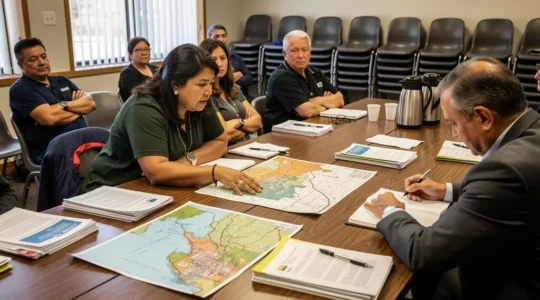
What Does Meaningful Indigenous Reconciliation Require in Canada?
Meaningful Indigenous reconciliation in Canada requires more than acknowledging historical injustice. It involves changing the laws, institutions, relationships and economic arrangements that continue to affect First Nations, Inuit and Métis peoples. Recognition matters, but reconciliation becomes substantive when Indigenous peoples…
Lire la suite
How Are Changing Social Dynamics Reshaping Everyday Life in Canada?
Everyday life in Canada is changing through more than technology or shifting cultural attitudes. Housing pressures influence where families can settle. Population aging changes the demand for care and neighbourhood services. Immigration reshapes communities, while hybrid work alters the places…
Lire la suite
How Can Canada Keep Public Services Accessible as Demand Grows?
Canada can maintain accessible public services as demand grows, but doing so requires more than increasing government spending. Healthcare, education, transportation, administrative services and public infrastructure all depend on the same underlying conditions: sufficient capacity, reliable facilities, effective processes and…
Lire la suite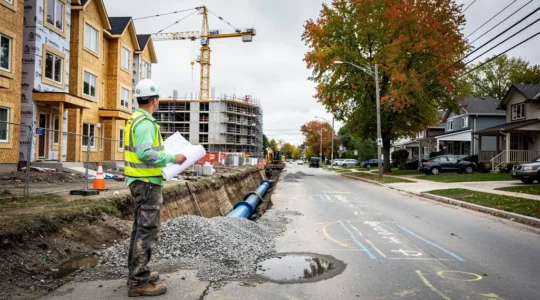
How Is Significant Demographic Change Reshaping Canada’s Communities?
Canada’s demographic transformation is changing how communities accommodate residents, deliver public services and support local economies. Population growth, international migration, shifting settlement patterns and aging are creating different challenges across the country. Some municipalities must prepare for more homes, classrooms…
Lire la suite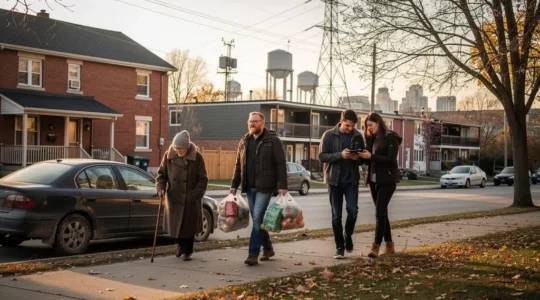
How Is Canadian Society Changing Across Generations and Regions?
Canadian society is changing through several interconnected forces: population aging, immigration, regional migration, shifting economic opportunities, digital communication and growing pressure on public services. Yet these changes do not unfold uniformly. A young adult in Calgary, a family in suburban…
Lire la suite