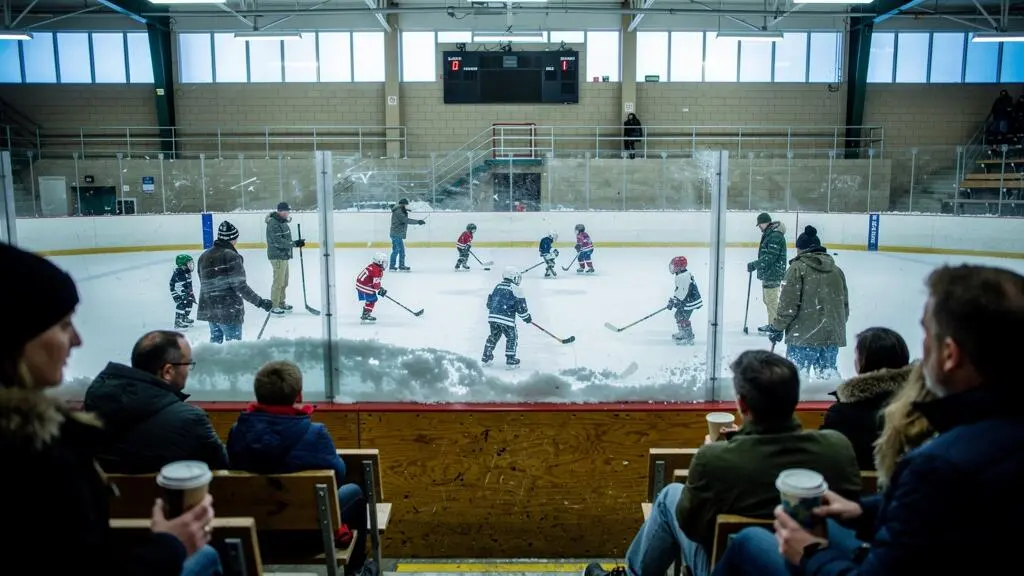
On a winter Saturday in Canada, hockey can bring together people who might otherwise have little reason to meet. At a neighbourhood arena, children learn to skate, parents coordinate rides, volunteers organize practices, and families share the experience of watching young players improve. That recurring community activity helps explain why hockey remains more than a spectator sport.
Hockey also has a formal place in Canada’s national heritage. Parliament designated it the country’s national winter sport in 1994. Yet its cultural influence is sustained not only by professional teams and international competitions, but also by recreational leagues, outdoor rinks, local associations and generations of family participation.
That connection comes with practical challenges. Equipment, registration, travel and increasingly demanding schedules can make organized hockey difficult for some households. Understanding hockey’s place in Canadian life therefore means examining both what makes it meaningful and what families and communities must do to keep participation welcoming, affordable and enjoyable.
Hockey’s place in Canadian life: the essentials
- Hockey connects national sporting identity with regular community participation, supported by local arenas, families and volunteers.
- Families can manage costs by choosing an appropriate level of play, exploring equipment exchanges and checking available financial assistance.
- Healthy development depends on enjoyment, age-appropriate training, recovery and opportunities to participate in other activities.
- Why Does Hockey Build Such Strong Community Connections in Canada?
- How Can Families Prepare for a First Hockey Season Without Overspending?
- Recreational or Competitive Hockey: Which Fits Your Child Better?
- When Can Too Much Hockey Become Counterproductive for Young Players?
- When Is Extra Hockey Training Worth It for a Young Player?
- How Can Community Sports Become More Accessible to More Families?
- Indoor or Outdoor Winter Sports: Which Works Better for Your Family?
- How Do Community Sports Strengthen Canadian Communities?
Why Does Hockey Build Such Strong Community Connections in Canada?
Hockey builds strong community connections in Canada because local participation brings families, volunteers and neighbours together repeatedly throughout the winter. Arenas become familiar meeting places where people share responsibilities, celebrate progress and develop relationships beyond the game. Its cultural importance comes from this combination of everyday social participation and a widely recognized national sporting tradition.
The local rink functions as a community gathering place, particularly where winter limits other recreational opportunities. Parents meet during practices, volunteers prepare equipment and schedules, and weekend tournaments bring together families from different neighbourhoods or municipalities. These interactions are repeated throughout a season rather than confined to a single event.
Organized minor hockey depends on this participation. Coaches, safety personnel, team managers and association volunteers help make programs possible, as explained in Hockey Canada’s Hockey Starts Here resource. Families may participate through practical roles even when they have limited playing experience.
This local experience is different from hockey’s symbolic role. The Government of Canada’s official symbols of Canada explains that the National Sports of Canada Act received royal assent on May 12, 1994, formally recognizing hockey as Canada’s national winter sport and lacrosse as its national summer sport.
That designation acknowledges a sporting tradition, but it does not mean every Canadian plays hockey or identifies with it. Cultural attachment differs across communities, generations and households. For some people, hockey is a family tradition; for others, it is primarily a televised sport or an activity they have never been able to access.
In smaller communities, the municipal arena can have particular social significance. When recreation facilities and winter gathering places are limited, a rink may host youth activities, volunteer events and community encounters that extend beyond scheduled games. Its value is not simply the number of players on the ice but the relationships sustained around them.
Those connections become more meaningful when families can participate without taking on unreasonable financial or scheduling pressures. For newcomers to organized hockey, that begins with a realistic first-season plan.
How Can Families Prepare for a First Hockey Season Without Overspending?
Families can prepare for a first hockey season without overspending by separating essential safety equipment from items that can be purchased second-hand, estimating the full cost of participation and exploring local assistance before registering. Choosing a beginner-friendly program with manageable scheduling commitments can also reduce financial pressure while allowing children to discover whether they enjoy the game.
Safety and proper fit should guide equipment decisions. Young players need correctly fitted hockey skates, a CSA-approved helmet with a face mask and the protective equipment required by their program, including a BNQ-certified neck guard under Hockey Canada’s equipment guidance. A low purchase price is not worthwhile if protective equipment is damaged, unsuitable or incorrectly fitted.
For other items, equipment swaps, lending programs, reputable second-hand purchases and end-of-season sales may help. Families should inspect protective gear carefully, verify applicable certification requirements and confirm that equipment fits the child rather than assuming every used item is suitable.
Age and experience influence the best purchasing strategy. A rapidly growing beginner may benefit from borrowed or adjustable-fit options where appropriate, while a more experienced child may have clearer equipment preferences. In every case, comfort, protection and freedom of movement matter more than appearance or the popularity of a particular product.
The budget also extends beyond equipment. Registration fees help cover ice time, administration, insurance and team operations. Families should ask about additional team charges, tournament participation, travel, skate sharpening and optional training before committing.
Financial assistance may be available. For 2026, Jumpstart’s Individual Child Grants program provides eligible children aged 4 to 18 with support of up to CAD 300 per year for qualifying registration and equipment expenses. Eligibility depends on financial need, local availability and available funding; support is not guaranteed.
Up to CAD 300
Maximum annual support per eligible child through Jumpstart’s 2026 Individual Child Grant program, subject to program requirements and local funding availability.
Canadian Tire Jumpstart Charities, 2026 Individual Child Grants.
Five steps to organize a first hockey season
- Request the association’s registration and mandatory equipment information. Save one complete requirements list.
- Check the child’s existing equipment for fit, condition and certification. Create an inventory showing what can safely be reused.
- Contact local equipment exchanges or lending programs. Record available items, sizes and borrowing conditions.
- List registration, equipment, travel, tournament and maintenance expenses. Produce a season budget with a contingency amount.
- Review the weekly schedule and available assistance programs. Make a final participation plan showing costs, transportation arrangements and application deadlines.
Starting with an affordable, enjoyable experience also leaves room to reassess the child’s interests. As confidence grows, the next decision is whether recreational or more competitive hockey best suits the player and the household.
Recreational or Competitive Hockey: Which Fits Your Child Better?
Recreational hockey is generally a better fit for children who want to play, learn and socialize with manageable time commitments. Competitive hockey may suit players who actively seek more intensive training, structured competition and greater commitments. The right choice depends on the child’s motivation, readiness and enjoyment, alongside the family’s schedule, budget and willingness to travel.
The most useful starting point is the child’s own behaviour. Do they look forward to practices? Are they interested in improving specific skills? Do they enjoy competition, or is playing alongside friends their main motivation? These observations reveal more than an adult’s estimate of talent alone.
The distinction also affects family life. Competitive programs may involve additional ice sessions, evaluations, selection decisions, longer travel and higher expenses. Recreational programs generally prioritize participation and development with fewer commitments, although actual structures vary among Canadian hockey associations.
| Decision factor | Recreational hockey | Competitive hockey |
|---|---|---|
| Primary motivation | Enjoyment, friendships and skill development | Strong interest in structured competition and improvement |
| Typical commitment | Generally more manageable scheduling | Often more frequent training and games |
| Travel | Often more locally focused | May involve longer trips and tournaments |
| Family budget | Usually fewer additional commitments | Potentially greater fees, travel and training expenses |
| Selection pressure | Generally less emphasis on roster selection | May include evaluations and competitive selection |
These differences are tendencies, not national rules. Families should compare the actual schedules, fees and participation expectations offered by their local association. A recreational program with frequent tournaments can still require substantial travel, while some competitive options may remain relatively close to home.
It is also important to separate parental ambition from a child’s preferences. A player can have promising skills without wanting an intensive schedule. Likewise, a motivated child may be ready for a greater challenge even if they have not previously played at a competitive level.
The decision is not permanent. Children develop physically and emotionally at different rates. Moving between recreational and competitive pathways as interests and circumstances change can be a reasonable response to that development, rather than evidence of success or failure.
Whatever pathway a family selects, the workload should support the player’s development rather than overwhelm it. This becomes especially important when hockey begins occupying most of a child’s free time.
When Can Too Much Hockey Become Counterproductive for Young Players?
Too much hockey can become counterproductive when training and competition exceed a young player’s capacity to recover, causing persistent fatigue, declining motivation or recurring physical discomfort. More ice time does not automatically produce better development. Children need appropriate workloads, adequate recovery and opportunities for varied physical activities, with training adjusted to their individual stage of growth.
Some tiredness after a demanding practice is normal. Greater concern arises when fatigue does not resolve with ordinary recovery or begins affecting a child’s mood, sleep, participation or enjoyment. Recurrent pain, unusual irritability, reluctance to attend practices and continuing performance difficulties deserve attention rather than being dismissed as a lack of effort.
These observations are not a diagnosis of overtraining. Sleep difficulties, injury, illness and other circumstances can produce similar signs. Persistent or concerning symptoms warrant an appropriate healthcare assessment, particularly when a child experiences repeated injuries or ongoing pain.
The developmental issue extends beyond immediate fatigue. Sport for Life’s long-term development key factors emphasize physical, mental, cognitive and emotional development, along with progressive training and opportunities to participate in different sports. Its framework warns that excessively accelerated specialization can contribute to burnout and overuse injuries.
A « hot house » approach can produce early winners, but it hinders longterm development and ultimate athletic success, and can lead to burnout and overuse injuries.
Playing other sports can expose children to different movement patterns, social environments and challenges. It can also make returning to hockey feel refreshing rather than obligatory. Multisport participation should not be viewed as wasted training time simply because it does not involve a puck or skates.
Family workload matters as well. Multiple practices, weekend tournaments, transportation and expenses can affect parents and siblings. When the household is consistently exhausted or sacrificing essential routines to maintain a hockey schedule, that pressure is relevant to evaluating whether participation remains sustainable.
The goal is not to eliminate challenging practice. It is to make training purposeful, age-appropriate and compatible with recovery. The same principle should guide decisions about purchasing extra coaching or ice time.
When Is Extra Hockey Training Worth It for a Young Player?
Extra hockey training is worthwhile when a young player wants to improve, has a specific skill to develop and can participate without compromising recovery or family priorities. A focused session addressing skating, puck control or another identified need may offer more value than simply adding ice time. The best option depends on coaching quality, developmental readiness and the player’s existing workload.
Before enrolling in additional training, families should identify the actual objective. A child struggling with stopping or turning may benefit from targeted skating instruction. A player seeking more confidence handling the puck could benefit from a small-group skills session. If no clear goal exists, additional structured practice may provide limited benefit relative to its cost.
Different training formats serve different purposes. Skills clinics provide organized instruction, while small-group coaching can allow more individualized feedback. Public skating offers opportunities to practise familiar movements, and age-appropriate off-ice activities can support general coordination and physical development without requiring another booked ice session.
The relative value of these formats depends on the problem being addressed. Individualized instruction may help when a player needs specific technical feedback, but a clinic with a suitable instructor and a well-matched group can also be effective. For families managing costs, supervised practice opportunities and existing team resources deserve consideration before expensive additions.
Timing is equally important. During a demanding competitive season, another session may create more fatigue than improvement. A less crowded part of the year may offer greater flexibility for focused development, while still preserving time away from organized hockey.
A practical evaluation is to ask whether the player enjoys the session, understands what is being practised and can demonstrate progress over time. Improvement might appear as more confident skating, better control or greater willingness to practise independently. Not every benefit needs to be measured through goals scored or team selection.
Families should also weigh opportunity costs. Extra ice time can replace free play, other sports, social activities or rest. Those alternatives have developmental value of their own and should not automatically be considered less productive.
Making good training choices improves the experience for families already involved in hockey. A broader challenge is ensuring that more children can participate in the first place.
How Can Community Sports Become More Accessible to More Families?
Community sports become more accessible when organizations address financial, transportation, scheduling, cultural and informational barriers together. Lower registration fees help, but families also need clear instructions, suitable equipment, welcoming environments and realistic ways to attend activities. Lasting accessibility means helping children remain involved beyond their first registration, not simply increasing initial enrolment.
Cost remains a significant practical obstacle in equipment-intensive activities such as hockey. Fees, skates, protective gear and travel can accumulate before the season begins. Equipment lending, swaps, local subsidies and introductory programs can reduce these pressures, especially when families learn about them before making a financial commitment.
Transportation and work schedules can be equally limiting. A program may be affordable but inaccessible to a household without reliable access to a car or with caregivers working evenings and weekends. Associations can examine practice schedules, facility locations and opportunities for voluntary ride coordination, while respecting families’ safety and logistical needs.
Information is another barrier. Newcomers to Canada and parents unfamiliar with organized hockey may not know how registration works, which equipment is mandatory or what is expected of volunteers. Plain-language guidance, welcoming introductory sessions and assistance with practical questions can make the first experience less intimidating.
Hockey Canada’s introductory resources describe opportunities such as NHL/NHLPA First Shift, Esso Fun Days, Learn to Skate and Learn to Play Hockey. Their local availability should be confirmed rather than assumed. Such initiatives can offer entry points for children who are not ready to join a traditional organized team immediately.
Retention is as important as registration. An affordable first season may not lead to a second if the child feels excluded, the schedule proves unmanageable or the family cannot sustain the costs. Associations can seek feedback from new participants and examine whether their programs create a consistent sense of belonging.
Accessibility also depends on volunteer culture. Clear expectations, supportive coaching and respectful communication help parents understand how to participate without needing extensive hockey knowledge. An inclusive environment benefits experienced families as well as newcomers.
One practical way to broaden participation is to offer several ways to enjoy winter recreation, including less structured opportunities outside the arena when weather and local facilities allow.
Indoor or Outdoor Winter Sports: Which Works Better for Your Family?
Indoor winter sports generally offer more predictable conditions, structured instruction and reliable scheduling, while outdoor activities can provide flexible, spontaneous recreation with fewer organized commitments. Neither is automatically better for every Canadian family. The most useful choice depends on local facilities, weather, costs, the child’s interests and whether the priority is skill development, regular participation or informal enjoyment.
Indoor ice rinks provide a controlled playing surface and scheduled access. Organized hockey programs can deliver coaching, team experiences and regular opportunities to practise specific skills. The trade-off is that families must accommodate assigned times, fees and transportation, while access to additional ice may be limited.
Outdoor rinks can offer a different experience. Children may skate with friends, experiment with skills and organize informal games without the structure of a league practice. Where municipal or community outdoor facilities are available, this can complement organized participation rather than compete with it.
Conditions are less predictable outdoors. Temperature fluctuations, precipitation, maintenance and ice quality affect whether a rink can be used safely. Families should consult local facility information and follow posted guidance rather than assuming an outdoor surface is ready for skating.
Regional differences matter across Canada. Outdoor skating opportunities are influenced by local winter conditions and facility maintenance, so a routine that works in one community may not be practical elsewhere. Indoor facilities offer greater protection from weather changes, although access and affordability still vary by municipality.
The two environments can support different aspects of development. Formal instruction helps children practise technique and learn team responsibilities, while unstructured play gives them opportunities to make decisions, experiment and enjoy movement without constant evaluation.
Families do not have to choose one format exclusively. A child might participate in a weekly indoor program while enjoying occasional outdoor skating when conditions permit. Other winter activities can provide variety without requiring additional hockey commitments.
That balance also illustrates something larger about Canadian sport: organized facilities and informal shared spaces both contribute to relationships, belonging and community life.
Key takeaways for families and communities
- Choose sustainable participation: a manageable schedule, suitable equipment and an enjoyable experience matter more than maximizing hockey commitments.
- Look beyond the individual player: transportation, welcoming volunteers and accessible facilities influence whether families can stay involved.
- Support the local sport ecosystem: community programs depend on families, municipalities and associations contributing more than registration fees alone.
How Do Community Sports Strengthen Canadian Communities?
Community sports strengthen Canadian communities by creating regular opportunities for shared activity, volunteering, cooperation and belonging. Hockey is one familiar example, but the same mechanisms can operate through soccer, swimming, basketball and other local programs. Their wider value comes from the relationships and practical support networks that develop around participation, provided the activities remain welcoming and sustainable.
Sport creates occasions for people from different households and generations to interact. Coaches teach, parents organize activities, participants build friendships and volunteers maintain programs. Over time, these recurring relationships can create networks through which neighbours exchange information, coordinate transportation and support community events.
The contribution of volunteers is especially important. Parent coaches, team managers, safety personnel, association administrators and tournament organizers perform work that may receive little public attention but is essential to everyday operations. Hockey Canada identifies volunteer participation as a central part of organized minor hockey.
Facilities also matter. Municipal arenas, recreation centres and outdoor spaces offer common places where residents can gather around a shared activity. When facilities are accessible and programs are organized around local needs, they can encourage participation across households that might otherwise rarely meet.
These benefits are not automatic. Expensive programs, demanding volunteer expectations or unwelcoming environments can reinforce barriers rather than reduce them. Strong community sport therefore requires more than enthusiastic participants: it depends on organizations willing to address affordability, accessibility and respectful treatment.
The ability to renew volunteer involvement is another long-term concern. Families may be willing to help, but unclear responsibilities or excessive demands can discourage participation. Associations that distribute tasks fairly, explain expectations and welcome new helpers are better positioned to maintain their programs.
Hockey’s continuing cultural importance reflects this interaction between national symbolism and local experience. Its status as Canada’s national winter sport recognizes an established heritage, while its everyday presence depends on children choosing to play, families supporting participation and communities maintaining places for recreation.
Families interested in taking part can begin with a practical local step: contact a community recreation centre or minor hockey association, ask about introductory opportunities, equipment support and volunteer roles, and choose a level of involvement that fits their circumstances. Preserving hockey’s place in Canadian culture depends on making that first step—and the seasons that follow—worthwhile for the next generation.
Is hockey Canada’s only official national sport?
No. Under the National Sports of Canada Act, which received royal assent on May 12, 1994, hockey is Canada’s national winter sport and lacrosse is its national summer sport. This formal recognition reflects sporting heritage rather than establishing that every Canadian participates in either sport.
Can a child try hockey without joining a competitive team?
Yes. Families can explore Learn to Skate, Learn to Play Hockey and other beginner opportunities identified by Hockey Canada, depending on local availability. Recreational programs can provide a structured introduction without requiring a commitment to competitive selection and travel schedules.
Are hockey registration fees the same across Canada?
No. Fees depend on factors such as the association, program structure, ice-time needs and team activities. Families should request a full cost breakdown, including mandatory equipment, potential tournaments, travel and any additional team expenses.
Do parents need hockey experience to volunteer?
Not for every role. Community hockey associations may need assistance with team management, scheduling, events, administration and other activities. Some positions require specific training, screening or qualifications, so families should ask their local association about requirements and available opportunities.
Can children develop hockey skills without extra paid coaching?
Yes. Regular team instruction, appropriate independent practice, recreational skating and varied physical activities can all contribute to development. Additional paid coaching is an option when it addresses a specific need and suits the child’s interests, workload and family resources, rather than a requirement for every young player.