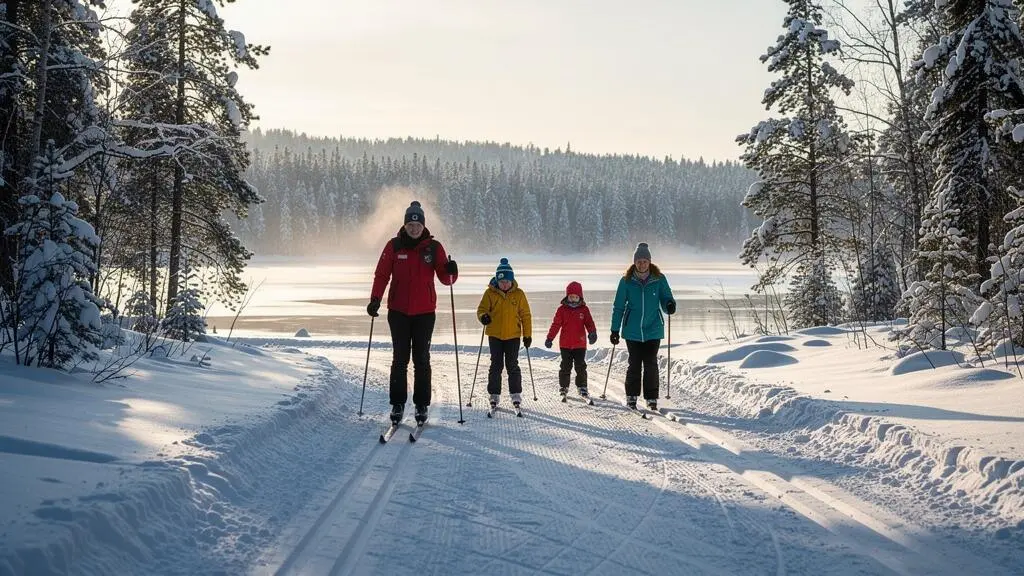
Winter sports in Canada can mean a free afternoon on a neighbourhood skating rink, a family cross-country ski outing or a carefully planned weekend in the mountains. The best choice depends less on how adventurous an activity looks than on whether it fits your climate, budget, experience and available time.
For families seeking affordable recreation, maintained outdoor rinks, groomed Nordic trails and beginner snowshoe routes can offer accessible starting points. Indoor skating and climbing provide more predictable conditions, especially where winter temperatures fluctuate. Downhill skiing can be rewarding for beginners, but lessons, equipment rentals, lift tickets and travel require more planning.
Safety also changes the equation. A sunny morning can turn into icy trails, poor visibility or dangerous wind chill before an outing ends. Parents and recreational participants need to consider not only what they want to do, but also what conditions would make another activity more appropriate.
The most sustainable winter recreation routine combines an enjoyable primary activity with an affordable alternative for days when weather, money or energy make the original plan impractical.
Winter Sports in Canada: The Essentials
- Match the activity to your lifestyle: Local skating, cross-country skiing and snowshoeing can offer lower-cost recreation, while downhill skiing usually requires more equipment and travel planning.
- Make weather part of the decision: Wind chill, visibility, ice stability and avalanche exposure matter differently depending on the activity and location.
- Build skills before investing heavily: Start with lessons when appropriate, rent specialized equipment and progress toward more demanding outings gradually.
- Why Do Winter Sports Become Riskier When Weather Changes Quickly?
- How Can Beginners Prepare for Their First Day of Winter Sport?
- Indoor or Outdoor Winter Sports: Which Works Better for Your Family?
- What Gear Mistakes Can Ruin a Winter Sports Day?
- When Should You Cancel a Winter Sports Outing Because of Conditions?
- How Can You Prepare for Your First Ski Day Without Forgetting the Essentials?
- Day Hike or Overnight Trip: Which Is Better for Your Next Adventure?
- How Can You Start Skiing in Canada Without Making Costly Beginner Mistakes?
Why Do Winter Sports Become Riskier When Weather Changes Quickly?
Rapid weather changes make Canadian winter sports riskier because they can alter snow traction, ice stability, visibility and exposure to cold within hours. Conditions that were manageable at departure may become unsafe during an outing. The consequences depend on the activity, terrain and participants’ experience, making repeated weather checks more useful than relying on a morning forecast alone.
Along the Pacific coast, rain can saturate snow before falling temperatures create a hard, slippery surface. Prairie winds can substantially increase cold exposure even when air temperatures remain relatively stable. In Quebec and Atlantic Canada, freeze-thaw cycles can turn soft snow into hard crust or exposed ice.
These changes affect sports differently. Downhill skiers may find that braking and turning require more control on icy runs. Snowshoers can encounter harder footing and slippery slopes. Families skating on natural lakes face a different hazard: ice conditions can deteriorate despite a surface that still appears frozen.
Health Canada recommends checking natural ice on every visit rather than assuming yesterday’s conditions remain valid. Its guidance identifies minimum ice-thickness recommendations of 15 cm for an individual and 20 cm for groups, but these figures do not guarantee safety. Currents, snow cover and local variations remain important. See Health Canada’s winter sports and recreation safety recommendations.
Before travelling into avalanche terrain, consult Avalanche Canada‘s avalanche safety and forecast guidance. Its five danger ratings—Low, Moderate, Considerable, High and Extreme—must be interpreted by forecast region, elevation band and terrain. Even a Low rating does not guarantee safety.
Weather also affects access to emergency help. Snow-covered roads, poor visibility, remote terrain and unreliable communication can complicate a rescue, so destination choice matters as much as clothing and equipment.
The following decision guide provides practical indicators rather than universal safety thresholds.
| Condition | Potentially manageable response | Reason to change or cancel plans |
|---|---|---|
| Freeze-thaw conditions | Use a maintained, inspected facility with suitable traction | Unverified natural ice or terrain beyond participants’ skills |
| Strong winds | Choose sheltered, short routes when local guidance permits | Dangerous wind chill, unsafe exposure or facility closures |
| Reduced visibility | Stay within a supervised facility with clear boundaries | Navigation or hazard identification becomes unreliable |
| Unstable mountain snow | Remain outside avalanche terrain | Hazardous terrain or conditions exceed training and equipment |
The practical rule is to evaluate the expected conditions at your destination and return time, not just outside your front door. For first-time participants, choosing a maintained facility with readily available assistance provides an additional margin of safety.
How Can Beginners Prepare for Their First Day of Winter Sport?
Beginners should prepare for winter sports in three areas: basic physical readiness, properly fitted equipment and familiarity with the activity site’s safety procedures. A little practice before departure can reduce avoidable discomfort, while professional instruction helps establish safer techniques. The objective is not peak fitness but being comfortable enough to learn without unnecessary fatigue or equipment problems.
Physical preparation should reflect the sport. New skiers can practise controlled squats, supported single-leg balance and gentle leg-strength exercises. Skating beginners benefit from balance work and learning how to rise safely after a fall. Snowshoeing requires walking endurance, particularly when snow is deep or terrain is uneven.
Start with an activity and duration that fit your current ability. Someone accustomed to short walks should not assume that a demanding mountain snowshoe route will feel equally manageable.
Lessons are especially valuable for activities involving unfamiliar movement. Canadian ski schools offer group and private instruction, and some instructors hold Canadian Ski Instructors’ Alliance certification. Ask about instructor qualifications, lesson levels and beginner packages when booking.
Learning basic stopping, turning and controlled movement from an instructor can prevent inefficient habits from becoming established. Group lessons may offer a less expensive entry point than private instruction, although actual value depends on local pricing, group size and lesson duration.
Equipment preparation deserves similar attention. If a rental shop allows advance fitting, try boots with the socks you intend to wear. Check that your heel stays secure without painful pressure and that your toes are not compressed. Ask trained staff to inspect the fit and adjust ski bindings; binding settings should not be guessed or changed without appropriate expertise.
For equipment collected on arrival, reserve enough time for fitting and adjustments before a lesson begins. Avoid assuming every rental operator allows equipment to be taken home in advance.
Finally, identify the site’s emergency contact procedure, patrol location and designated beginner area. Carry water, take breaks and learn to recognize excessive shivering, confusion, numbness or unusually pale skin. Cold exposure can develop even when someone remains physically active.
At higher mountain elevations, start with manageable effort and allow time to adjust. Altitude effects vary, but headaches, dizziness or unusual fatigue should not be ignored.
Begin with a short, achievable session rather than trying to maximize every minute. A comfortable first outing makes it easier to decide whether a sport deserves a place in your family’s winter routine.
Indoor or Outdoor Winter Sports: Which Works Better for Your Family?
Indoor winter sports usually work better for families prioritizing predictable schedules, easy supervision and independence from weather. Outdoor activities can provide more space, natural scenery and inexpensive municipal recreation, but their availability depends on local conditions. The best choice considers children’s ages, annual spending and travel distance rather than assuming one setting is always cheaper or more enjoyable.
For younger children, a nearby indoor arena can make short beginner skating sessions easier to organize. Families with older children who enjoy extended outdoor activity may prefer groomed cross-country ski trails, snowshoe routes or local downhill hills.
Consider the full cost rather than the admission price alone. An indoor climbing gym or skating arena may charge per visit, but equipment rental and reduced travel can make occasional participation practical. Outdoor recreation might have free access while still requiring insulated clothing, boots, skis or transportation.
| Family priority | Indoor activities | Outdoor activities |
|---|---|---|
| Predictable scheduling | Generally stronger, subject to facility hours | More dependent on weather and maintenance |
| Low initial spending | Possible with rental equipment and occasional visits | Possible through free local facilities and borrowed gear |
| Young beginners | Controlled conditions and structured instruction | Suitable when terrain and supervision are appropriate |
| Extended family outings | Usually limited by booked sessions and facility access | Potentially more flexible on suitable trails and maintained sites |
| Regular after-school participation | Less affected by changing weather | Depends on daylight, conditions and local access |
Regional climate changes the balance. Coastal British Columbia’s milder, wetter winters can make indoor facilities more dependable at lower elevations, while nearby mountains may offer substantial snow recreation opportunities. Prairie families may benefit from maintained outdoor rinks and Nordic trails, although severe wind chill can restrict participation.
In Quebec and Atlantic Canada, snowfall can support skiing, skating and snowshoeing, but storms and changing temperatures still affect schedules. Within every region, conditions vary considerably by community, elevation and season.
The social dimension also matters. A recurring indoor skating session creates a reliable meeting point for friends and classmates. Outdoor activities may become memorable family traditions but require more flexibility when weather changes.
A useful approach is to select one predictable activity and one weather-dependent alternative. For example, a family could attend a weekly arena session and visit a municipal cross-country trail when snow conditions permit.
Children are more likely to develop confidence when activities are accessible enough to repeat. A modest local option that fits everyday schedules may offer a better learning environment than occasional expensive outings.
What Gear Mistakes Can Ruin a Winter Sports Day?
Common winter sports equipment mistakes include poorly fitted boots, moisture-retaining clothing, inappropriate protective gear and unreliable second-hand equipment. Comfort problems can end an outing early, while defective safety equipment can have much more serious consequences. Prioritize proper fit and essential protection before spending money on premium features, and check every item against the demands of your chosen activity.
Footwear is often the first problem beginners notice. Cotton socks hold moisture and can contribute to cold, uncomfortable feet. Bulky socks may also make fitted ski or skating boots painfully tight. A properly sized moisture-managing wool or synthetic sock is usually a more practical choice.
More clothing is not necessarily better. Excess layers can trap heat during exertion, increasing perspiration. When activity slows, damp clothing may accelerate cooling.
A three-layer clothing system addresses this problem: a moisture-managing base layer, an insulating middle layer and an outer layer appropriate for wind and precipitation. Adjust insulation and ventilation according to exertion and conditions.
Protective equipment must never become an afterthought. A helmet suitable for the activity, properly fitted and meeting relevant safety requirements, is more important than appearance or premium branding. Do not treat a visibly damaged or impact-compromised helmet as a bargain.
Second-hand marketplaces and community gear swaps can reduce costs, but certain items require professional assessment. Before purchasing used skis or snowboards, inspect visible damage and have bindings and compatibility evaluated by a qualified technician. Check boots for damaged closures, distorted shells and excessive wear. Avoid used helmets with uncertain impact histories.
Small accessories can matter greatly. UV-protective eyewear and sunscreen help address sunlight reflected from snow. On isolated snowshoe routes, an accessible whistle, navigation supplies and emergency essentials provide additional safeguards. Keep a power bank protected from severe cold, but do not assume a functioning phone guarantees coverage.
Environment and Climate Change Canada explains how wind chill and reflected ultraviolet exposure affect winter recreation in its wind chill and UV safety guidance. It notes that frostbite risk increases rapidly when wind chill falls below -27, although individual risk also depends on clothing and exposure duration.
Spend first on reliable protection and appropriate fit. Rent specialized equipment when its suitability remains uncertain, and replace damaged safety-critical items rather than trying to extend their usable life.
When Should You Cancel a Winter Sports Outing Because of Conditions?
Cancel or change a winter sports outing when official warnings, unsafe travel conditions, poor visibility or activity-specific hazards exceed your group’s abilities and safety preparations. The decision should begin the evening before departure and be repeated that morning. A disappointing change of plans is preferable to entering terrain or weather where participants cannot reasonably manage the consequences.
Use a two-stage decision process. The evening before, review the destination forecast, weather warnings, operating notices and road conditions. For backcountry travel in avalanche terrain, check the applicable avalanche forecast and reassess whether the intended route fits your training.
On departure morning, confirm that the forecast still supports the activity. Check whether roads, trails or lifts are open, and whether any warnings have been updated. Forecasted temperatures alone are insufficient: wind chill, precipitation, visibility and expected changes during the return journey can alter the decision.
A dangerous wind chill warning deserves particular caution, especially for children and beginners. Environment and Climate Change Canada’s guidance identifies rapidly increasing frostbite risk below a wind chill of -27. This is a risk indicator, not a universal legal cancellation threshold.
Ski resorts may suspend lift operations because of wind or other conditions, but operating limits vary by equipment and operator. Follow the resort’s current notices rather than applying a single assumed wind-speed threshold.
Cancellation does not always mean losing the entire day. Three responses are possible: postpone until conditions improve, change to a safer location or indoor activity, or cancel entirely when travel or exposure remains hazardous.
Five Checks Before Leaving for Winter Recreation
- Review the destination’s weather forecast and official warnings; save a brief note of the conditions expected during your activity.
- Check the facility’s operating status, applicable terrain information and road conditions; record whether access is confirmed.
- Compare expected conditions with every participant’s abilities and equipment; identify the least-experienced person’s limitations.
- Choose a fallback activity or postponement option; write down where the group will go if the original plan becomes unsuitable.
- Set a departure and return plan, including an emergency contact; share the destination and expected return time with someone staying behind when appropriate.
Financial pressure can make decisions harder. A prepaid lift ticket, accommodation booking or group arrangement may encourage people to continue despite deteriorating conditions. Before purchasing, examine refund terms, rebooking conditions and any optional cancellation coverage rather than assuming protection is included.
Flexible bookings or shorter advance-purchase windows may reduce the financial impact of changing plans, although prices and availability can differ. The goal is to avoid letting money already spent determine whether conditions are safe.
Establish the conditions that would trigger a change before everyone becomes committed to the trip. Once those conditions occur, use the alternative plan instead of negotiating away the safety margin.
How Can You Prepare for Your First Ski Day Without Forgetting the Essentials?
Your first ski day requires four kinds of preparation: clothing and personal comfort, protective equipment, correctly fitted rentals and travel logistics. Booking instruction and rentals in advance, checking the weather and organizing your belongings by where they are needed can make the day much easier. Prioritize a safe learning experience over packing specialized equipment you may not use.
Start with what you will wear: moisture-managing base layers, insulating clothing, a weather-resistant outer layer, suitable ski socks and gloves or mittens. Bring goggles or appropriate eye protection, a properly fitted ski helmet and sun protection.
Pack extra dry clothing and essentials in a separate bag. Water, snacks, identification and reservation confirmations should be easy to find. A change of socks or gloves may be particularly helpful after a wet session.
Keep travel items together: directions, parking details, vehicle winter supplies and the resort’s arrival instructions. Verify current road conditions before leaving and allow additional time when winter driving is difficult.
For rentals, confirm which items are included. Ski packages may contain skis, boots and poles, while helmets, goggles and clothing can be treated separately. Availability and policies vary by operator.
Canadian travellers should also consider identification and health coverage. Bring any identification required by the rental operator and your provincial or territorial health card. If skiing outside your home province, check which services your provincial plan covers and whether supplemental travel medical insurance is appropriate. Coverage should not be assumed to include every transport, rescue or medical expense.
A simple schedule helps avoid the most frustrating beginner mistakes.
| When | What to do |
|---|---|
| Several days before | Choose a beginner-friendly hill and reserve instruction and rental equipment |
| Evening before | Check forecasts, travel access, clothing, booking details and resort policies |
| Before the lesson | Arrive with time for parking, rental fitting, washrooms and finding the meeting area |
| During the day | Follow instructor guidance, drink water and take breaks when needed |
| Before departure | Return rental items, check belongings and reassess road conditions |
Buying everything immediately is rarely necessary. Renting skis, boots and poles allows beginners to try the sport before committing to a particular equipment setup. Purchasing well-fitting clothing or goggles may be reasonable if those items will also serve other activities, while helmet rental or purchase should depend on trustworthy fit, condition and availability.
Confirm your lesson meeting time, check the resort map and plan to finish before exhaustion affects technique. A manageable first experience provides a much better foundation for deciding whether skiing belongs in your regular winter plans.
Day Hike or Overnight Trip: Which Is Better for Your Next Adventure?
A winter day hike is generally the better choice for beginners because it offers a shorter commitment, simpler equipment requirements and more opportunities to turn back. An overnight winter trip demands additional competence in shelter, insulation, navigation and emergency management. Experience and conditions should determine the choice, not simply a desire to spend more time outdoors.
Day hikes still require serious preparation. Short daylight hours, changing snow conditions and freezing temperatures can make an otherwise familiar summer route considerably more demanding. Set a realistic turnaround time and carry suitable navigation, food, water, extra clothing and emergency supplies.
Overnight travel increases the consequences of mistakes. A sleeping system that works in mild weather may be inadequate for freezing temperatures, and moisture management becomes critical when clothing must remain usable the following morning.
Winter camping also introduces practical tasks that cannot be learned safely through improvisation alone: selecting an appropriate campsite, maintaining insulation from the ground, managing water supplies and responding to equipment problems in darkness.
In Canadian national parks, applicable overnight permits, campsite reservations and seasonal access restrictions depend on the park and specific area. Some places require advance arrangements, while others have different backcountry rules. Verify the requirements directly with the park before organizing an overnight trip.
For mountain travel, Parks Canada advises researching routes, matching them to personal skills, carrying emergency essentials and informing someone of the intended destination and return time. Its winter mountain safety recommendations also caution against relying completely on cellular, GPS or satellite communications.
An overnight trip should not depend on presumed phone coverage. Communication devices can be useful, but signal availability, battery limitations and terrain must all be considered.
A sensible progression begins with several manageable winter day hikes on maintained or well-used routes. Next, practise longer outings under changing conditions while remaining within your competence. For a first overnight experience, select an accessible location with suitable facilities or experienced supervision rather than an isolated route. Even a location with apparent cellular coverage should have a separate emergency plan.
Longer is not automatically better. A well-planned day outdoors can deliver scenery, exercise and adventure without introducing the additional risks and costs of winter camping.
Key Takeaways Before Investing in Skiing
- Start at a local beginner-friendly ski area where lessons, rental equipment and manageable terrain are available.
- Evaluate the cost of several visits rather than comparing only the price of one lift ticket or equipment purchase.
- Let demonstrated skills and actual participation frequency guide future equipment purchases and destination choices.
How Can You Start Skiing in Canada Without Making Costly Beginner Mistakes?
The most economical way to start downhill skiing in Canada is often to learn at a nearby beginner-friendly hill, rent equipment and book appropriate instruction before purchasing specialized gear. Small local resorts can reduce travel and lift-ticket commitments, while beginner packages may simplify planning. Compare the total cost of learning and progressing, not the reputation or size of the ski destination.
For the first several visits, gentle beginner terrain matters more than the number of runs available. A major destination resort may offer extensive terrain and facilities, but a beginner who spends most of the day on introductory slopes may receive little additional value from that scale.
Local options vary by region. Western Canadians can investigate community hills and smaller ski areas before booking mountain resort trips. In Ontario and Quebec, regional slopes may provide accessible beginner instruction without long-distance travel. Atlantic Canadian participants can similarly compare nearby operating ski areas with more distant destinations.
Cross-country skiing is another option for people whose main goal is winter exercise and outdoor enjoyment rather than downhill progression. However, Nordic skiing uses different techniques and equipment and should not be treated as direct technical preparation for downhill turns.
Ask each ski school whether it offers an introductory package combining a lesson, beginner-area access and rental equipment. Compare its included services with separate bookings rather than assuming a package is always cheaper.
Financial decisions become clearer when spread across several seasons. Consider two hypothetical approaches for someone learning gradually.
Hypothetical Three-Season Skiing Budget Comparison
Scenario A: Buying immediately. A beginner purchases skis, boots, poles and other necessary equipment before the first season. Total spending over three seasons includes initial purchases, lift access, lessons, travel, maintenance and any required replacements. The equipment cost remains even if participation stops after a few outings.
Scenario B: Renting progressively. The beginner rents equipment during the first season, continues renting or uses multi-visit packages during the second, and considers buying suitable equipment in the third only after establishing regular participation.
To compare the scenarios, record actual local prices and calculate the three-year totals using this framework: purchase scenario = initial equipment + maintenance and replacements + lessons + lift access + travel; rental scenario = rental fees + lessons + lift access + travel + any later purchases.
This is an illustrative budgeting method, not a real Canadian household case study. Neither approach is guaranteed to cost less: frequent skiing may eventually favour ownership, while occasional skiing may favour continued rental.
Buying a season pass too early can create a similar problem. Estimate how many times you are realistically able to visit, then compare the pass price against the total cost of suitable day tickets or multi-visit products. Include travel costs and any dates or terrain restrictions.
Technical instruction is another investment with long-term implications. Learning balanced stance, speed control and turning from a qualified instructor can help prevent inefficient habits. Beginners should avoid selecting specialized all-mountain or off-piste skis before understanding the terrain and skiing style they actually enjoy.
For a family, a practical first-season strategy is to choose an accessible local hill, schedule beginner instruction and evaluate the experience after several outings. Equipment purchases can follow once the sport becomes an established interest rather than an uncertain experiment.
Choose one suitable nearby ski area, confirm its beginner lesson and rental options, and calculate the full cost of your first few visits. Starting with a realistic budget and manageable terrain gives you the freedom to develop skills before making larger commitments.
What winter sport is easiest for a Canadian family to try on a small budget?
Public skating at a maintained municipal rink, beginner snowshoeing and cross-country skiing on accessible local trails can be relatively affordable. The best option depends on free or low-cost facilities, equipment availability and travel distance. Check local admission, rental and maintenance conditions before choosing.
Can children participate in winter sports when temperatures are below freezing?
Yes, suitable winter activities can take place below freezing when clothing, supervision, wind exposure and activity duration are appropriate. There is no single temperature that guarantees safety for every child. Follow local cold-weather warnings, monitor for signs of cold injury and provide accessible opportunities to warm up.
Is a frozen Canadian lake safe for skating if other people are already using it?
No. Other people’s presence does not establish ice safety. Thickness and strength can vary across the same body of water because of currents, snow cover and changing temperatures. Follow current local assessments and restrictions, and use maintained, officially approved skating areas whenever possible.
Is renting winter sports equipment better than buying it?
Renting is often practical when trying an unfamiliar sport or participating only occasionally. Buying may become more economical with frequent use, particularly when equipment fits properly and remains suitable over time. Compare rental costs, maintenance, replacement needs, storage and participation frequency before deciding.
Do beginners need avalanche training for every winter activity in Canada?
No. Avalanche training is particularly relevant to activities involving avalanche terrain, including certain backcountry ski, snowshoe and mountain travel routes. Ordinary municipal skating and maintained facilities do not involve the same terrain hazards. Before entering avalanche terrain, obtain appropriate education, assess the route and consult current regional forecasts.