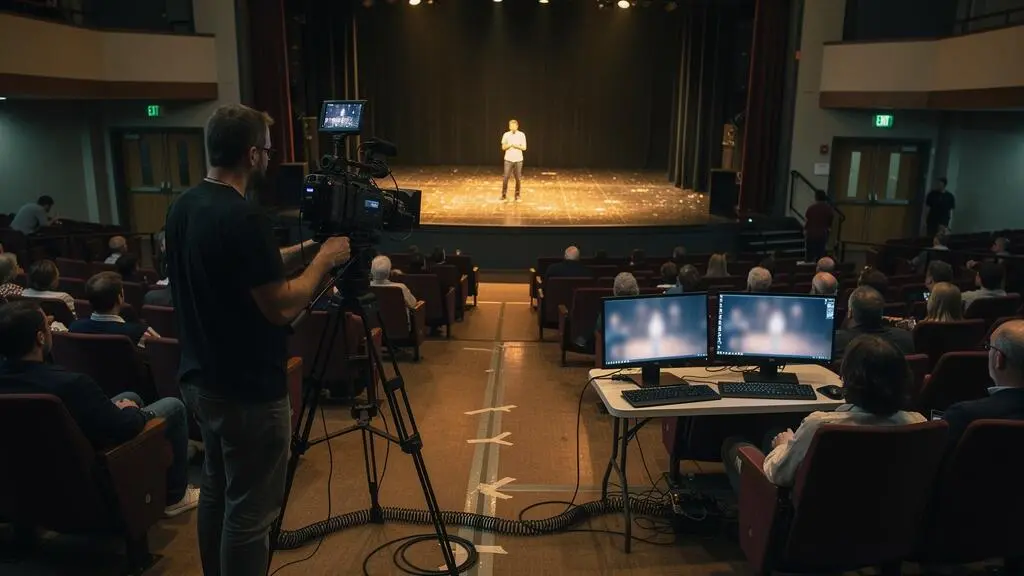
Canada’s cultural sector is adapting to digital audiences by changing how creative work is produced, discovered, financed and experienced. Streaming services, online performances, interactive installations and digital festivals can connect Canadian artists with audiences far beyond their immediate communities. Yet wider distribution does not automatically produce greater visibility, sustainable revenue or meaningful engagement.
For cultural organizations, the challenge is particularly complex. A regional theatre may need to maintain loyal subscribers while reaching younger viewers online. An independent musician can distribute work internationally but struggle to earn enough to support the next recording. A digital artist may find funding for an innovative project while facing uncertainty about its long-term preservation.
Canadian public institutions are also responding through funding programs, research and broadcasting policy. Their approaches reveal a broader shift: digital adaptation is less about replacing traditional cultural experiences than about deciding which technologies strengthen artistic work, audience relationships and financial resilience.
Canada’s cultural transition: What matters most
- Distribution is not discovery: Online platforms expand potential reach, but creators still need effective promotion, metadata and direct audience relationships.
- Digital growth requires financial choices: Public support, earned revenue and hybrid models address different risks, and none guarantees sustainability.
- Audience experience comes first: Hybrid events and interactive formats are most useful when they address a real audience need rather than follow a technological trend.
- Why Has Digital Distribution Made Cultural Success Both Easier and Harder?
- How Can Cultural Organizations Reach New Audiences Without Losing Existing Ones?
- Public Funding or Commercial Revenue: Which Better Supports Cultural Organizations?
- How Can Platform Algorithms Limit Cultural Discoverability?
- When Should Cultural Organizations Shift Toward New Digital Formats?
- How Can Creators Add Interactivity Without Making Content More Complicated?
- Big-City or Regional Festival: Which Experience Fits You Better?
- How Is Interactive Media Changing Canada’s Creative Landscape?
Why Has Digital Distribution Made Cultural Success Both Easier and Harder?
Digital distribution makes cultural success easier by removing many geographical and technical barriers between Canadian creators and potential audiences. It makes success harder because accessible publishing channels attract enormous volumes of competing work. The central obstacle has shifted from getting content distributed to getting it discovered, valued and financially supported.
Previously, distribution could depend heavily on physical venues, broadcast schedules, retail networks or established intermediaries. Today, an independent musician can release recordings internationally, while a theatre company can make a filmed performance available beyond its local audience.
However, availability is only the beginning. The CRTC-commissioned Nordicity report on Canadian content discoverability, published in 2026, distinguishes the technical availability of cultural work from its ability to reach audiences. Based in part on 48 stakeholder interviews and three roundtables conducted in 2025, the research examines how recommendation systems, promotion and platform interfaces influence discovery.
This distinction matters for Canada’s geographically dispersed cultural communities. Digital channels can connect audiences interested in Indigenous music, experimental cinema or francophone theatre outside Quebec. Such communities may be too geographically scattered to support frequent in-person events but sufficiently connected to sustain ongoing cultural exchange.
This is the promise of the digital long tail: specialized creative work can find audiences without requiring mass-market appeal. Its financial limitation is equally important. A geographically dispersed audience does not necessarily generate enough subscription, streaming or ticket revenue to cover production costs.
Platforms also hold considerable influence over how work is presented. They may control recommendation interfaces, access to detailed audience data and the commercial conditions under which content circulates. Independent creators can therefore gain distribution while losing some control over their relationship with audiences.
Producing for digital audiences introduces further expenses, including filming equipment, editing, accessibility services, technical support and digital rights clearances. An organization accustomed to live programming may find that successful online demand creates additional obligations rather than eliminating existing costs.
The practical challenge is to convert access into meaningful audience relationships. That requires considering not only who can find cultural work, but also how people can continue engaging with it.
How Can Cultural Organizations Reach New Audiences Without Losing Existing Ones?
Cultural organizations can reach new audiences without alienating established supporters by adding accessible digital experiences while protecting the qualities that make their existing programming valuable. Rather than treating younger online audiences and traditional attendees as competing groups, organizations can design complementary formats, assess engagement separately and build opportunities for both groups to participate.
A long-standing theatre subscriber may value the atmosphere of a live performance, familiar programming and relationships with performers. A potential new audience member in a rural community may prefer an online presentation because travelling to the venue is expensive or impractical.
These preferences do not necessarily conflict. A hybrid performance can preserve the in-person event while offering remote access. Bilingual online programming, post-performance discussions and recorded artist conversations can also create new entry points without changing the central artistic experience.
The important distinction is between audience acquisition and audience retention. Organizations need to understand both before allocating scarce marketing resources.
| Decision factor | Existing audiences | New digital audiences |
|---|---|---|
| Primary objective | Maintain participation and loyalty | Encourage first-time discovery and engagement |
| Useful indicator | Subscriber renewal or repeat attendance | First-time participation and subsequent return |
| Cost measure | Cost of retaining an existing attendee | Cost of acquiring an additional participant |
| Programming approach | Protect valued traditions and live experiences | Offer accessible introductions and flexible formats |
Canadian organizations can learn from community-centred audience development. Nordicity’s research documents Indigenous film circulation through screenings in rural communities and on reserves. It also describes discoverability initiatives involving independent francophone production companies in official-language minority communities.
These examples suggest that reaching underserved audiences requires attention to local contexts and distribution relationships. Simply uploading an existing performance may not address language preferences, cultural expectations or practical barriers to participation.
Digital audience information can also support physical attendance. With appropriate consent and privacy safeguards, organizations can invite viewers of online performances to related local events, workshops or future live productions. Measuring whether those invitations lead to attendance is more useful than assuming every online view represents a potential ticket sale.
Audience development works best when communities influence programming decisions rather than merely receiving finished content. Consultation, accessible participation and sustained relationships can make digital outreach more culturally relevant.
Once organizations identify those needs, the next challenge is finding a funding structure that can support them without making experimentation financially unsustainable.
Public Funding or Commercial Revenue: Which Better Supports Cultural Organizations?
Neither public funding nor commercial revenue universally offers better support for Canadian cultural organizations. Public funding can make culturally valuable but commercially uncertain work possible, while earned revenue can provide flexibility and reduce dependence on grant decisions. A carefully designed hybrid model often offers a practical balance, provided the organization understands the risks and costs of each income source.
Public arts funding supports activities whose cultural or social importance may exceed their immediate commercial potential. In Canada, organizations may encounter funding opportunities through the Canada Council for the Arts, Canadian Heritage or provincial arts councils, depending on the project and applicable eligibility requirements.
However, grants are not automatically stable or unrestricted. Funding decisions depend on program criteria, competitive assessment, available budgets and sometimes changing policy priorities.
Commercial revenue introduces a different set of pressures. Ticket sales, memberships, licensing and digital subscriptions can generate income directly from audiences or buyers, but demand may fluctuate. Revenue generated through third-party platforms can also depend on changing distribution terms and audience access.
| Consideration | Public funding | Commercial revenue |
|---|---|---|
| Main advantage | Can support work without immediate market returns | Can provide flexible income linked to demand |
| Principal uncertainty | Eligibility, competitive decisions and budgets | Audience demand, pricing and market conditions |
| Typical accountability | Program objectives, reporting and eligible spending | Customer expectations and financial performance |
| Digital opportunity | Build capacity or support eligible experimentation | Test paid access, licensing or memberships |
| Potential drawback | Restrictions on use and uncertain renewal | Revenue volatility and possible access barriers |
Canada has historical examples of using public support to build digital capabilities before pursuing new business models. The Canada Council for the Arts Digital Strategy Fund special initiative helped eligible core-funded organizations assess their digital readiness and develop strategies.
That initiative included assessment tools and permitted eligible expenditures for specialist advice. Its application deadline was February 4, 2019, and the initiative is closed. It remains informative as an example of funding digital planning rather than assuming every organization is immediately ready to launch a commercial platform.
A public-first, commercial-later sequence can be useful when a grant helps develop necessary capacity and a later revenue model is realistically viable. It is not inherently superior in every case. Some organizations may already have the skills and demand required to finance a modest initiative independently.
Paid digital access deserves particular scrutiny. A subscription service needs sufficient recurring revenue to cover administration, technical maintenance, rights and audience support. Charging for previously accessible material may also create barriers for lower-income audiences or communities the organization is trying to reach.
Five steps to assess your digital funding mix
- Calculate the proportion of current income from grants, donations and earned revenue; produce a one-page funding breakdown.
- List recurring digital costs, including software, labour, accessibility and rights; produce a cost worksheet.
- Identify one digital offering with demonstrated audience interest; prepare a short demand-evidence summary.
- Compare a grant-supported pilot with a self-financed alternative; produce a two-scenario budget.
- Set a review date and define financial and accessibility measures; produce a written continuation decision checklist.
Even a well-financed digital program can struggle if potential audiences never encounter it. That brings the question of platform discoverability into focus.
How Can Platform Algorithms Limit Cultural Discoverability?
Platform algorithms can limit cultural discoverability by prioritizing content according to signals that do not necessarily reflect artistic significance, linguistic diversity or community value. Recommendation systems influence what appears in feeds, playlists and search interfaces. Canadian creators whose work serves smaller or specialized audiences may therefore struggle to secure attention, even when their content is widely available.
Digital discovery operates through several mechanisms. Some audiences actively search for particular artists or subjects, while others encounter work passively through recommendations, featured collections and automatically generated suggestions.
Many recommendation systems use behavioural information, such as viewing patterns and engagement, to determine what to display. These signals may favour content with existing popularity or strong immediate engagement, depending on the platform’s design.
For an experimental filmmaker, Indigenous-language broadcaster or classical music ensemble, the challenge is not necessarily deliberate suppression. Rather, commercial engagement objectives may differ from cultural objectives. A work can have substantial community significance without generating signals that a particular recommendation system rewards.
There are practical ways to reduce this dependency. Accurate titles, creator information, language labels, descriptions and rights metadata can help audiences and distribution systems identify cultural content. Search engine optimization can improve the clarity of an organization’s public-facing information.
Direct channels such as newsletters, owned websites and podcasts can also support recurring audience relationships. They do not eliminate the need for promotion, and they demand staff time and technical expertise, but they provide alternatives to relying entirely on third-party recommendations.
Discoverability is also a regulatory issue in Canada. On May 21, 2026, the CRTC published CRTC Broadcasting Regulatory Policy 2026-95, establishing a framework addressing the availability and visibility of Canadian and Indigenous broadcasting content and services.
The framework provides a basis for future measurable commitments through tailored conditions of service. It also recognizes metadata inconsistencies and the lack of a standardized measurement approach across platforms.
This development belongs to the broader evolution of Canadian broadcasting regulation following changes to the Broadcasting Act, including the Online Streaming Act. Its scope should not be confused with a universal requirement governing every theatre, artist or cultural festival. Nor does the framework mean that Canadian authorities directly control the internal recommendation algorithms of foreign platforms.
Regulation and organizational strategy therefore address different parts of the problem. Public policy can establish expectations for relevant broadcasting services, while creators still need practical ways to explain their work and connect with audiences.
Organizations should also avoid algorithmic fatalism: the assumption that every creative decision must follow the latest platform convention. Shorter videos or trend-based promotional content may be useful for some audiences, but should not automatically replace culturally distinctive formats.
These pressures help explain why decisions about adopting new digital formats should begin with organizational readiness, not merely with changing online trends.
When Should Cultural Organizations Shift Toward New Digital Formats?
Cultural organizations should adopt new digital formats when they can identify a meaningful audience need, demonstrate sufficient operational readiness and finance the transition without undermining their existing work. A shift may be justified by geographical barriers, changing participation habits or an opportunity to improve accessibility. Competitors adopting a technology is not sufficient justification on its own.
The first question is whether digital programming will complement or replace an existing activity. These are fundamentally different strategic decisions.
An additional digital format expands what an organization offers. A live performance might remain the central experience while selected recordings, artist discussions or remote workshops serve audiences who cannot attend.
A substitutive transition replaces part of an activity that is declining or no longer viable. This requires stronger evidence because the organization may sacrifice existing revenue, audience habits or artistic qualities that cannot easily be reproduced online.
For example, consider a hypothetical regional theatre experiencing declining season subscriptions. Filming performances and selling digital tickets might appear to offer a straightforward replacement. Yet the theatre would need to test whether remote demand is sufficient, whether performance rights permit distribution and whether filming costs can be recovered.
Without this analysis, digital expansion could add expenses while leaving the original attendance problem unresolved.
Before committing, organizations can assess three areas:
- Technical readiness: Are staff, equipment, accessibility arrangements, rights permissions and support processes adequate for the proposed format?
- Audience evidence: Do existing participation patterns, consultations or small-scale tests indicate that people want the experience?
- Financial tolerance: Can the organization absorb development, experimentation and possible underperformance without damaging core programming?
These criteria are consistent with the organizational-readiness approach illustrated by the Canada Council’s historical digital strategy initiative. They are a practical decision framework, not a set of officially validated eligibility thresholds.
Timing also matters. An organization may benefit from a limited pilot before a full transition, particularly when audience behaviour remains uncertain. Small tests allow teams to examine accessibility, costs, operational burden and participant feedback before expanding.
Some cultural forms resist substitution by design. The collective atmosphere of a live concert, the spatial relationships of an installation or the social ritual of attending a community performance may be central to their value.
Digital tools can provide related experiences, but they need not reproduce everything that makes the original meaningful.
Once a format has a clear purpose, organizations can consider whether audience participation would enrich the experience—and how much interactivity is appropriate.
How Can Creators Add Interactivity Without Making Content More Complicated?
Creators can add interactivity without overwhelming audiences by introducing a small number of purposeful choices that contribute directly to the artistic experience. Effective interaction should make the audience’s participation meaningful, not simply increase the number of controls or features. Starting with one well-designed interaction and testing it with users is often more useful than building a technically elaborate system immediately.
Not every interactive feature has the same artistic function. Reactions, polls and chat windows may encourage participation, but they can remain largely decorative if they do not affect the experience itself.
Structural interactivity goes further. An audience decision might influence a story’s progression, change an installation’s visual response or determine which perspective is explored next. Such decisions can become part of the creative work rather than an additional interface layered on top.
However, interaction introduces cognitive demands. Every choice asks participants to interpret information and decide what to do. Too many simultaneous options can interrupt concentration or make an experience difficult to navigate.
A useful design principle is to treat interaction as a form of artistic direction. Choices should arrive when they are understandable, emotionally relevant and consistent with the experience’s rhythm.
For example, a hypothetical interactive documentary could allow viewers to select between two perspectives at one clearly defined moment. This creates meaningful participation without requiring viewers to navigate a complicated branching interface throughout the entire film.
Canadian creators working in interactive digital media can explore forms of experimentation through specialized support structures. The Canada Media Fund’s Innovation & Experimentation Program, discussed in the following section, provides an institutional example of support for innovative interactive content and technology.
Whether a project involves a documentary, digital performance or gallery installation, a simple development sequence is useful: define the audience’s role, choose one interaction, observe how participants respond and improve the experience before adding further features.
Testing should examine more than whether the technology functions. Creators can ask whether people understood what was expected, whether the interaction enriched the work and whether anyone encountered accessibility barriers.
Retention or completion data may help, but participants’ interpretations and experiences remain important, particularly for experimental work where commercial engagement metrics do not capture every artistic objective.
The same emphasis on experience applies to festivals, where digital access is changing how audiences choose between large metropolitan events and smaller regional gatherings.
Big-City or Regional Festival: Which Experience Fits You Better?
A big-city festival may suit audiences seeking a broad selection of events, industry connections and concentrated cultural activity. A regional festival may appeal more to visitors seeking local character, closer contact with artists and a less crowded experience. The better choice depends on programming interests, total travel costs, accessibility and the kind of social experience a visitor values.
Large urban festivals can bring together international artists, major cultural institutions, industry professionals and extensive programming. Their scale can be attractive to audiences who want to sample several artistic forms or attend multiple events during one visit.
That density also creates trade-offs. Popular performances may compete for attention, schedules can overlap and accommodation or transportation expenses can become important considerations for visitors travelling from outside the city.
Regional festivals may provide different advantages. An event rooted in a particular community can offer opportunities for informal encounters, focused programming and stronger connections between cultural activity and its local setting.
However, smaller festivals are not necessarily inexpensive, intimate or easier to attend. Rural transportation limitations, accommodation availability and local infrastructure can shape the visitor experience. The actual programme matters more than the festival’s size alone.
| Factor | Big-city festival | Regional festival |
|---|---|---|
| Programming | Often offers numerous events and disciplines | May offer more focused or locally distinctive programming |
| Total cost | Compare tickets, transport, accommodation and meals | Compare the same costs, including potentially limited transport options |
| Artist access | Potential for extensive professional networking | Potential for smaller discussions and personal encounters |
| Social experience | Energetic and diverse, sometimes crowded | Potentially community-oriented and less anonymous |
| Digital access | May offer selected streams or recordings | May use online programming to reach distant audiences |
Digital distribution makes the choice more flexible. A visitor interested in only one performance at a metropolitan festival may be able to watch an authorized online presentation, if that option is offered. Similarly, a regional event may share selected programming with national audiences without changing its in-person identity.
Digital access does not necessarily reproduce the atmosphere of being present, and online availability depends on programming decisions and distribution rights.
For artists, the distinction is equally nuanced. A major festival can offer professional exposure but may place emerging creators among numerous competing performances. A regional festival can offer focused attention, although its immediate audience may be smaller.
Specialization can be more important than geography. A regional festival dedicated to emerging music, Indigenous cinema or experimental digital art may offer greater depth in its chosen field than a larger general-interest programme. Conversely, a major urban festival may provide specialized experiences unavailable elsewhere.
Both festival models illustrate a wider transformation: audiences increasingly move between physical and digital encounters, while creators experiment with works that challenge the boundaries of traditional cultural categories.
Key takeaways for Canada’s evolving creative sector
- Choose technologies according to the cultural experience they enable, not their novelty.
- Evaluate interactive projects across artistic, technical and financial requirements because traditional organizational categories may not fully accommodate them.
- Plan for long-term access and preservation from the beginning, especially when artworks depend on specialized hardware or software.
How Is Interactive Media Changing Canada’s Creative Landscape?
Interactive media is changing Canada’s creative landscape by blending storytelling, audiovisual production, software development and audience participation. These hybrid works create opportunities for new cultural experiences while challenging established approaches to funding, professional training and preservation. Their long-term significance depends not only on technical innovation, but also on whether institutions can support their production, accessibility and continued existence.
Interactive projects can combine elements of documentary filmmaking, videogames, digital performance and visual installation. Participants may influence narrative paths, navigate immersive environments or change the appearance of an artwork through movement or other inputs.
Such work does not always fit neatly into conventional cultural categories. A project that combines documentary storytelling with game mechanics might involve producers, programmers, writers, designers and artists working together. Its funding eligibility, rights management and distribution requirements can differ from those of a traditional film or exhibition.
Canada has a specialized institutional framework supporting some of these projects. The Canada Media Fund Innovation & Experimentation Program supports eligible Canadian interactive digital media content and software applications through competitive funding rounds.
Its 2026–2027 program framework addresses innovation, eligibility, production and distribution planning. The two published 2026 application periods closed on April 21 and September 15, respectively, so those dates should not be interpreted as currently open opportunities.
The program demonstrates how dedicated funding can accommodate work that combines creative content and technology. It does not establish that every cultural organization qualifies, or that supported projects will achieve commercial success.
Institutions and events also play a role in making interactive experiences visible. Montréal’s PHI Centre and digital arts events such as MUTEK provide relevant contexts for encountering technology-based creative practices. Their specific programming and access conditions vary, and not every project presented by such organizations is necessarily interactive.
The growing intersection of disciplines also changes professional requirements. Interactive production may call for narrative design, creative coding, accessibility expertise, interface development, sound design and technical maintenance within the same team.
These needs create training challenges for both emerging creators and established cultural organizations. Traditional disciplinary expertise remains valuable, but interdisciplinary collaboration becomes increasingly important. An accomplished filmmaker, for example, may need development partners with experience in responsive systems or user experience design.
Preservation presents another significant challenge. A painting can often remain accessible without its original production tools, but an interactive installation may depend on software, sensors, operating systems or hardware that eventually become obsolete.
Historic technologies such as Flash illustrate the broader problem of digital dependency. Virtual-reality equipment and proprietary software environments can create similar long-term uncertainties. An artwork may retain its digital files while losing the functionality required to experience it as originally intended.
Possible preservation approaches include documenting the interaction, retaining source materials where permitted, maintaining compatible equipment or exploring migration and emulation. Each approach involves technical, financial and sometimes copyright-related considerations.
Consequently, digital innovation and cultural stewardship cannot be treated as separate concerns. An organization commissioning interactive work should consider who will maintain the technology, what rights are required for future access and how the experience might be documented if its original platform becomes unavailable.
For Canadian creators and cultural organizations, a useful next step is to select one proposed digital experience, identify its audience need, test its technical and financial feasibility, and document how it could remain accessible over time. That process makes digital adaptation a deliberate cultural choice rather than an automatic response to technological change.
Does digital programming have to replace live cultural events?
No. Digital programming can complement live experiences through recorded performances, remote workshops, accessible presentations or audience discussions. Replacement is a separate strategic decision that requires evidence of sufficient demand, realistic costs and a clear understanding of which elements of the original experience cannot be reproduced online.
Can small Canadian arts organizations improve discoverability without large marketing budgets?
They can improve the accessibility and clarity of their information through accurate metadata, descriptive programme pages, relevant search terms and direct communication with audiences. Community partnerships and newsletters may also help. These measures require organizational effort and do not guarantee increased visibility, but they can reduce exclusive dependence on platform recommendations.
Are Canadian digital arts grants available to every independent creator?
No. Funding programs have specific eligibility, project, assessment and application requirements. For example, the Canada Media Fund’s Innovation & Experimentation Program addresses eligible interactive digital media projects rather than all cultural activities. Applicants need to review the applicable guidelines and current application periods before planning around a potential grant.
How should cultural organizations measure the success of digital audience engagement?
Measures should reflect the organization’s objective. Useful indicators can include repeat participation, completed experiences, audience feedback, accessibility, conversion to in-person events and net financial contribution. For community-centred or experimental work, cultural relevance and participant experience may matter more than raw view counts. No single metric captures every form of cultural value.
What happens when the technology supporting an interactive artwork becomes obsolete?
An artwork may become partially or entirely inaccessible if essential software, devices or operating systems stop functioning. Documentation, rights planning, technical maintenance and potential migration or emulation can help address this risk. The appropriate preservation approach depends on the artwork’s design, available resources and whether its essential interactive qualities can be maintained.