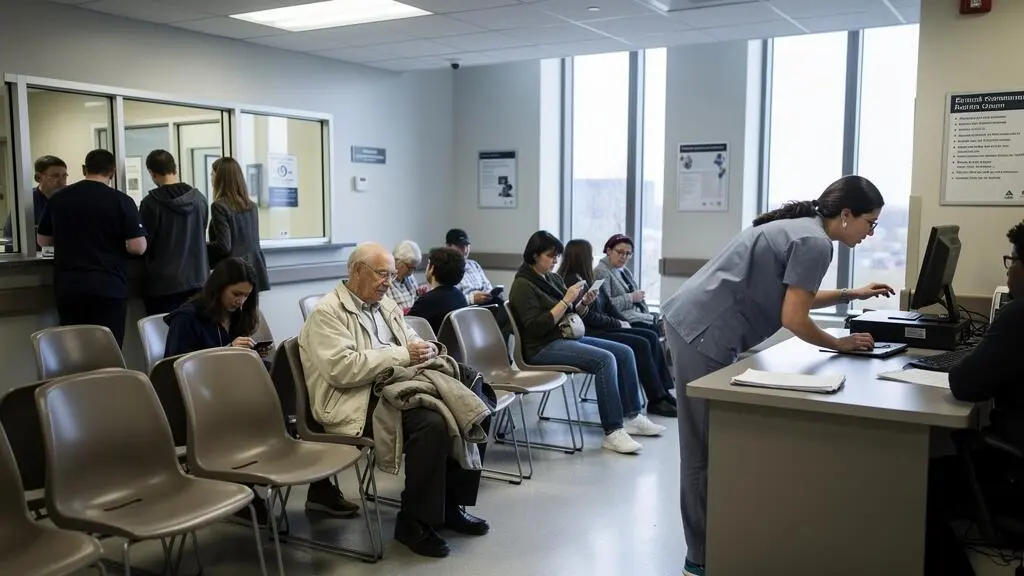
Two Canadians with similar medical needs can experience very different healthcare journeys. One may obtain a primary care appointment within days, while another waits much longer, travels to a neighbouring community, or visits an emergency department because no suitable alternative is available nearby.
These differences exist despite Canada’s publicly funded healthcare system. Provincial and territorial governments administer health insurance and organize service delivery, while local workforce availability, hospital capacity, referral systems, geography, and available care models influence how quickly patients receive treatment.
The variation is measurable. In 2024, only 27% of Canadian adults who had a primary care provider reported obtaining same-day or next-day care for a non-urgent need, according to the Canadian Institute for Health Information. Provincial results differed considerably, and rural residents reported less timely access than urban residents.
Understanding these differences helps patients distinguish an insurance coverage problem from a service availability problem, identify realistic alternatives, and make informed decisions without delaying necessary care.
Healthcare access in Canada: Key points
- Public insurance helps protect eligible patients from charges for insured services, but it does not guarantee that a provider or appointment will be available promptly.
- Provider shortages, provincial delivery decisions, rural geography, and disconnected referral systems contribute to differences in access.
- Patients can improve navigation by choosing care according to urgency, maintaining records, confirming referrals, and understanding local services.
- Why Does Healthcare Access Remain Difficult Even When Spending Increases?
- How Can Patients Find Care When They Cannot See a Family Doctor Quickly?
- Virtual or In-Person Care: Which Is More Appropriate for Different Needs?
- Why Can Fragmented Healthcare Lead to Delays or Repeated Tests?
- When Do Healthcare Shortages Require a Different Model of Care?
- How Can Patients Make Better Use of Their Digital Health Records?
- Workplace or Community Support: Which Option Fits Different Mental Health Needs?
- How Can Canadians Find the Right Mental Health Support When They Need It?
Why Does Healthcare Access Remain Difficult Even When Spending Increases?
Healthcare access can remain difficult despite increased spending because funding and service capacity are not interchangeable. Additional resources may support existing operations, wages, equipment, or temporary staffing without immediately creating more appointments. The number and distribution of available professionals, hospital capacity, and provincial service organization all influence whether patients receive timely care.
Canada’s public insurance system establishes coverage obligations rather than a universal appointment schedule. As explained in Health Canada‘s explanation of publicly funded health care coverage, provinces and territories administer their own insurance plans and determine which services qualify as medically necessary under applicable requirements.
The Canada Health Act establishes national conditions for publicly funded coverage, including insured medically necessary hospital and physician services and certain surgical-dental services. However, patients must also meet provincial or territorial eligibility requirements. Coverage for additional services, including many prescription drugs, varies by jurisdiction.
Financial coverage and timely delivery are different dimensions of access. Having an insured service available without patient charges does not mean a local clinician can provide it immediately.
27%
Share of Canadian adults with a primary care provider who reported same-day or next-day access for a non-urgent primary care need in 2024. This survey indicator does not include adults without a primary care provider.
Canadian Institute for Health Information, 2025 reporting on 2024 survey data.
Workforce pressures illustrate why increased expenditure does not automatically translate into more available care. CIHI reported that hospitals used more than 7.8 million hours of agency staffing and almost 32 million overtime hours in fiscal year 2023–2024. These figures demonstrate reliance on additional staffing arrangements, although they do not establish that spending generally flows away from clinical capacity or primarily into administration.
Provincial governments also differ in their approach to physician compensation, primary care teams, hospital management, and workforce recruitment. Consequently, similar insured needs can lead to different experiences across jurisdictions.
Clinical prioritization introduces another distinction. Emergency departments and specialist services generally assess urgency, meaning a seriously ill patient may receive attention before someone with a less urgent problem. This protects patients with immediate needs, but lengthy waits for lower-priority conditions can still delay assessment, monitoring, or treatment.
Persistent symptoms should therefore be reassessed when they worsen rather than treated as permanently non-urgent simply because an earlier referral received a lower priority.
For patients, the practical question is not only whether a service is covered, but also where it is delivered, which professional can provide it, and how quickly the healthcare system can respond.
How Can Patients Find Care When They Cannot See a Family Doctor Quickly?
Canadians who cannot obtain a timely family doctor appointment can consider community health centres, nurse practitioners, walk-in clinics, urgent care centres, pharmacy services, and provincially supported virtual care. The safest choice depends on symptom severity, the need for an examination, and whether ongoing follow-up is required. Emergency services remain essential for potentially life-threatening conditions.
Having a regular primary care provider is valuable because that professional or team can build a longitudinal understanding of medical history, medications, risk factors, and chronic conditions. A one-time appointment may address an immediate concern without replacing this continuity.
Patients should distinguish between alternatives intended for episodic problems and those able to coordinate ongoing care.
| Care option | Potentially appropriate needs | Important limitations |
|---|---|---|
| Community health centre | Primary care, prevention, chronic condition support, and sometimes coordinated social services | Availability, eligibility, and acceptance of new patients vary by location. |
| Nurse practitioner | Assessment, prescribing, monitoring, and primary care within the applicable scope of practice | Services and practice arrangements vary across jurisdictions. |
| Walk-in clinic | Non-emergency illnesses, minor concerns, and selected prescription needs | Limited continuity and variable appointment availability. |
| Urgent care centre | Problems requiring prompt assessment but not necessarily an emergency department | Capabilities, opening hours, and local availability differ. |
| Pharmacy-based services | Medication advice and selected assessments or prescriptions where authorized | Pharmacists cannot assess or treat every condition. |
| Provincial attachment registry | Seeking an ongoing primary care provider | Registration does not guarantee placement by a particular date. |
National survey findings show why alternatives matter. In 2024, adults with a primary care provider reported same-day or next-day access at rates ranging from 21% in British Columbia and Newfoundland and Labrador to 33% in Manitoba. These figures describe non-urgent appointment timeliness among adults already connected to primary care; they do not measure the full experience of people without a provider.
For someone seeking an ongoing clinician, a provincial patient attachment program may provide a structured registration route. Patients can consult their provincial or territorial health authority to identify the relevant registry and confirm eligibility, registration status, and any necessary updates.
Because waiting periods are uncertain, maintaining an alternative arrangement for new symptoms, prescriptions, and chronic condition monitoring is important.
Urgency should determine the next step. Stable concerns such as routine monitoring may be suitable for a scheduled appointment if a clinician has advised that waiting is appropriate. A new, worsening, or significant symptom may require prompt assessment at a walk-in clinic, urgent care centre, or another suitable service.
Possible emergencies should not be delayed while searching for a family doctor. Severe chest pain, major breathing difficulty, stroke-like symptoms, uncontrolled bleeding, or sudden loss of consciousness warrant emergency assistance, including calling 911.
For uncertain symptoms, a provincial health advice line may help identify an appropriate service, although availability and capabilities differ across Canada.
The goal is to obtain appropriate assessment now while continuing to pursue a reliable long-term care relationship.
Virtual or In-Person Care: Which Is More Appropriate for Different Needs?
Virtual care is often appropriate when a clinician can assess the concern through conversation, available records, or remote monitoring. In-person care is more suitable when physical examination, diagnostic procedures, or hands-on treatment are necessary. Many patients benefit from a combination: an initial remote consultation followed by examination or testing when clinically indicated.
Virtual appointments can reduce travel and make some follow-ups more convenient, particularly for patients who live far from a clinic. However, they cannot fully replace the information obtained through physical examination.
Choosing the right format requires considering what the clinician must observe, measure, or investigate before reaching a safe decision.
| Healthcare need | Virtual care | In-person care |
|---|---|---|
| Routine medication renewal | Often suitable when the condition is stable and appropriate monitoring is available | Needed when examination or testing is required before renewal |
| Mental health follow-up | Often suitable when privacy, communication, and clinical needs permit | May be preferable for certain assessments or patient preferences |
| Discussion of test results | Frequently suitable for explanation and planning | Useful when findings require further examination |
| New minor infection symptoms | May support initial assessment or triage | Necessary when hands-on findings or testing are important |
| Injury or complex unexplained symptoms | May help determine the next step | Often required for a reliable clinical assessment |
| Medical procedure or imaging | Can support preparation and follow-up | Required for the procedure or imaging itself |
A consultation might begin virtually with a review of symptoms and medications. If the clinician identifies a need to examine the abdomen, assess an injury, or obtain laboratory tests, the next step would be an appropriate in-person appointment.
This hybrid approach can be useful when remote assessment is connected to a local provider or team capable of arranging follow-up.
Virtual care also introduces access barriers. Reliable internet, appropriate devices, digital literacy, hearing or language accommodations, and a private environment are not equally available to every patient.
A person sharing a crowded home may be unable to discuss sensitive symptoms confidentially. Someone without stable connectivity may struggle to complete a video appointment. Telephone appointments may reduce certain barriers, but are not appropriate for every assessment.
Provincial billing arrangements also matter. Public coverage rules for virtual consultations have changed over time and differ by jurisdiction, provider, and service. Patients should confirm whether an appointment is publicly insured or involves a fee before booking.
Continuity matters as much as convenience. When a virtual-only clinician orders tests or recommends a specialist referral, patients should establish who will receive results, communicate findings, and coordinate subsequent care.
Serious warning signs, including symptoms suggesting stroke, heart attack, severe breathing difficulty, or other acute emergencies, require emergency assessment rather than a routine virtual booking.
Virtual services work best as part of an accessible, coordinated care pathway rather than an automatic substitute for local clinical capacity.
Why Can Fragmented Healthcare Lead to Delays or Repeated Tests?
Fragmented healthcare creates delays when referrals, test results, medication information, and clinical notes do not move efficiently between providers. Each transfer can require additional administrative steps, clarification, or waiting. Patients may undergo repeated tests when previous findings are unavailable, while unclear responsibility for follow-up can allow important results or referrals to remain unresolved.
Consider a hypothetical patient referred by a primary care clinician to a specialist. The referral must reach the appropriate office, be reviewed, and receive a priority designation. The specialist may then request imaging or laboratory testing before deciding on treatment.
Even when every professional performs their role appropriately, the overall journey can become lengthy because several separate queues and administrative processes are involved.
Healthcare information systems are another challenge. Hospital networks, independent clinics, laboratories, and provincial systems may not automatically exchange records. A patient moving between jurisdictions can encounter additional difficulties obtaining complete records.
Repeated investigations are not always unnecessary. A new test may be clinically justified when symptoms change, results become outdated, or a different diagnostic method is required. The problem arises when repetition occurs primarily because previous information cannot be found or accessed.
Patients should never assume that a referral or test result has reached every relevant clinician. Asking for confirmation is a practical part of care coordination, not a replacement for professional responsibility.
Five actions to keep care moving between providers
- Create a medical summary: Prepare a one-page document containing current diagnoses, major medical events, allergies, and relevant treatments.
- Verify medications: Maintain a dated list of medication names, doses, and actual use, including relevant non-prescription products.
- Record referral details: Note the receiving clinic, referral date, reason for consultation, and any instructions provided.
- Confirm outstanding results: Keep a list of ordered tests, completion dates, the responsible clinician, and whether the results have been discussed.
- Identify the follow-up contact: Write down which clinic or professional should be contacted if a referral, result, or treatment plan remains unclear.
A helpful question after any investigation is: « Who will review these results, and how will I be notified? » Patients can also ask when to follow up if they have heard nothing.
Silence does not necessarily mean a result is normal. Communication processes can fail, and findings may require interpretation even when they are available through a digital portal.
When a patient notices that a referral has not progressed, contacting the referring clinic to verify its status is generally more productive than assuming the receiving specialist has all necessary information.
Good coordination cannot eliminate provider shortages, but it can reduce avoidable confusion while patients move between services.
When Do Healthcare Shortages Require a Different Model of Care?
Healthcare shortages may require different delivery models when conventional physician-led appointments cannot meet local demand or when geographic isolation makes timely access difficult. Team-based primary care, expanded professional roles, community paramedicine, and remote consultations offer different ways to organize services. Their suitability depends on local staffing, clinical needs, available infrastructure, and clear responsibility for continuing care.
Not every health concern requires the same professional. Nurse practitioners may provide primary care within their authorized scope, pharmacists can support medication-related services, and other clinicians may contribute assessment, education, treatment, or monitoring.
Team-based care organizes these contributions around patient needs. In some settings, different professionals share responsibility for chronic disease monitoring, preventive services, and referrals.
However, expanded access should not be confused with interchangeable expertise. Professional scopes of practice differ, and some clinical situations still require a physician, specialist, emergency department, or hospital-based service.
Rural and remote communities face additional challenges. Smaller populations, travel distances, professional isolation, on-call responsibilities, and recruitment difficulties can make maintaining comprehensive local services especially demanding.
These pressures are reflected in CIHI’s report on hospital staffing and service delivery. Between 2019–2020 and 2023–2024, purchased staffing hours in rural and remote hospitals increased by 261%, compared with 98% in urban hospitals within the report’s available data.
The comparison has important limitations: the hospital staffing dataset excludes certain jurisdictions, including Quebec and Nunavut, and other exclusions vary by reporting year. It describes hospital staffing arrangements rather than all forms of rural primary care.
261%
Increase in purchased staffing hours in rural and remote hospitals between fiscal years 2019–2020 and 2023–2024, within CIHI’s reporting coverage. This is not a measure of additional permanent clinicians or overall patient access.
Canadian Institute for Health Information, health workforce reporting updated in 2026.
Depending on the region, patients may encounter rotating locum physicians, nurse-led clinics, remote specialist consultations, or community paramedicine programs. Each model responds to a different practical constraint.
A nurse-led outpost may provide assessment and monitoring while connecting patients with distant physicians. Telehealth can support consultations without requiring every patient to travel immediately, but it cannot perform imaging, surgery, or other procedures unavailable locally.
Community paramedicine may extend selected monitoring and support services beyond conventional emergency response where programs exist. Its availability and functions depend on local arrangements.
Patients using team-based services should identify a primary contact, understand which professional manages each condition, and confirm how information is shared across the team.
In remote areas, it is also sensible to ask which services require travel, how urgent transfers are arranged, and what options exist when local services are temporarily unavailable.
Regional inequality therefore affects more than appointment delays: it can determine which professionals, treatments, and diagnostic facilities patients can access close to home.
How Can Patients Make Better Use of Their Digital Health Records?
Patients can use digital health records to improve continuity by reviewing available results, checking medication information, tracking referrals, and preparing for appointments. Provincial portals can make information easier to access, but they rarely provide a complete, automatically integrated history from every provider. Patients should also confirm that important findings are reviewed by a qualified clinician.
Depending on the province, territory, and connected healthcare organizations, a patient portal may display laboratory results, prescriptions, immunizations, selected imaging reports, and appointment information.
However, availability differs considerably. A record from an independent clinic or another province may not appear. Some documents may be delayed, restricted, or accessible only through a specific healthcare organization.
A patient portal is a useful information source, not necessarily a complete medical record. It is important to establish which services contribute information to it and how missing documents can be requested.
Rather than checking records only when something goes wrong, patients can use them systematically before appointments.
- Review recent results and prepare questions about findings that remain unexplained.
- Compare listed medications with what is actually being taken, including changes made by different clinicians.
- Check whether expected specialist reports or investigation results are available.
- Maintain copies of relevant documents when moving between clinics or provinces.
- Keep a record of important follow-up instructions and upcoming assessments.
Trends in results can sometimes matter more than a single isolated value. Nevertheless, interpreting a trend requires clinical context, including symptoms, medical history, reference ranges, and the reason for testing.
Patients should avoid changing medication or making treatment decisions based solely on a result displayed online. A borderline or flagged value is not necessarily evidence of a serious condition, while an apparently normal result does not rule out every illness.
Digital access is also unequal. Language barriers, disability, limited connectivity, difficulties verifying identity, or unfamiliarity with online systems can prevent people from using portals effectively.
Where digital access is unavailable, patients or authorized representatives can ask the relevant healthcare organization about obtaining copies of records through its established access procedures. Applicable privacy legislation, identity verification, and authorization requirements vary by jurisdiction.
For caregivers, access to another person’s records should follow the relevant consent or legal authorization rules rather than relying on informal password sharing.
The most useful record is one that supports communication between patients and their healthcare teams, whether it is accessed digitally or on paper.
Workplace or Community Support: Which Option Fits Different Mental Health Needs?
Workplace and community mental health supports serve different purposes. Employee assistance programs may provide a convenient entry point for short-term counselling, while community services may offer broader or continuing support. The right option depends on symptom severity, duration, available benefits, confidentiality preferences, and whether the person needs clinical assessment or specialized treatment.
Many employee assistance programs, or EAPs, offer confidential counselling or referral services through an employer-arranged provider. Their services, session limits, delivery formats, and eligibility rules depend on the specific program.
Some workers may also have extended health benefits that reimburse part of the cost of private psychotherapy. Those benefits should not be confused with EAP services, since they may operate under different eligibility and payment arrangements.
Community options can include publicly funded mental health programs, community agencies, peer support groups, and subsidized counselling. Availability, referral requirements, costs, and eligibility vary by region.
| Decision factor | Workplace support | Community support |
|---|---|---|
| Access route | Through an eligible employer program or benefits provider | Through community agencies, public programs, referrals, or direct registration |
| Cost | May be included in employment benefits, subject to program terms | May be publicly funded, subsidized, free, or privately paid |
| Duration | Often designed around a defined service package or limited sessions | Varies from brief interventions to ongoing programs |
| Privacy considerations | Requires understanding the employer-linked program’s confidentiality and reporting policies | Generally administered separately from employment, with its own privacy arrangements |
| Clinical complexity | May provide initial support or help identify more specialized services | Some programs provide continuing or specialized care, depending on eligibility and capacity |
Confidentiality can influence the choice, particularly when mental health concerns involve workplace conflict, harassment, or job insecurity.
Employees should review the privacy terms of their specific program, including what information may be shared with the employer and in which circumstances. An employer-linked arrangement does not automatically mean counselling details are disclosed to management.
Similarly, community services have their own privacy obligations and limits. Neither setting should be assumed to offer absolute confidentiality in every circumstance.
For temporary stress, a short course of counselling may provide sufficient support. Recurrent depression, trauma-related symptoms, significant functional impairment, or more complex conditions may require ongoing clinical care beyond a brief workplace program.
The intensity of need should guide the choice. Where symptoms substantially affect daily functioning, professional assessment is important even when counselling or peer support is already available.
For many people, these options are complementary: an accessible workplace program may provide interim support while a more suitable continuing-care arrangement is established.
Key takeaways for finding appropriate mental health care
- Choose the level of support according to symptom severity and safety, not simply which appointment is available first.
- Check public coverage, workplace benefits, private fees, and referral requirements before committing to a service.
- If ongoing care is delayed, establish interim support and a clear plan for obtaining more urgent help if symptoms worsen.
How Can Canadians Find the Right Mental Health Support When They Need It?
Canadians can find appropriate mental health support by matching the seriousness of their symptoms with the type of service available locally. Options range from self-guided resources and peer support to counselling, primary care, psychiatry, and crisis services. Coverage, affordability, waiting times, clinical expertise, and continuity should all influence the decision.
Mental healthcare in Canada is delivered through several overlapping pathways rather than one universally accessible service.
For mild or emerging concerns, structured self-help resources, community organizations, and peer support may provide useful information and connection. These resources can complement professional treatment, but they are not equivalent to clinical assessment when a mental health condition requires diagnosis or treatment.
Primary care clinicians may assess symptoms, discuss treatment options, monitor medications, and refer patients to additional services where needed. Psychiatric services delivered by physicians and insured hospital services generally fall within provincial or territorial public insurance arrangements for eligible patients.
Private psychological services and counselling, however, are not automatically covered by provincial health insurance. Some services may be publicly funded through specific programs, while others require private insurance or personal payment.
Coverage depends on the provider, service, program, and jurisdiction. Patients should confirm whether a service is publicly funded, reimbursable through benefits, offered on a sliding fee scale, or paid entirely out of pocket.
Publicly funded community counselling is an important pathway, but access can involve substantial waits.
According to CIHI’s report on access to community mental health counselling, half of clients referred to participating publicly funded scheduled counselling services received their first appointment within 30 days during 2024–2025. One in ten waited longer than 131 days.
The findings do not represent all mental healthcare in Canada. Quebec, British Columbia, and Nunavut were excluded, Manitoba had partial coverage, and unscheduled, walk-in, and private counselling services were outside the indicator.
These limitations matter when patients compare local services. A national waiting-time figure cannot predict how long an individual will wait for a particular program.
When choosing a mental health professional, patients can evaluate four practical factors:
- Clinical fit: Does the professional have appropriate qualifications and experience with the presenting concern?
- Therapeutic approach: Is the proposed treatment suitable for the person’s needs and preferences?
- Practical access: Are appointments, location, accessibility accommodations, and fees manageable?
- Working relationship: Does the patient feel able to communicate openly and participate in treatment decisions?
A constructive therapeutic relationship is an important consideration, but individual outcomes depend on several factors, including the condition, treatment, and circumstances. If the relationship is not working, patients can discuss concerns or explore alternative providers where feasible.
While waiting for ongoing care, patients may be able to use community peer groups, structured self-guided programs, workplace benefits, or an interim appointment with a qualified clinician. They should clarify which services provide clinical treatment and which offer information or emotional support.
Urgency changes the appropriate pathway. Someone experiencing worsening symptoms, major difficulty functioning, or concerns about personal safety should seek prompt professional assessment rather than relying exclusively on a routine waiting list.
In Canada, people experiencing suicidal thoughts or a suicide-related crisis can call or text 988 for crisis support. Where there is immediate danger or a life-threatening emergency, call 911 or seek emergency care.
A practical next step is to identify one suitable local service, confirm its eligibility and coverage requirements, and establish a follow-up plan. If the first option cannot meet the person’s needs or provide care in time, seeking an appropriate alternative is safer than waiting without support.
Does having a provincial health card guarantee a quick specialist appointment?
No. Provincial or territorial health insurance establishes eligibility for covered services, subject to applicable rules, but does not automatically guarantee an appointment within a particular timeframe. Specialist availability, referral processes, clinical priority, and local capacity affect waiting times. Patients can ask their referring clinic to confirm that a referral was received and whether additional information is needed.
Can someone receive medical care while waiting to be assigned a family doctor?
Yes. Depending on the community, alternatives may include walk-in clinics, urgent care centres, nurse practitioners, community health centres, pharmacies, and virtual services. These options have different clinical capabilities and eligibility requirements. Patients should continue seeking a regular primary care provider while obtaining appropriate interim care.
Can patients request copies of medical records from another province?
Patients can generally request access to their personal health information through applicable healthcare organization procedures and privacy legislation. Access methods, identification requirements, authorization rules, and possible fees differ by jurisdiction and record holder. Provincial portals may not automatically display information collected elsewhere in Canada.
Are emergency department patients treated in the order they arrive?
Emergency departments prioritize patients according to clinical urgency rather than relying solely on arrival order. Someone with a potentially life-threatening condition may therefore be assessed before someone who arrived earlier with a less urgent concern. Patients whose symptoms worsen while waiting should inform clinical staff so their condition can be reassessed.
Why might two Canadians pay different amounts for mental health counselling?
Mental health costs depend on the service, professional, funding arrangement, insurance coverage, and province or territory. Insured physician and hospital services differ from private psychotherapy and counselling, which may require personal payment or extended health benefits. Some community programs provide publicly funded or subsidized support, subject to local eligibility and availability.