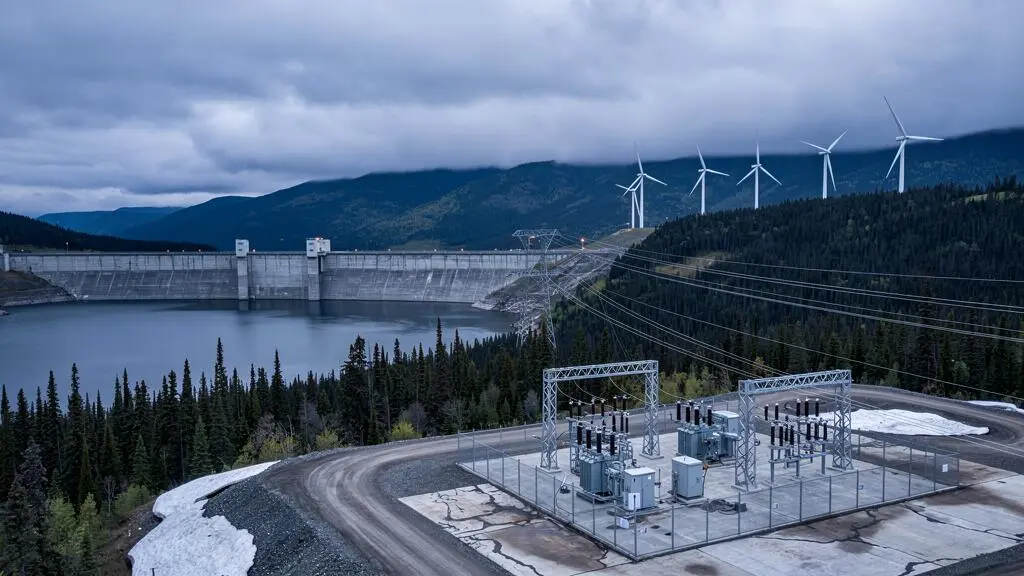
Canada’s energy transition cannot be built around one technology. Hydroelectric reservoirs support electricity supply in Quebec, British Columbia and Manitoba, while Ontario relies on substantial nuclear generation. Prairie provinces have different resource advantages, and remote northern communities face energy challenges that large interconnected grids do not.
The most suitable energy source therefore depends on geography, seasonal demand, infrastructure, affordability and environmental consequences. Wind and solar can provide low-emission electricity where resources and grid connections are favourable. Hydroelectricity and nuclear generation offer different reliability characteristics, while storage, transmission and flexible generation help balance changing demand.
Distinguishing electricity from total energy consumption is equally important. Replacing fossil fuels used for heating, transport and industry may increase electricity demand even where today’s power supply is already relatively clean. Canada’s future energy choices must consequently address both how electricity is generated and whether enough dependable power can reach consumers when needed.
Canada’s regional clean energy choices at a glance
- Hydroelectricity, nuclear, wind and solar serve different regional needs; no single technology is the best choice everywhere.
- Electricity demand patterns, grid capacity and flexibility matter as much as renewable resource availability.
- Environmental impacts, Indigenous participation and long-term operating costs should influence local project decisions from the beginning.
- Why Does Canada’s Energy Mix Need Different Solutions Across Provinces?
- How Can Communities Assess Whether a Clean Energy Project Fits Local Needs?
- Wind or Solar: Which Works Better Under Canadian Weather Conditions?
- What Happens When Renewable Power Grows Faster Than Grid Capacity?
- When Does Energy Storage Become Essential for a Renewable Grid?
- How Can Communities Prioritize the Environmental Risks That Matter Locally?
- Repair or Build New: Which Infrastructure Choice Delivers Better Value?
- Which Environmental Challenges Pose the Greatest Risks Across Canada?
Why Does Canada’s Energy Mix Need Different Solutions Across Provinces?
Canada needs different regional energy strategies because its provinces and territories have unequal natural resources, electricity demand patterns and existing infrastructure. Hydroelectricity is well established in several provinces, nuclear generation is important in Ontario, and fossil-fuel generation remains significant elsewhere. Provincial authority over electricity also means that investment decisions largely reflect regional priorities rather than one national generation plan.
Canada is better understood as a collection of connected but distinct electricity systems than as a single uniform market. Provincial governments generally control electricity generation and infrastructure within their boundaries. Federal responsibilities cover specific matters, including nuclear regulation, international electricity trade and certain transmission facilities.
Provincial jurisdiction does not make a Quebec-style hydro strategy legally impossible in Alberta or Saskatchewan. The greater obstacles are physical: suitable rivers, reservoir sites, environmental impacts, financing and proximity to electricity demand. Geography determines what can realistically be built; governance influences how development proceeds.
According to the Canada Energy Regulator‘s provincial and territorial energy profiles, hydroelectricity accounted for approximately 60% of Canadian electricity generation in 2021. The regulator identifies British Columbia, Manitoba, Quebec and Newfoundland and Labrador as provinces that typically generate more than 85% of their electricity from hydropower.
More recent federal reporting provides a useful national comparison. In 2024, Canada’s electricity generation consisted of 56.1% hydro, 13.4% nuclear, 7.5% wind, 1.5% biomass and 0.9% solar, according to the federal 2025 emissions progress report. These historical shares must not be treated as current measurements of individual provincial systems.
The following table compares regional electricity characteristics rather than presenting unverified current provincial percentages or transmission capacity figures.
| Province or region | Important electricity characteristics | Grid and interconnection considerations |
|---|---|---|
| British Columbia | Large hydroelectric resources, with opportunities for complementary wind and solar | Reservoir flexibility and transmission connections influence the value of additional generation |
| Quebec | Hydroelectricity-dominated generation and substantial reservoir resources | Provincial transmission, export connections and seasonal demand shape system flexibility |
| Manitoba | Hydroelectricity-dominated generation | Connections with neighbouring systems provide opportunities for electricity exchange |
| Ontario | Major nuclear generation alongside hydroelectricity and other sources | Transmission capacity and regional demand influence new generation and refurbishment decisions |
| Alberta | Significant natural gas generation, with wind and solar development | Connection availability, internal transmission constraints and interties affect renewable integration |
| Saskatchewan | Fossil-fuel generation, wind potential and uranium production | Grid flexibility and connections to neighbouring provinces matter for diversification |
| Atlantic Canada | Different provincial combinations of hydro, wind, nuclear and fossil-fuel generation | Interprovincial connections can support balancing, subject to transfer capacity |
| Northern territories | Remote systems using different combinations of diesel, hydro and local renewable resources | Many communities lack connections to larger electricity networks |
This comparison describes structural differences, not a ranking of interconnection capacity. A province may have a connection to another electricity system without having enough available transfer capacity to balance every period of renewable surplus or shortage. Prince Edward Island also illustrates why generation and consumption must be distinguished: its locally generated wind electricity does not represent its entire electricity supply, which also depends on imports.
Saskatchewan’s uranium production contributes to Canada’s nuclear fuel supply, including reactors in Ontario and New Brunswick. Yet access to uranium does not automatically make nuclear generation the most economical choice locally. Reactor scale, capital requirements, operating expertise and system demand also matter.
The practical conclusion is that national averages should inform, rather than determine, regional decisions.
Once these regional differences are understood, the next challenge is determining whether a particular clean energy project actually meets the needs of the community expected to host it.
How Can Communities Assess Whether a Clean Energy Project Fits Local Needs?
Communities should assess clean energy projects by matching local electricity and heating needs with available resources, infrastructure and operating capacity. A technically promising site is not automatically a suitable investment. Demand patterns, ownership arrangements, environmental effects, grid access and maintenance requirements all determine whether a project can deliver dependable benefits over its operating life.
The assessment should begin with demand rather than technology. A community experiencing its highest electricity demand during cold winter evenings has different requirements from a town where summer commercial activity drives peak consumption. Annual energy use alone cannot identify the generation or storage needed during critical hours.
Local planners should examine peak demand, seasonal heating requirements, industrial loads, anticipated electrification and the reliability of existing supply. Wind measurements, solar irradiation, available water resources and sustainable biomass feedstocks can then be evaluated against those requirements.
Grid connection is another deciding factor. A promising wind or solar location may become uneconomic when long-distance transmission construction, difficult terrain or extensive network upgrades are necessary. Remote communities must also account for replacement parts, specialist travel, winter road access and the availability of trained operators.
Indigenous participation requires particular attention. Consultation, shared ownership and full community ownership represent different arrangements, with different governance responsibilities and opportunities for retaining project revenues locally. The appropriate structure depends on the rights, priorities and decisions of the Indigenous communities involved.
The federal Indigenous Leadership Fund eligibility and project requirements illustrate the importance of clear ownership, project readiness, partnership agreements and decision-making arrangements for projects seeking support under that program. These specific funding criteria should not be mistaken for universal requirements applicable to every Canadian energy development.
Five practical checks before selecting a community energy project
- Map local demand: produce an hourly or seasonal demand profile showing expected peaks, heating requirements and major consumers.
- Assess available resources: prepare a site comparison recording wind, solar, hydro or biomass potential and the limitations of the available measurements.
- Verify infrastructure: obtain a preliminary grid connection assessment identifying access points, possible upgrades and unresolved costs.
- Define participation and impacts: document proposed community governance, Indigenous engagement, land requirements and environmental assessment needs.
- Test long-term operation: develop a lifecycle cost and maintenance plan covering staffing, equipment replacement, financing and project shutdown.
A hypothetical northern village, for example, might find that solar generation reduces fuel consumption during brighter months but cannot replace dependable winter generation without complementary equipment. A hybrid design could be more appropriate than the technology with the highest annual output per installed unit.
Once a community understands its requirements, the next step is comparing technologies against actual Canadian weather conditions rather than relying on generic renewable energy performance claims.
Wind or Solar: Which Works Better Under Canadian Weather Conditions?
Wind and solar perform differently across Canada’s seasons, making them complementary in many locations. Solar generation generally peaks during longer summer days, while wind output can be stronger in winter in several Canadian regions. The better choice depends on local weather records, demand timing, land availability and grid access. Neither technology guarantees electricity during every period of high demand.
Canadian solar panels face shorter daylight hours, lower sun angles and possible snow coverage in winter. Cold air can improve photovoltaic module efficiency under otherwise comparable sunlight conditions, but that benefit cannot compensate for all the seasonal reduction in available solar energy.
Panel angle, snow accumulation, local shading and system design consequently matter. Comparing installations by their strongest summer output is misleading; annual production and monthly generation profiles provide a better basis for decisions.
Wind generation offers a different seasonal profile. The Prairies, Atlantic Canada, Gaspésie and selected coastal locations have favourable wind resources, although each project still requires site-specific measurements. Strong regional winds do not guarantee consistent output at every hour.
Cold climates introduce additional complications. Turbine icing can affect production and equipment performance, while extreme temperatures may restrict operation if machines are not designed for local conditions. Cold-climate turbine configurations, suitable materials and icing management systems can mitigate some constraints, but cannot eliminate weather-related uncertainty.
| Decision factor | Wind power | Solar power |
|---|---|---|
| Seasonal output | Can offer stronger winter generation in favourable regions | Generally produces more during longer, brighter summer days |
| Winter limitations | Icing, extreme cold and low-wind periods | Short daylight hours, low sun angles and snow coverage |
| Land and location | Requires appropriate wind conditions, turbine spacing and suitable siting | Can use rooftops, developed sites or larger ground-mounted areas |
| Demand matching | Potentially useful for winter-intensive demand where wind patterns align | Useful for daytime demand and summer electricity needs |
| System flexibility | May require balancing during extended low-wind periods | May benefit from storage or demand shifting after sunset |
For a hypothetical commercial building with substantial daytime summer consumption, solar may reduce grid purchases when electricity use is highest. For a community facing large winter loads and favourable seasonal winds, wind may offer greater value. Both conclusions would still require local cost and production modelling.
Neither technology should be described as continuous baseload generation. Their contribution to displacing fossil-fuel electricity depends on when they generate, the emissions associated with the electricity they replace and the flexibility available elsewhere on the grid.
A hybrid wind-and-solar configuration can diversify production across different weather conditions. However, complementarities do not guarantee that the combination will always cost less or eliminate the need for dispatchable generation.
Even a well-matched renewable project needs a network capable of transporting its output, making transmission capacity a central part of the decision.
What Happens When Renewable Power Grows Faster Than Grid Capacity?
When renewable generation expands faster than electricity networks, transmission lines, substations and transformers may be unable to carry all available power. Operators can then limit output through curtailment, even when wind or sunlight is available. Connection delays, reduced project revenues and higher system costs may follow, especially where planned network upgrades are difficult or slow to deliver.
Electricity infrastructure must satisfy two separate requirements: sufficient generating capacity and sufficient delivery capacity. A province may produce enough power overall while specific communities, industrial facilities or transmission corridors still face supply constraints.
Wind and solar developments often target locations with favourable natural resources rather than existing grid strength. If substantial new generation is concentrated in one area, the local network can reach its operating limits during periods of high output.
Operators may then instruct generators to reduce production. Curtailment is not necessarily evidence that the electricity is unwanted across the entire system; it can reflect an inability to move it to consumers or store it at the required time.
Alberta offers a relevant context because its expanding renewable sector must operate within an electricity network with finite connection and transfer capacity. However, grid congestion should not be used as a blanket explanation for all provincial renewable restrictions or investment changes. Regulatory uncertainty, project economics and transmission planning are distinct influences.
Ontario’s earlier feed-in-tariff era likewise demonstrates the importance of coordinating generation procurement with system planning. It would be inaccurate to infer from that history alone that every project experienced curtailment or that all subsequent policy changes resulted from grid saturation.
Congestion has consequences beyond lost electricity. Repeated curtailment can reduce generator revenues and make financing more difficult. In some circumstances, network limitations may also prevent low-emission electricity from displacing fossil-fuel generation in another part of the system.
Solutions include targeted transmission upgrades, stronger interprovincial connections, local storage, demand flexibility and better coordination of new generation with network investment. None is universally preferable: a transmission project may connect many resources, while local storage can address a narrower constraint without constructing an entirely new corridor.
Interprovincial infrastructure is especially relevant in Canada, where regional resource diversity creates opportunities for electricity exchange. Yet new connections require planning, approvals, land access arrangements and capital investment, and they do not automatically eliminate local distribution bottlenecks.
Where the network cannot immediately absorb or export available electricity, energy storage becomes one possible way to shift generation toward periods when it is more valuable.
When Does Energy Storage Become Essential for a Renewable Grid?
Energy storage becomes increasingly important when variable renewable generation creates recurring mismatches between electricity supply and demand that existing grid flexibility cannot manage economically or reliably. There is no universal renewable electricity percentage that makes batteries mandatory. The need depends on hourly generation patterns, dispatchable resources, transmission connections, demand response and the duration of expected supply gaps.
Storage provides several different services, which should not be confused. Fast-response systems can help stabilize electricity networks over seconds or minutes. Short-duration batteries can shift electricity between daytime generation peaks and evening consumption. Longer-duration technologies may help manage extended periods of low renewable production.
Seasonal balancing is a substantially different challenge. Canadian winter electricity needs can remain high across long periods, while solar generation is seasonally reduced. A battery designed for daily charging and discharging should not be assumed capable of supporting an entire community through prolonged winter shortages.
| Technology or resource | Potential system role | Principal limitation |
|---|---|---|
| Lithium-ion batteries | Fast response, short-duration balancing and daily energy shifting | Longer storage durations require additional capacity and cost |
| Reservoir hydropower | Flexible generation and water conservation for later electricity production | Depends on existing reservoirs, water availability and operating constraints |
| Pumped hydro storage | Large-scale energy shifting where suitable sites exist | Requires appropriate geography, infrastructure and environmental assessment |
| Compressed-air storage | Potential longer-duration energy storage | Depends on suitable technical conditions and project economics |
| Emerging long-duration systems | Potential support for extended supply gaps | Commercial maturity, cost and performance vary by technology |
Hydroelectric provinces possess a structural advantage. Where reservoirs permit flexible operation, operators may conserve water when wind or solar generation is abundant and release it later. This resembles storage at the electricity-system level, although the reservoir is not necessarily storing electricity directly.
That flexibility remains constrained by reservoir levels, environmental requirements, downstream water needs and turbine capacity. Hydroelectric resources are not unlimited backup systems, particularly during drought.
Other provinces may depend more heavily on batteries, demand management, imports or flexible generation. Natural gas plants can provide dispatchable electricity during the transition, but their operation produces greenhouse gas emissions and must be evaluated against applicable emissions limits and decarbonization objectives.
The Government of Canada‘s clean electricity framework recognizes regional differences and the need to maintain affordability and reliability. The Clean Electricity Regulations finalized in December 2024 establish emissions limits beginning in 2035 for covered fossil-fuel generating units, with specified eligibility criteria and flexibility provisions. They do not prescribe one universal generation or storage technology.
Once a workable balance of generation and flexibility is identified, communities must evaluate the environmental effects of developing and operating that infrastructure.
How Can Communities Prioritize the Environmental Risks That Matter Locally?
Communities should prioritize environmental risks by considering how likely each impact is, how severe its consequences could be and whether affected ecosystems can recover. A relatively uncommon but irreversible impact may deserve greater attention than a frequent, manageable disturbance. Assessments should reflect the proposed technology, local environmental conditions and the cumulative effects of nearby developments.
A useful starting point is to identify what the community could lose or damage: drinking-water sources, wildlife habitat, productive land, fisheries, culturally significant places or local air quality. The same project technology may pose very different risks depending on its location.
Risk scoring can help organize discussions, but a numerical score should not override regulatory obligations, Indigenous rights or the need to examine potentially irreversible damage.
| Energy technology | Relevant local risks | Useful assessment focus |
|---|---|---|
| Wind | Bird and bat collisions, habitat disturbance, noise and land use | Wildlife monitoring, siting, cumulative effects and appropriate noise assessment |
| Solar | Land conversion, habitat disturbance and end-of-life equipment management | Site selection, existing land uses, habitat surveys and decommissioning plans |
| Hydroelectricity | Fish passage, altered river flows, flooding and aquatic ecosystem changes | Watershed effects, ecological connectivity and downstream conditions |
| Bioenergy | Air emissions, feedstock extraction and transport impacts | Local air quality, sustainable sourcing and lifecycle emissions |
| Energy storage | Materials extraction, equipment safety and end-of-life waste | Technology-specific safety, supply chain and recycling arrangements |
Perceived impacts and measured impacts should be evaluated separately. For example, concerns about wind turbine noise and well-being deserve careful assessment, but specific claims about direct health effects should not be treated as proven without appropriate evidence. At the same time, habitat fragmentation and the combined effect of multiple developments should not be overlooked simply because each individual project meets its own requirements.
Consider a hypothetical watershed with sensitive fish habitat. A proposed hydroelectric modification might have a lower apparent construction footprint than a new generating station, yet its effects on fish passage or river flows could be difficult to reverse. Those consequences may deserve priority over more visible but manageable short-term construction disturbances.
Canadian environmental governance involves different federal, provincial, territorial and, where applicable, municipal processes. The relevant assessment requirements depend on project type, location, jurisdiction and applicable legislation. Municipal zoning, environmental monitoring, mitigation commitments and community benefit agreements can play roles, but their authority and enforceability differ.
Communities should request accessible impact assessments, baseline ecological information, mitigation plans and clear accountability for monitoring. Agreements about local benefits can complement environmental protections; they cannot replace legal assessment requirements or eliminate an unacceptable impact.
Environmental assessment also informs a related investment question: whether improving existing infrastructure could deliver cleaner, more reliable electricity with fewer new disturbances than constructing replacement assets.
Repair or Build New: Which Infrastructure Choice Delivers Better Value?
Refurbishing existing energy infrastructure can provide better value when the asset has substantial remaining potential, upgrades improve reliability and lifecycle costs remain competitive. New construction may be preferable when existing equipment cannot meet future demand, safety standards or emissions objectives. The decision should compare long-term performance, downtime, environmental effects and financial risk rather than initial construction cost alone.
Canada’s electricity infrastructure includes generating stations, hydroelectric dams, transmission corridors, substations and nuclear facilities that may remain useful through upgrades. Reusing existing sites and connections can reduce some development requirements, although major refurbishment is rarely simple.
Ontario’s nuclear sector provides a particularly relevant example. Life-extension and refurbishment programs, including work at Bruce Power, are intended to preserve substantial existing low-carbon generating capacity. These programs demonstrate why utilities may favour upgrading established facilities rather than replacing their entire output with newly constructed generation.
However, the existence of a refurbishment program does not independently prove that it costs less per unit of electricity than every new alternative. That requires comparable project-specific cost, output, financing and risk data.
Major repairs can uncover hidden structural problems, extend outages or require additional replacement equipment. Refurbishment may also preserve a technology whose operating requirements are poorly suited to future conditions. Conversely, a new project may require expensive land acquisition, permitting, transmission development and construction before it produces any electricity.
| Criterion | Refurbish existing infrastructure | Build new infrastructure |
|---|---|---|
| Capital investment | May reuse existing assets and connections | Requires investment in new facilities and potentially new network access |
| Operating life | Depends on structural condition and refurbishment scope | Depends on selected technology and construction quality |
| Reliability | May improve proven equipment but can involve outages | May introduce new capabilities alongside commissioning risks |
| Environmental impact | Can reduce new land disturbance, but existing impacts remain relevant | May offer cleaner technology while creating new land and materials demands |
| Flexibility | Limited by the original asset design and feasible upgrades | Can be designed around future operating requirements |
| Opportunity cost | Commits funds and resources to extending existing assets | Commits funds and resources to new capacity rather than upgrades |
Hydroelectric refurbishment illustrates why flexibility matters. Upgrading turbines or control systems may improve performance without developing a new dam, but a project must still account for reservoir constraints, environmental obligations and future water availability.
A credible comparison should evaluate discounted lifecycle costs, expected generation, outage risk, financing assumptions and emissions consequences under the same assessment period. Neither the lowest initial capital cost nor the newest technology automatically provides the greatest public value.
Because infrastructure decisions can influence electricity systems for decades, they should also account for the changing environmental conditions that threaten energy production across Canada.
Key considerations before choosing Canada’s future energy investments
- Regional climate exposure should influence generation choices, transmission planning and the expected service life of infrastructure.
- Low operational emissions do not eliminate land, water, materials or biodiversity impacts; these require technology-specific assessment.
- A resilient electricity system must combine emissions reductions with dependable operation under changing weather and environmental conditions.
Which Environmental Challenges Pose the Greatest Risks Across Canada?
Canada’s major environmental energy risks arise from three connected pressures: climate change affecting existing infrastructure, ecological impacts from new energy development and cumulative damage from expanding energy supply chains. Their severity varies by region. Drought can undermine hydroelectric generation, wildfire can disrupt transmission, and northern permafrost thaw can threaten infrastructure foundations. Effective energy planning must address both emissions and resilience.
Canada’s strong reliance on hydropower creates an important connection between water conditions and electricity reliability. Reservoir levels, river flows, precipitation and snowmelt affect generating potential. Changing hydrological conditions can therefore influence electricity supply even in provinces with historically low-emission power systems.
The 2025 Emissions Reduction Plan progress report states that 79.4% of Canadian electricity generation came from renewable and non-greenhouse-gas-emitting sources in 2024. It also identifies persistent dry conditions affecting hydroelectric generation as a contributor to the decline in that share since 2023.
79.4%
Share of Canada’s electricity generation supplied by renewable and non-greenhouse-gas-emitting sources in 2024, according to federal reporting. This is a historical national electricity indicator, not a measure of all energy consumption or a 2026 observation.
Environment and Climate Change Canada, 2025 Progress Report on the 2030 Emissions Reduction Plan.
Wildfires present another challenge, particularly where transmission infrastructure crosses forested landscapes. Fire can damage equipment or interrupt operations, while smoke and emergency access restrictions may complicate maintenance and recovery. British Columbia and Alberta provide relevant settings for examining these vulnerabilities, though specific impacts depend on local conditions.
In northern Canada, thawing permafrost can destabilize foundations, roads and supporting infrastructure. Remote electricity systems may also be exposed to supply-chain disruptions and costly equipment replacement. These issues affect how generation and storage technologies should be selected, installed and maintained.
Clean energy development has its own environmental footprint. Battery manufacturing requires extracted and processed materials. Wind turbines require construction materials and eventual blade management. Solar equipment creates end-of-life handling and recycling challenges. Hydroelectric developments can change aquatic ecosystems, river flows and surrounding landscapes.
These impacts should be compared using consistent boundaries. Assessing only the operating emissions of wind or solar while considering the full fuel supply chain of natural gas would produce an incomplete comparison. Likewise, focusing exclusively on renewable equipment manufacturing while ignoring ongoing fossil-fuel combustion would misrepresent the broader trade-offs.
In Canada’s boreal regions, cumulative impacts warrant particular attention. Individually approved roads, power lines, mines and generating facilities can collectively fragment habitats and alter ecosystems. Project assessments should therefore consider regional development pressures where applicable, not merely the footprint of one installation.
Different regions consequently require different environmental priorities. Hydroelectric planning may focus on fisheries, river ecosystems and changing water availability. Prairie development may emphasize land use, habitat and transmission requirements. Northern projects may prioritize infrastructure durability, local energy security and logistical constraints.
The most appropriate energy strategy is not simply the technology with the lowest emissions during operation. It is a combination capable of reducing lifecycle emissions, meeting demand, remaining financially and technically viable, and managing environmental consequences that matter in the location concerned.
For a practical next step, compare local demand and generation records, request grid connection information, and evaluate environmental and lifecycle costs for the feasible technologies in the region. That evidence provides a stronger basis for decisions than selecting a renewable energy source from a national ranking.
Is nuclear power considered renewable energy in Canada?
Nuclear power is generally classified as non-renewable because it uses mined fuel, but it is also a low-greenhouse-gas-emitting electricity source during operation. Canadian federal electricity reporting distinguishes renewable and non-emitting categories while recognizing nuclear generation as a significant contributor to low-carbon electricity supply.
Can Canada operate entirely on wind and solar electricity?
Wind and solar could supply substantial additional electricity, but meeting every hour of demand would require sufficient flexibility through storage, transmission, demand response or complementary generation. The technical and economic feasibility of a system relying entirely on these two technologies cannot be established from national renewable resource potential alone.
Does expanding renewable electricity eliminate the need for natural gas?
Not automatically. Some electricity systems currently use natural gas for flexible generation and reliability. Its future role depends on renewable availability, grid infrastructure, storage, other dispatchable resources and applicable emissions requirements. Gas remains a fossil fuel and is not an emissions-free electricity source.
Why do some remote Canadian communities still depend on diesel generators?
Some remote communities lack connections to large electricity grids and must generate power locally. Diesel generators provide controllable output, but fuel transport and combustion create economic and environmental challenges. Renewable hybrid systems can reduce diesel use where suitable resources, storage and long-term maintenance arrangements are available.
Should a community prioritize cheaper electricity or lower emissions?
A sound assessment considers affordability, lifecycle emissions, reliability and environmental effects together. A project with a low estimated generation cost may require expensive grid upgrades or backup capacity. Conversely, a higher initial investment may provide durable reliability or emissions benefits. Comparing complete system costs is more informative than comparing generation prices alone.